Imago
IMAGN
Imago
IMAGN
To truly understand the pressure of the NBA, you have to look past the highlights and into the training room at 3:00 AM. The good-old Kobe Bryant adage comes to mind. All those intense wee hours in the gym that prepared stars and promised them defense against game injuries. But the truth is, just as The Mamba ruptured his Achilles tendon in 2013, the NBA has always witnessed injury scares despite concepts like load management and advances in sports science.
For Chelsea Lane, an Australian-trained sports physiotherapist, the transition into the league wasn’t just a career move; it was an immersion into a different world.
“People often say, how did I find living in the States? I say I didn’t, I didn’t move to America,” Lane recalls to EssentiallySports. “I moved to the NBA.”
Her philosophy is built on a specific paradox: we pay to see athletes perform like gods, but they recover like humans.
The Human Behind the Superhuman
Lane’s approach to high performance rejects the assembly-line medical model. She views an elite athlete as a delicate balance of immense talent and inherent vulnerability.
“High-performance sports, in particular, is a group of incredibly talented individuals, and then we elevate them to a superhuman level and super things, and then we get to enjoy it,” Lane explains. “So I think my first tenet is to always remember that athletes are humans, and they do superhuman things, and they are humans when they are doing it. So they are vulnerable, they are fallible, and they are highly individualized.”
This realization dictates every decision made in the training room. In Lane’s world, there is no “standard protocol.”
“All of the management of elite athletes needs to be individualized,” Lane says. “It needs to be bespoke to the athlete in front of us. There is no one-size-fits-all because they are humans and all individuals.”
The Stephen Curry Standard and the ZAMST Discovery
Lane’s first deep dive into the NBA was with the Golden State Warriors, a “fully formed, title-bidding team” fresh off its magical dynastic run and ready for another. It was here she witnessed the level of obsession required to stay at the top.
While the world saw Stephen Curry’s “basketball chops,” Lane was watching the invisible work.
“He was the first guy in the gym in the morning,” Lane notes. “He gets his body right. He is the first guy in the waiting room. He makes sure that he’s got the muscle balance and training on lock. He is the last guy out at the end of the day. He gets his recovery done. This is a guy that is the world’s best, and it’s not an accident. You don’t get to be world’s best accidentally.”
It was also where she first encountered ZAMST. Because Curry had a history of ankle issues, the gear he chose was scrutinized.
Imago
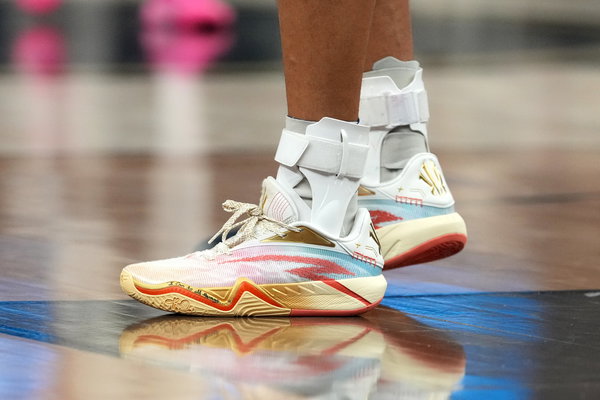
Jan 30, 2026; San Francisco, California, USA; A closeup view of the shoes worn by Golden State Warriors guard Stephen Curry (30) against the Detroit Pistons in the first quarter at the Chase Center. Mandatory Credit: Cary Edmondson-Imagn Images
“Steph wore braces, and when we were working together as performance therapist and athlete, I got to know his braces, and at the time he was wearing a ZAMST brace,” Lane says. “And it was the first I had seen it. So I got to really get up close and personal with their products.”
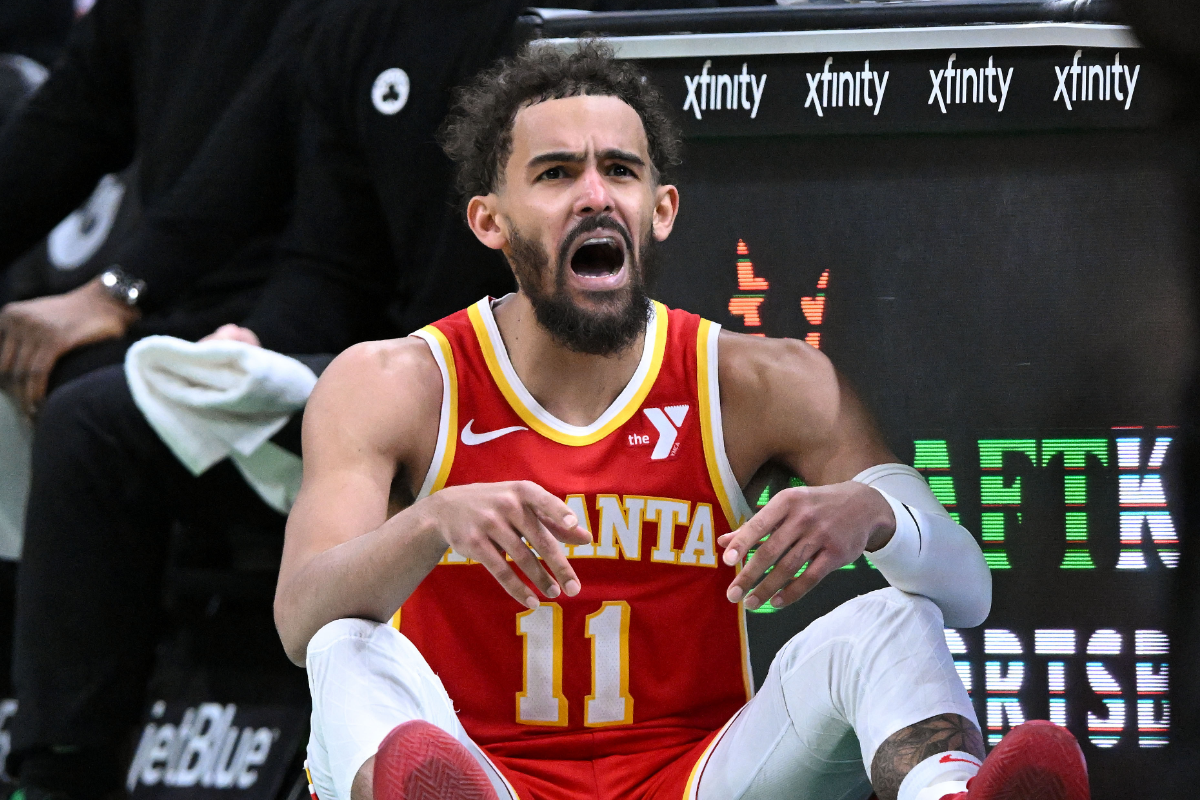
When Lane moved to the Atlanta Hawks, the challenge shifted from maintaining a dynasty to building one. She was now working with a young rebuilding team, including a teenage Trae Young whose “superpower” was his frantic, contained-by-no-one energy on the court.
When Young suffered ankle injuries in 2018, Lane stepped in not just as a director but as a physiotherapist.
“First and foremost, the pain and dysfunction that come about from having an ankle injury, let’s not forget this stuff hurts, so that is our first priority, of course,” Lane says. “Then quickly, in these sorts of environments, we move to how do we get this guy back on court, and how do we do it safely? And also, how do we keep him fit and healthy, and how do we keep him engaged? Not doing the thing that he was built to do, which is hoop.”
The Logic of the A2-DX
The decision to put Young in the ZAMST A2-DX ankle braces was born from Lane’s experience with Curry. She knew that for a player of Young’s stature and style, the ankle brace couldn’t feel like an anchor.
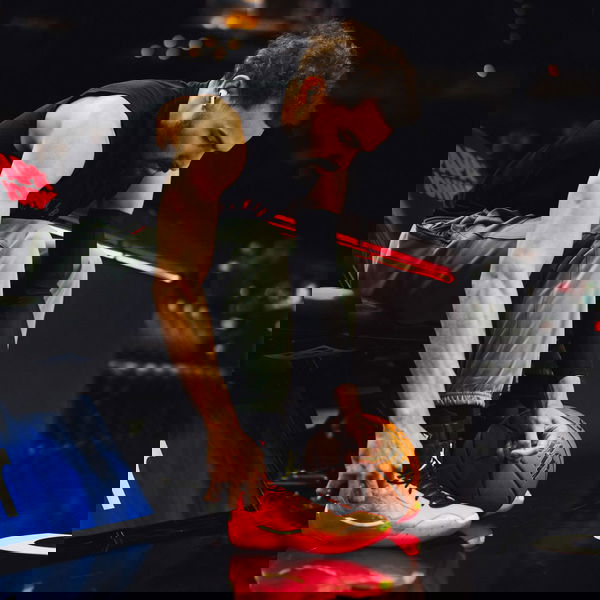
“I don’t know if you’ve seen Trae Young; he is not a really heavy dude, so we don’t want to weigh him down,” Lane explains. “So we need something that doesn’t feel burdensome during play. We need something that is comfortable. I don’t want someone who can do the magic that he does, thinking about his ankle. I want that to be symbiotic and comfortable. I also want him to wear it. So if it’s not comfortable and hard to get on, he’s not going to be compliant with it.”
The A2-DX ankle braces hit the rare sweet spot of being “light, but not lightweight.” It provided the necessary restriction for the “forces of an NBA basketball game” without stripping the athlete of their confidence.
“We don’t want something on him that is going to take away a superpower, it needs to be comfortable enough that he can switch off and know that it’s there,” Lane explains.
Modern-Day NBA Needs This Innovation More Than Ever
Today, the league has entered an era in which we have the early-season NBA Cup, Christmas Day games, the midseason NBA All-Star, and the pre-playoffs Play-in Tournament, among other things. Even the offseason comes with media commitments, frequent travels, and packed calendars. All these mean more games and tighter schedules.
Additionally, the new-age players are running faster than ever. They’re clocking 4.5 mph as opposed to under 4.2 mph a decade ago, per Sportico data.
When those two things are coupled, it is no surprise that the NBA, during its running season, had almost half of its ‘stars’ injured in the first month itself. Here, though, most injuries were hamstring or calf-related, and even as the season matured, the likes of Giannis Antetokounmpo and Devin Booker (that is assuming Luka Doncic will be back after that court-related mishap).
Such facts add to the importance of elite performance coaches and cutting-edge innovations, such as ZAMST, that support prevention.
The “Why” Behind the Grind
The life of an NBA performance director is a grueling cycle of putting players to bed at 3:00 AM and waking up for early shootarounds. It is a life of “the hardest work you will ever do on the least sleep you’ve ever had,” yet Lane insists you will “never be happier doing it.”
The fulfillment comes from the quiet moments of impact.
“Every single day is jam-packed full of moments that are ‘this is why I do this’ moments,” Lane says. “When your whole purpose is facilitating somebody else’s excellence and somebody else’s dream, whether the NBA is custom-built to allow that. Whether it is retaining a rockstar NBA player to his profession after he has suffered an injury… Every single touch, every single moment, you are responsible for that, and this is why I do that.”
About Chelsea Lane
Chelsea Lane is an Australian-trained sports physiotherapist and high-performance specialist whose career spans elite sport worldwide.
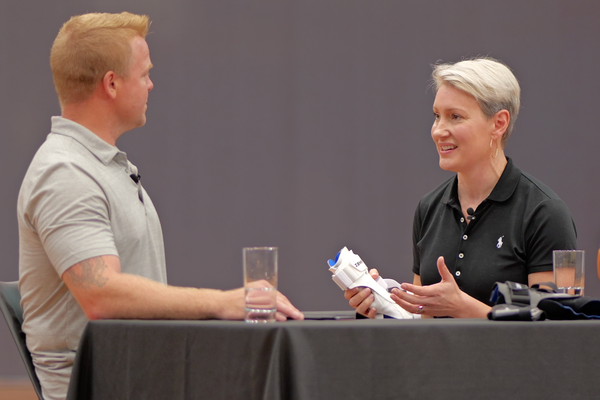
Lane rose to international prominence during six years in the NBA, serving as Director of Performance and Sports Medicine with the Golden State Warriors, where she was one of the first women to lead an NBA performance and medical department and helped support multiple championship runs, and later as Vice President of Athletic Performance and Sports Medicine with the Atlanta Hawks.
Known for her holistic, athlete-first approach, she now consults and leads high-performance programs, sharing insights on injury minimization, resilience, and athlete readiness at the highest levels of sport.
For more information about Zamst, visit: US: Zamst.us, International: Zamst.com.
