
In 1951, basketball learned just how dangerous money and the game could become when mixed together. The City College of New York point-shaving scandal involved players taking money to influence games and spread across seven universities. What followed was one of the darkest chapters in basketball history, with 33 players caught up in the scandal and the sport facing a serious crisis of trust.
Watch What’s Trending Now!
More than seven decades later, the relationship between basketball and gambling looks very different. The NBA went from fighting the spread of sports betting to building business relationships with the companies behind it. And as billions of dollars now move through legal betting markets, NBA stars have become part of that business too.
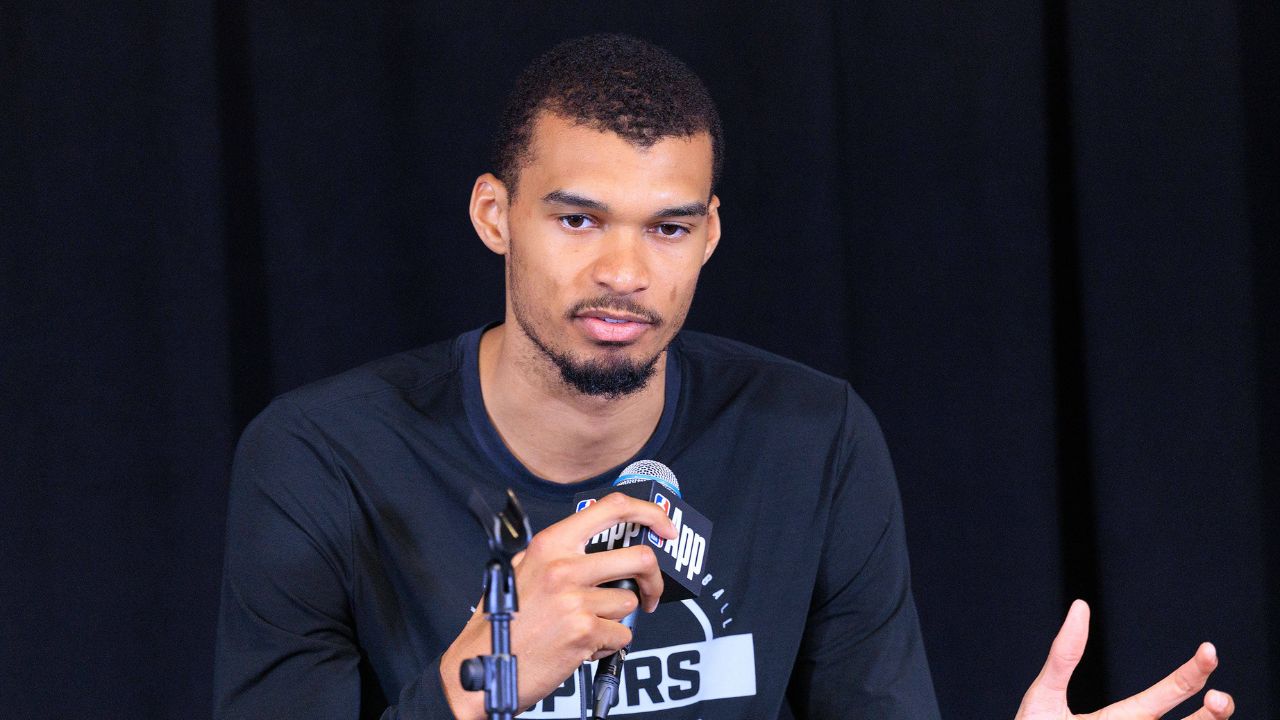
But when Victor Wembanyama was asked if he would ever join them, he did not leave much room for interpretation.
“Absolutely not. I will never do that. Honestly, I think it’s very sad to see some players promote it. …Everybody does whatever they want, but without me,” Victor Wembanyama told San Antonio Express-News columnist Mike Finger.
That answer was striking for more than the first two words. Wembanyama did not just say he would personally stay away from betting companies. He said he found it “very sad” to see some players promoting them, before making it clear that he was not trying to tell anyone else what to do.
And the timing makes his stance even harder to ignore.
Wembanyama Has Already Chosen What His Money Means
Wembanyama’s answer fits with something he has said about his approach to endorsements. For the 22-year-old Spurs star, the biggest offer is not always the offer he wants.
“There was a dimension of money in the past, but not anymore. I’ve refused much much more money than I’ve made for things that were not to my values. And now I want to promote things that have a good impact, have a good influence, with whom I can share messages with, and values. Obviously, we earn millions and millions, this is not our biggest strength. Our biggest strength is inspiring, and we can inspire in a good or a bad way. I want to inspire in a good way.”
That gives his latest comments another layer. Wembanyama is not presenting the decision as a financial calculation. He is saying there are deals he would rather walk away from if he does not believe in what he is promoting.
His representatives have also previously described a selective approach to endorsements. Wembanyama has turned down lucrative offers, including deals from major beverage companies, because of concerns about the products and their influence on younger audiences.
So when he says sports betting is not for him, it does not sound like a decision made in isolation.
It also puts him in an awkwardly interesting position in an NBA where some of the biggest names have gone in the opposite direction.
LeBron James Has Already Walked Through That Door
LeBron James’ relationship with the betting business gives Wembanyama’s comments an obvious point of comparison.
In January 2024, James agreed to a multi-year partnership with DraftKings. The deal made him a sports-betting ambassador, but the arrangement focused on football and other major sporting events rather than NBA betting.
That distinction mattered because NBA rules restrict active players from betting on or promoting wagers involving NBA and other league basketball games. The DraftKings partnership was therefore built around sports outside the NBA.
James later moved into a newer part of the industry.
On September 16, 2026, Polymarket announced a partnership with James, with Front Office Sports reporting that the deal was worth $15 million per year. The campaign is centered on football event contracts and positions James as a paid ambassador for the prediction-market platform.
That number makes the contrast with Wembanyama even more eye-catching.
Wembanyama is saying there is a type of endorsement he would never accept.
James has reportedly agreed to one worth $15 million a year.
But the money involved is only part of the story. The bigger change is how normal these relationships have become around the NBA.
And that change did not happen overnight.
The NBA Once Saw Betting Very Differently
In 1991, NBA Commissioner David Stern appeared before the U.S. Senate Judiciary Committee as the league pushed for federal restrictions on sports gambling.
The NBA’s position at the time was built around protecting the integrity of the game.
Then the league’s approach began to change.
In 2014, Adam Silver published a New York Times op-ed titled “Why Sports Gambling Should Be Legalized.” Silver argued that sports betting should be brought into a regulated system rather than left in an underground market.
Four years later, the U.S. Supreme Court struck down PASPA, clearing the way for states to legalize sports betting.
The NBA moved quickly into the new market.
The league established relationships with major betting companies, including FanDuel and DraftKings, while betting data and live odds became increasingly connected to the sports-viewing experience.
The 2023 NBA-NBPA collective bargaining agreement also opened the door for active players to have certain commercial relationships with sports-betting and prediction-market companies, as long as they followed league restrictions.
So the NBA that Wembanyama entered was not the NBA that Stern was protecting decades earlier.
And the money now attached to the industry shows just how big that change has become.
Betting Is No Longer a Side Business
The American Gaming Association reported that legal sports betting in the United States generated a $166.94 billion handle in 2025, an 11% increase from the previous year. Sportsbooks generated $16.96 billion in gross revenue, up 22.8%.
That is a massive business.
But there is another market growing alongside traditional sportsbooks.
Prediction-market platforms such as Polymarket and Kalshi have expanded rapidly, creating a different way for people to trade contracts tied to real-world events.
That distinction matters when talking about LeBron’s latest partnership. Traditional sportsbooks such as DraftKings and FanDuel operate through sports-wagering systems, while prediction markets use event contracts and operate under a different regulatory framework.
For NBA stars, however, the commercial opportunity is becoming harder to miss.
Giannis Antetokounmpo took a minority stake in Kalshi in 2026. Kevin Durant’s Boardroom entered a multi-year partnership with FanDuel in 2022. Nikola Jokic became a brand ambassador for Serbian betting company Superbet in 2023.
And Draymond Green recently pushed back against criticism of players taking these deals.
“You can’t be in sports and think that it’s okay for the league to have certain partnerships but not the players. That’s hypocritical. You look around the league, there’s FanDuel partnerships. There’s Fanatics Sportsbook partnerships. DraftKings partnerships… these are actual betting markets, betting houses, not actual prediction markets.”
From that point of view, players are simply entering a business that the sports industry itself helped normalize.
But there is another side to the story.
And some players have experienced it much closer than a sponsorship announcement.
The Players See a Different Side of Betting
Michael Porter Jr. spoke about the issue after his brother Jontay Porter was banned for life by the NBA following a gambling investigation.
“The whole sports gambling thing is only going to get worse. It’s changing the way fans look at the game, and it puts a lot of extra pressure on players.”
Kyrie Irving had raised a similar concern even earlier.
“Sports betting has really taken away the purity and the fun of the game. It’s taking away from the authenticity of basketball. You have fans sitting courtside yelling at players about their parlays, treating us like we’re machines.”
That last part is where the conversation changes.
Because for fans, a bet might be something that exists on a phone screen.
For a player, the person who placed that bet can be sitting courtside.
Tyrese Haliburton described exactly what that feels like from the other side.
“To half the world, I’m just helping them make money on DraftKings or whatever. I’m a prop. That’s what my social media mostly consists of. It can be funny sometimes when somebody says ‘I lost $1,000.’ I don’t give a f***. But we need people who value us as human beings.”
Now Wembanyama’s refusal starts to look less like a simple endorsement choice and more like part of a much bigger player conversation.
Because the business may be growing.
The questions around it are growing too.
The Jontay Porter Case Showed Why the Line Matters
The NBA’s biggest modern gambling scandal involved Jontay Porter, and it showed how quickly betting can move from a commercial product to an integrity issue.
The NBA’s investigation found that Porter disclosed confidential health information to bettors, deliberately limited his participation in a game to influence a prop bet, and placed NBA wagers through an associate’s account.
Between January and March 2024, Porter placed at least 13 bets totaling $76,059 in wagers, according to the investigation. He was permanently banned by the NBA on April 17, 2024, and later pleaded guilty to federal wire fraud charges.
The league’s response also changed how sportsbooks could offer certain player prop bets involving two-way and 10-day players.
But the problem was not limited to the players involved in gambling investigations.
It reached people simply trying to do their jobs.
Former Cavaliers head coach J.B. Bickerstaff revealed that bettors had obtained his personal phone number and sent messages about where he lived and his children.
“They got my telephone number and were sending me crazy messages about where I live and my kids and all of that stuff. Sports betting has crossed the line. It offers extra distraction and creates a dangerous environment for players, coaches, and referees.”
That is a very different picture from a celebrity appearing in a betting advertisement.
It is also why the NBA’s relationship with gambling has become such a complicated subject for the people inside the game.
And That Brings the Story Back to Wembanyama
The NBA has spent years moving gambling from something it feared into something it could regulate, partner with and profit from.
Players have followed that path too.
Some see business opportunities.
Others see growing pressure, harassment and a changing relationship between fans and athletes.
Wembanyama has simply drawn his own line.
He knows the business is there. He knows other players are participating. He even acknowledged that everyone can make their own decision.
But his decision is different.
“Absolutely not. I will never do that.”
In 1951, basketball was still dealing with the fear that gambling could destroy trust in the sport. More than 70 years later, the NBA has built an enormous business around an industry that once sat on the other side of the line.
Wembanyama is not trying to turn the clock back.
He is just choosing not to cross that line himself.
And in an NBA where a $15 million prediction-market partnership can now sit inside a superstar’s business portfolio, that choice says a lot about how much the game has changed.