
Essentials Inside The Story
- The stat that quietly backed Karl-Anthony Towns over his head coach
- How one Spurs adjustment changed the geometry of the entire game
- Why New York's biggest problem had little to do with the officiating
NBA Finals history is littered with teams that believed they had one hand on the trophy before everything changed. The Suns won the first two games in 2021 and never won another. The Mavericks held a 2-0 lead in 2006 before watching the series slip away. Momentum can feel permanent in June right until it isn’t.
Watch What’s Trending Now!
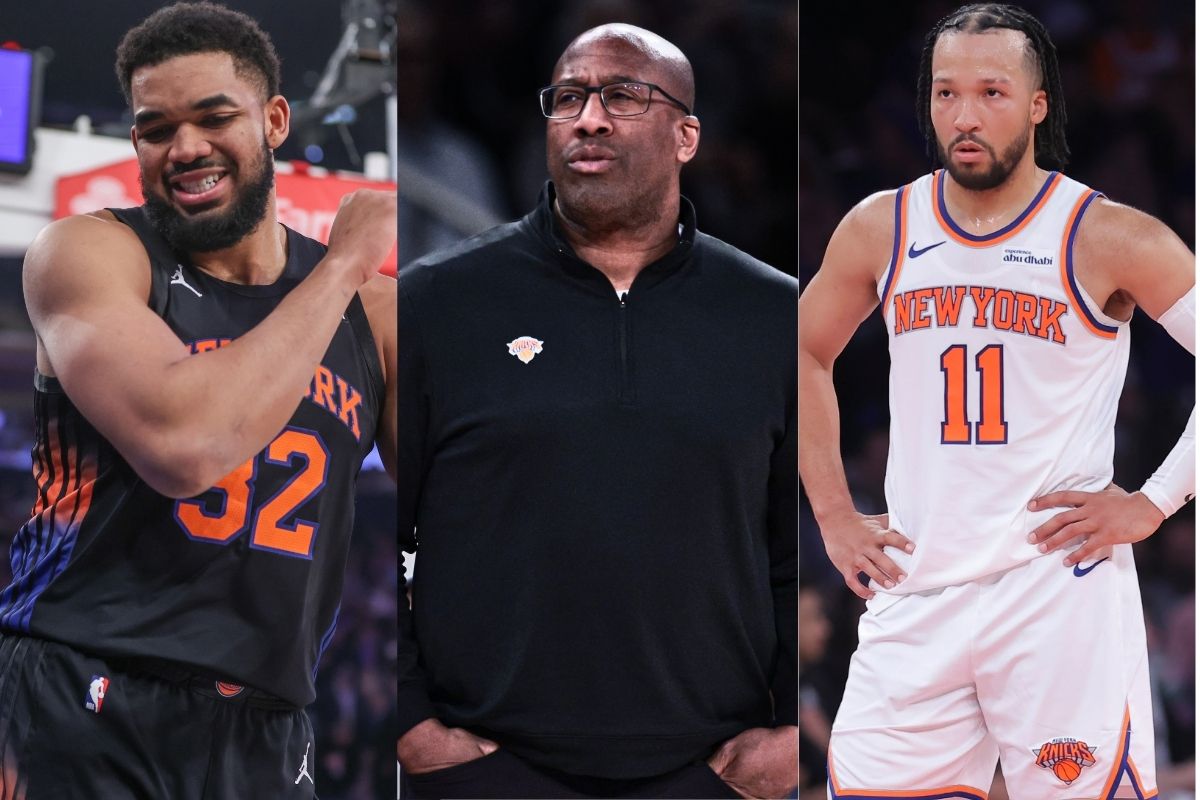
The Knicks learned that lesson Monday night. With a chance to grab a commanding 3-0 series lead over the Spurs, New York instead suffered its first loss in 45 days. What followed was an unusual divide inside the locker room, with Mike Brown blaming the officiating while Jalen Brunson and Karl-Anthony Towns pointed the finger inward.
“I never thought I’d be in the NBA Finals and see a team get 24 free throw attempts in the second half to another team’s eight,” Brown said, adding that a similar trend in Game 4 would pull their odds down.
While Mike Brown’s opinion had already begun to spread like wildfire, Karl-Anthony Towns saw things differently. “No, that ain’t cost us the game,” said the big man.
Jalen Brunson, on his part, accepted that they fouled a lot. “I think we’d turn the ball over a lot, first and foremost. But then also we were fouling a lot and put them at the line about 30 times.”
To be precise, the second-half free-throw disparity didn’t appear out of thin air. After trailing by seven at halftime, the Spurs completely changed the pressure points of the game. San Antonio attacked downhill relentlessly, repeatedly forcing New York into late defensive rotations. The result was a stunning third quarter in which the Spurs attempted 14 free throws while the Knicks managed just three.
That doesn’t mean Brown’s frustration was baseless. Several officiating decisions drew scrutiny throughout the night. But the Spurs’ aggressive interior attack also helps explain why the whistle tilted so dramatically after halftime.
Moreover, Towns didn’t just end his statement, disagreeing with the coach’s argument. He went a step further and exposed a glaring mistake within the locker room.
“Turned the ball over, didn’t execute, didn’t do what got us 13 straight wins in a row. That’s how you lose a game. We didn’t do what we’ve been doing for 13 (games),” Towns said. “We decided to do something different. It ain’t gonna work. And throwing the ball away is a clear indication of how you’re gonna lose a game, especially in the playoffs.”
The raw turnover total alone doesn’t look disastrous. The Knicks committed 13 compared to San Antonio’s 8. The real damage came from what happened afterward.
Those mistakes translated into a 21-7 Spurs advantage in points off turnovers, creating a 14-point swing in a game New York ultimately lost by four. Several of the giveaways came during momentum-changing stretches, including the opening minutes of the third quarter when San Antonio erased the Knicks’ halftime lead.
Suddenly, Towns’ frustration made a lot more sense. The issue wasn’t simply turning the ball over. It was when the turnovers happened and how severely the Spurs punished them.
According to both Towns and Brown, the answer wasn’t difficult to identify on film. The Knicks abandoned the ball movement and quick decision-making that fueled their 13-game winning streak.
Instead of generating advantages through multiple actions, possessions often devolved into isolation-heavy basketball. Brown later described it as “summertime drag” offense, with players standing still after the initial action and waiting for one teammate to create something out of nothing.
Jalen Brunson & Co. lose their rhythm in Game 3
If Brunson and Towns identified the glaring mistakes that resulted in loss, OG Anunoby found the cause. Coming fresh off his Finals career-high 28 points, Anunoby revealed that the team never looked comfortable.
“I think we were just a little bit out of rhythm,” he said. “We’re going to look at film, see what we can fix and try to prevent it from happening again.”
The lack of rhythm affected the offense. Towns, who averaged 19 ppg in the first two games, scored only 11 points. Similarly, Mikal Bridges almost went scoreless (2 points) despite averaging 14.5 ppg in the first two games. Even Josh Hart’s offensive compensation didn’t help.
Imago
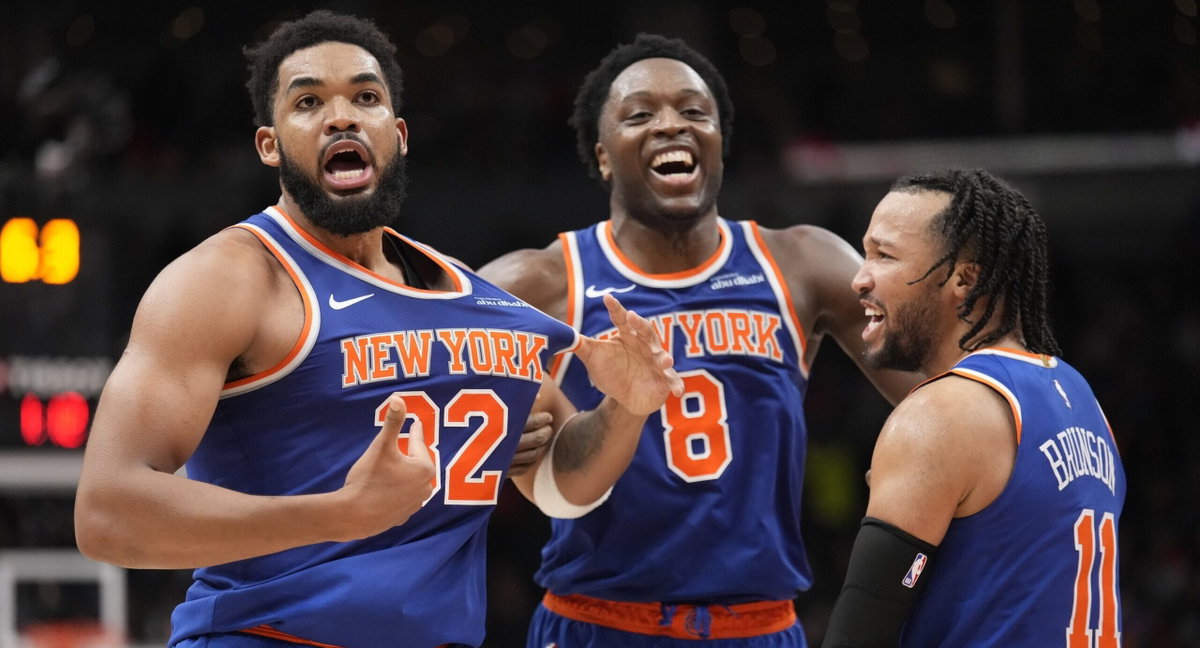
Dec 9, 2024; Toronto, Ontario, CAN; New York Knicks guard Jalen Brunson (11) and forward OG Anunoby (8) react after a three point basket by center Karl-Anthony Towns (32) to clinch a win over the Toronto Raptors during the second half at Scotiabank Arena. Mandatory Credit: John E. Sokolowski-Imagn Images
In short, the Spurs didn’t just defend better. They defended differently. Mitch Johnson moved Victor Wembanyama onto Josh Hart, allowing the Spurs star to roam the paint instead of chasing Karl-Anthony Towns around the perimeter. Meanwhile, Devin Vassell took on Towns directly, disrupting his touches and helping limit him to just 11 points.
The adjustment changed the geometry of the floor. With Wembanyama parked near the rim, the driving lanes that existed in Games 1 and 2 largely disappeared.
Now, with the 13-game winning streak clipped, the Knicks face the first real test of these Finals. Teams have recovered from 2-1 deficits before. Teams have also watched 2-0 leads disappear in a hurry.
Brown walked away convinced the officiating played a major role in Game 3. His players walked away believing they handed the Spurs an opening themselves. The film appears to lean toward Brunson and Towns’ explanation.
Game 4 will determine whether the Knicks learned the right lesson from their first loss in 45 days.