
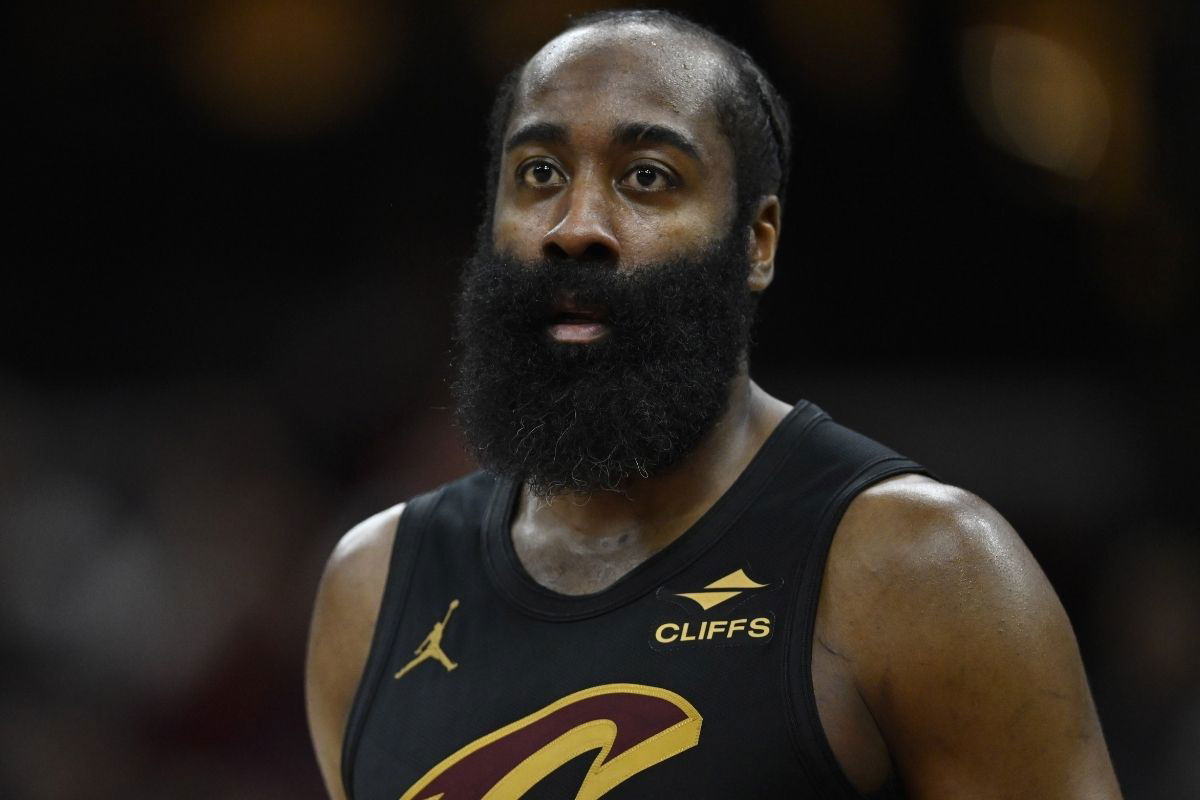
Cleveland sent Darius Garland, the point guard they had built their franchise around for five years, and a second-round pick to the Los Angeles Clippers at the trade deadline. A trade that significant does not happen without a guarantee on the other end. And according to ESPN’s Brian Windhorst, that guarantee was already in place before the ink was dry.
Watch What’s Trending Now!
“No matter how this playoff run unfolds, Harden, who has been inconsistent in the postseason again, will likely be coming back to Cleveland this summer on a multiyear deal,” Windhorst reported on Sunday, and that the decision carries no asterisk attached to the playoff outcome.
The language he used about the sequence of events is even more revealing: an understanding that a new contract would follow was almost certainly in place before the trade itself was completed. James Harden held veto power over any trade and would not have waived it without an implicit commitment from the organisation about his future.


James Harden is expected to sign a multiyear deal with the Cavs this summer, no matter how this playoff run unfolds, per @WindhorstESPN.

The reason the Clippers lost him is the same reason the Cavaliers got him. “Harden wanted contract certainty after this season, and the Clippers made it clear at midseason that they hadn’t decided whether to pick up his $42 million team option,” Windhorst reported.
When both sides showed their cards, Harden’s representation received permission to find a team willing to commit to him long-term. The Cavaliers were willing. The trade was not simply a roster move; it was the opening chapter of a longer arrangement, with both parties understanding that a multiyear deal was the destination from the moment the conversation began.
What sets Cleveland apart from every previous stop in Harden’s career is how the organisation went about securing his trust. Windhorst was specific about this: “Before the trade with LA was even finalized, the Cavs had taken steps to establish a strong bond with Harden, including coach Kenny Atkinson, who has worked to make him a partner from their first conversation.”
That dynamic was intentionally cultivated, as Atkinson and his staff understood that Harden had historically produced his best basketball when he had a strong relationship with his head coach, as was the case with Mike D’Antoni in Houston. The framework being replicated in Cleveland is not accidental. It is a deliberate attempt to recreate the conditions under which Harden becomes a different, if not a better player.
“Inconsistent in the Postseason Again”: The Risk Cleveland Is Accepting
Windhorst did not sanitise the concerns around the commitment. He noted plainly that Harden “has been inconsistent in the postseason again,” a phrase that encompasses a pattern stretching across Houston, Brooklyn, Philadelphia, and now Cleveland. Harden turns 37 in August, an age at which multiyear guarantees carry real financial exposure, particularly for a franchise already operating above the second apron.
Imago
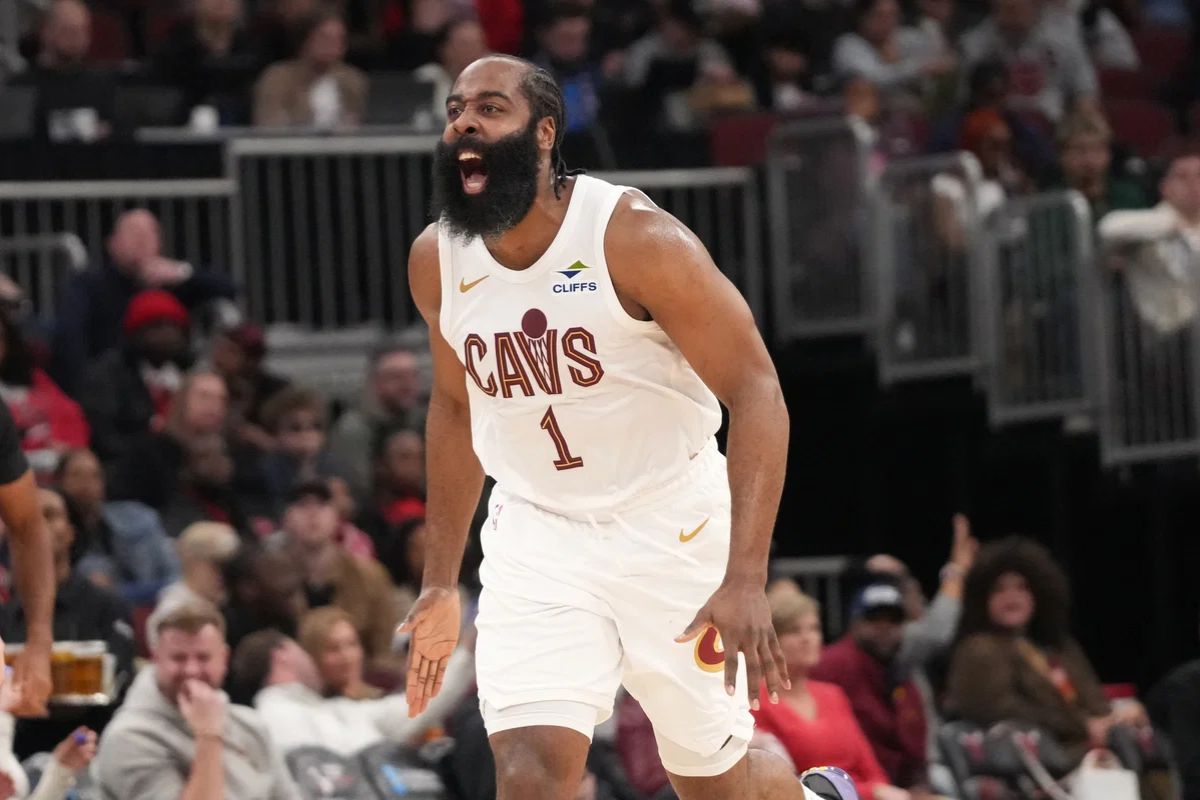
Mar 19, 2026; Chicago, Illinois, USA; Cleveland Cavaliers guard James Harden (1) reacts after making a three point basket against the Chicago Bulls during the second half at United Center. Mandatory Credit: David Banks-Imagn Images
Cleveland is carrying the league’s highest payroll at $226 million, more than $280 million with the luxury tax factored in, and is the only team currently operating over the second apron. A new deal for Harden is expected to lower his annual salary below the $42.3 million player option figure in exchange for additional years of security, which provides the Cavaliers with modest financial relief while locking in the arrangement both sides want.
The broader picture around Harden’s return is complicated by the Donovan Mitchell situation that sits alongside it. Mitchell becomes extension-eligible this summer and can sign a new deal worth up to $272 million over four years, but Windhorst notes that it is in his financial interest to wait until 2027, when 10 years of service would make him eligible for a five-year deal worth approximately $350 million and a no-trade clause.
That means the Cavaliers are heading into a summer where Harden is being locked in on a multiyear deal while their franchise cornerstone carries the equivalent of an expiring contract going into next season. An early playoff exit could affect the roster in other ways, with rival teams likely to circle Evan Mobley if Cleveland’s front office determines a shakeup is necessary, though Windhorst reported that the 25-year-old has been “untouchable” in internal discussions so far. For James Harden, Sunday’s result in Detroit changes nothing. For everything else in Cleveland, it could change quite a lot.