Imago
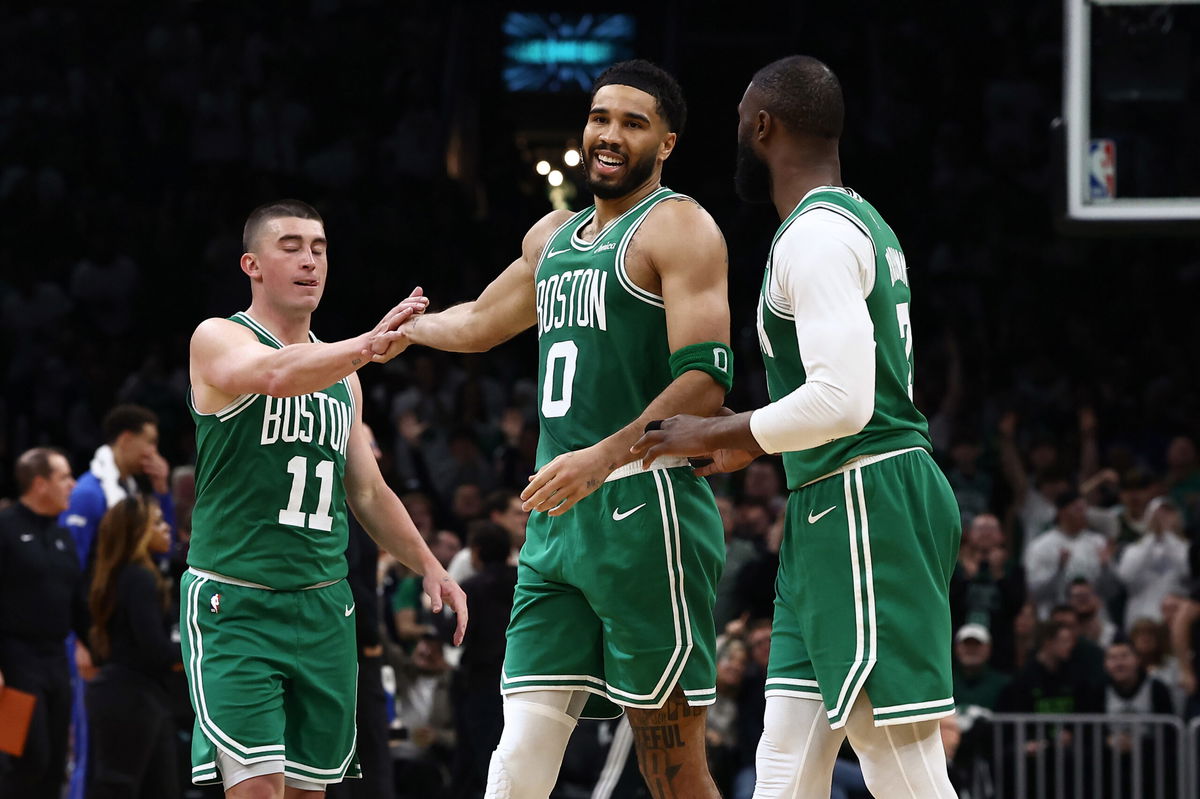
Mar 6, 2026; Boston, Massachusetts, USA; Boston Celtics forward Jayson Tatum (0) smiles at Boston Celtics guard Jaylen Brown (7) while being congratulated by guard Payton Pritchard (11) during the second half at TD Garden. Mandatory Credit: Winslow Townson-Imagn Images
Imago
Mar 6, 2026; Boston, Massachusetts, USA; Boston Celtics forward Jayson Tatum (0) smiles at Boston Celtics guard Jaylen Brown (7) while being congratulated by guard Payton Pritchard (11) during the second half at TD Garden. Mandatory Credit: Winslow Townson-Imagn Images
Jayson Tatum’s return is not just about recovery. It is about whether Boston can follow a blueprint that once built a dynasty. Because when a superstar comes back to a team that already learned how to win without him, history does not ask if it works.


It asks how far it can go. Tatum answered the first part on March 6 against the Dallas Mavericks. Ten months after tearing his right Achilles in the 2025 playoffs, he returned with 15 points, 12 rebounds, and seven assists in 27 minutes, before adding 20 points against Cleveland in his next outing.
Watch What’s Trending Now!
The bigger question is what it means. Because Boston was never supposed to be here.
Imago
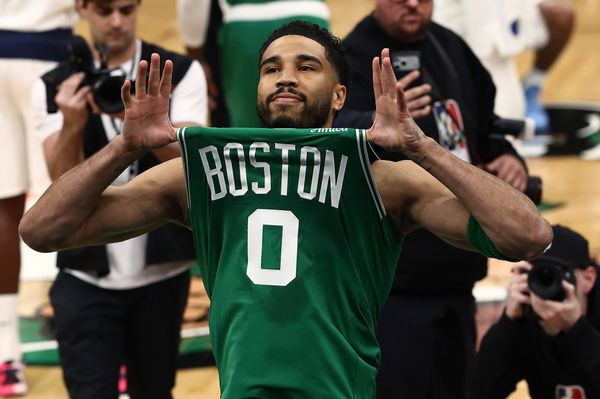
Mar 6, 2026; Boston, Massachusetts, USA; Boston Celtics forward Jayson Tatum (0) shows his jersey to the crowd before taking the court for the first quarter against the Dallas Mavericks at TD Garden. Mandatory Credit: Winslow Townson-Imagn Images
At the start of the season, the Celtics looked incomplete. Tatum was out indefinitely. The roster had already lost Jrue Holiday and Kristaps Porzingis. Expectations dropped immediately.
However, the team never collapsed. Boston stayed competitive and positioned itself right behind the Detroit Pistons in the East. Meanwhile, Jaylen Brown stepped into the primary role for the first time in his career and delivered career-high production across the board.
That shift changed the identity of the team. Instead of relying on one offensive engine, Boston became a defensive machine. They now hold the stingiest defense in the league while entering the postseason picture despite missing their best player for most of the year.
At the same time, that success revealed a ceiling. Among playoff teams, Boston ranks near the bottom in scoring. Because of that, the need for Tatum was never about survival. It was about finishing.
Tatum’s “Jordan” Blueprint
This situation has already played out before. In 1993-94, the Chicago Bulls lost Michael Jordan and handed the team to Scottie Pippen. Like Brown, Pippen delivered an MVP-caliber season and proved he could lead.
Chicago still won 55 games. However, the postseason told a different story. Without Jordan’s late-game scoring and offensive gravity, the Bulls were eliminated in the second round. That ceiling defined the gap between a great team and a championship team.
Then Jordan returned in 1995. The result was immediate and historic. Chicago went on to win 72 games the following season and launched one of the greatest dynasties in NBA history.
That is the blueprint Boston is walking into. Because the question is no longer whether Brown can lead. It is whether Tatum’s return elevates the team the same way Jordan’s did.
Boston does not need Tatum to score 40 every night. They need what only he provides. His presence alone shifts defenses.
When Tatum is on the floor, defenders collapse toward him, creating space for Brown and the rest of the offense. Driving lanes open. Shot quality improves. The entire system becomes more efficient.
That impact cannot be replicated by committee. During his absence, Boston relied on structure and defense to win games. With Tatum back, they gain offensive gravity.
Because of that, Brown’s evolution becomes even more dangerous. Instead of carrying the entire load, he now attacks secondary defenders and broken coverages. That is where elite teams separate.
The adjustment period that will decide everything
However, this transition is not automatic. History shows that reintegration is the hardest part. When Jordan returned, the Bulls had to adjust roles, touches, and expectations. The team had already built a rhythm without him.
Boston faces the same challenge. Brown has proven he can be the primary option. Now he has to recalibrate. At the same time, the supporting cast must shift back into complementary roles while maintaining the defensive identity that carried them all season.
That balance will define the postseason. Because if the transition fails, Boston risks becoming disjointed at the worst possible time. Boston is not chasing the top seed. Detroit currently holds that position and has been the most consistent team in the conference.
However, postseason basketball operates differently. The regular season rewards consistency. The playoffs reward shot creation.
Without Tatum, Boston relied on defense to stay competitive. With him, they gain the one element that matters most in a seven-game series. A player who can break defensive schemes. That changes every matchup.
Tatum’s return has already stabilized Boston. Now it must elevate them. The Celtics proved they can survive without their best player. However, survival is not the goal anymore.
The Jordan-era comparison sets a higher bar. Boston does not just need Tatum back. They need him to transform them. Because if the reintegration works, they become the most complete team in the Eastern Conference.
If it does not, they remain what they were before. A great team with a clear limit. The blueprint is already written. Now comes the part that matters. Executing it.