Imago
Imagn
Imago
Imagn
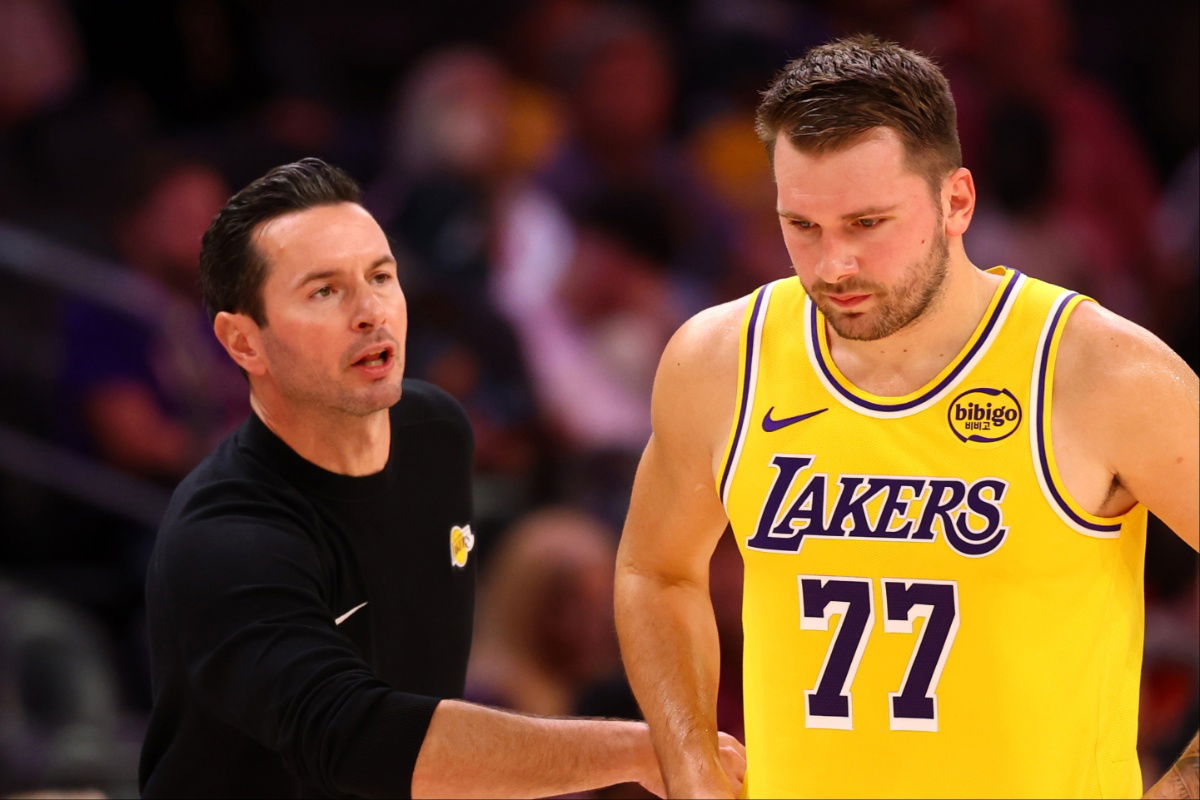
The Los Angeles Lakers’ playoff push just took a serious hit. After a red-hot March, injuries to Luka Doncic and Austin Reaves have suddenly thrown their rotation into chaos, forcing head coach JJ Redick to rethink everything heading into the postseason.
Watch What’s Trending Now!
With both guards sidelined — Doncic with a hamstring strain and Reaves with an oblique injury — Redick is now expanding his rotation from nine to potentially 11 players, according to ESPN’s Dave McMenamin. That shift opens the door for young depth pieces like Dalton Knecht, Kobe Bufkin, and Nick Smith Jr., all of whom have recently joined the team in Dallas and now find themselves in unexpected but critical roles.
🚨 JJ Redick said he plans to expand the rotation going from 9 to potentially 11 players for now, per @mcten
Dalton Knecht, Kobe Bufkin, and Nick Smith Jr. have joined the team in Dallas pic.twitter.com/RbfnZ0hwTX
— LakersMuse (@LALMuse) April 5, 2026
Doncic’s regular season ended Friday after he suffered a Grade 2 left hamstring strain, and by Saturday, the Lakers confirmed Reaves would also miss the remainder of the regular season with a Grade 2 oblique strain. In the span of two days, Los Angeles lost its top two backcourt scorers — a massive blow just weeks before the playoffs.
Among the new options, Knecht brings the most game experience this season, while Smith Jr. offers perimeter shooting and Bufkin adds ball-handling depth. None of them have played consistent NBA minutes, but that’s exactly the gamble — Redick is betting on energy, spacing, and fresh legs rather than proven production to stabilize the rotation in the short term.
Expanding the rotation also signals a shift in responsibility. LeBron James is expected to take over as the primary initiator, with Rui Hachimura stepping into a larger supporting role as the Lakers fight to hold onto the third seed in the Western Conference.
JJ Redick reshapes Lakers offense after losing primary playmakers
Doncic and Reaves were not just scorers — they were the backbone of the Lakers’ offense, combining for roughly 31% of the team’s touches this season, according to Second Spectrum. With Marcus Smart also sidelined, Redick now turns to LeBron James to anchor everything, while players like Luke Kennard, Rui Hachimura, and Deandre Ayton step into significantly larger roles.
Imago
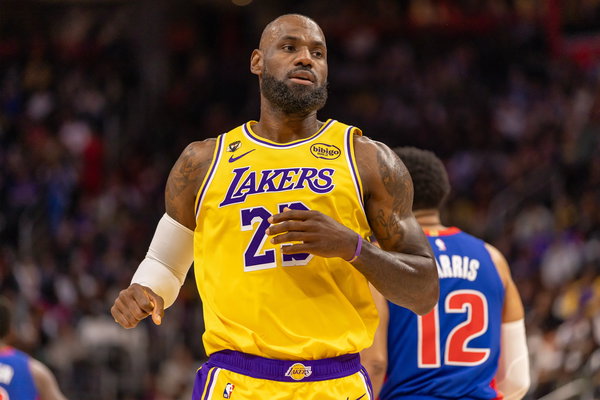
Mar 23, 2026; Detroit, Michigan, USA; Los Angeles Lakers LeBron James (23) runs up court against the Detroit Pistons during the first quarter at Little Caesars Arena. Mandatory Credit: David Reginek-Imagn Images
“It went from a strategic tactical standpoint that we obviously were going to have to play a little bit differently,” Redick said on Saturday following the team practice. “There’s enough that we have in that we can play through LeBron, play through Luke, play through Rui, play through D.A.”
There’s little doubt about LeBron’s ability to carry the load, even at this stage of his career. The bigger question is whether the supporting cast — now reshuffled and inexperienced — can keep up around him.
“There’s no filling it,” James said of being without Dončić, in particular, on Saturday. “I mean, you got a guy who’s averaging (almost) 35, and eight (assists) and seven (rebounds), and doing the things that he’s doing. You don’t replace that or try to even fill that. I think it’s up to all of us, whoever’s in the lineup, to pick up our individual play and make plays together, figure out ways we can get stops, figure out ways we can get the ball moving from one side to the other side offensively. And then, keep the same keys— no turnovers, obviously. Limit teams’ fast-break points. Limit teams’ offensive rebounds. It’s a lot of keys that we still need to do in order for us to win.”
LeBron will now operate as the primary playmaker, with Kennard spacing the floor, Hachimura attacking mismatches, and Ayton anchoring the defense on the interior. However, this stretch will ultimately test how quickly the Lakers can adapt — because with the playoffs approaching, every game now doubles as both survival and evaluation.
Written by

Edited by

Ved Vaze