Imago
Credit: IMAGN
Imago
Credit: IMAGN
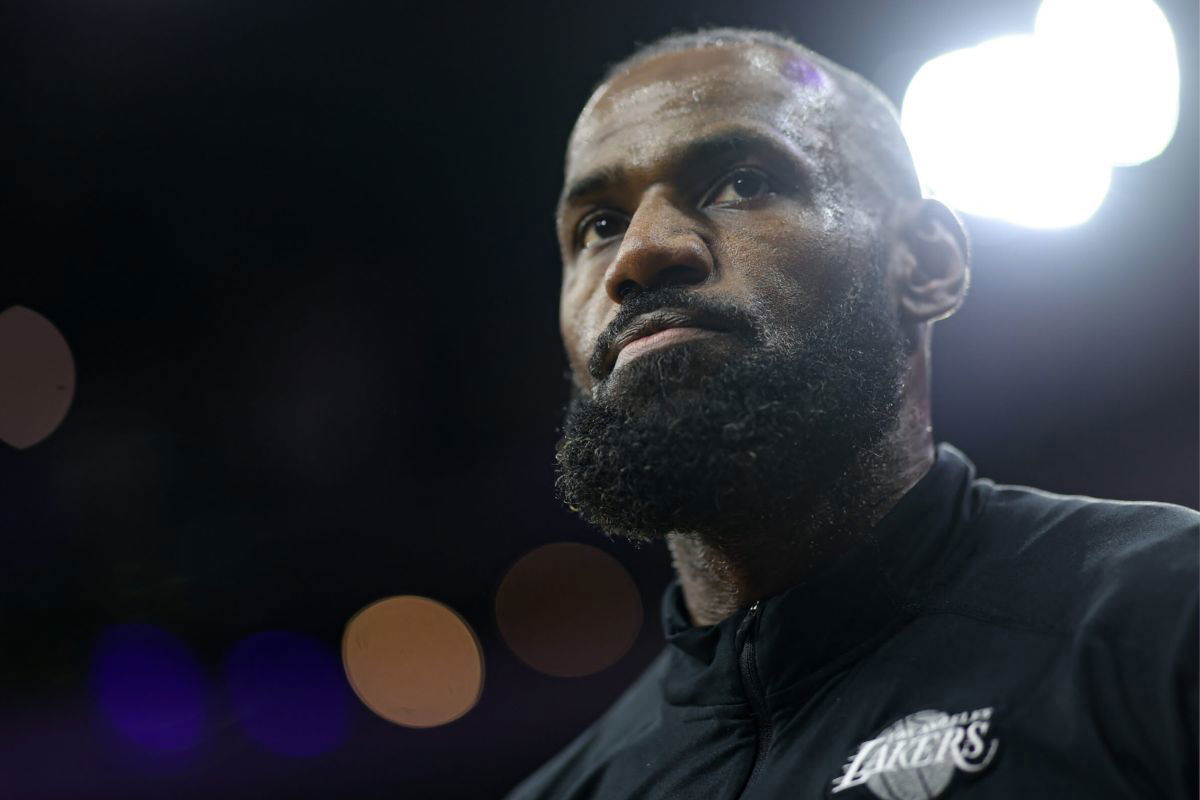
Tactics or probability? That is the balance the NBA constantly struggles to strike between satisfying fans and frustrating them. Few strategies spark more debate than fouling up three late in a game. Viewers see it as a buzzkill, stripping away the buildup to a game-winner and replacing it with free throws and desperation heaves. Fans crave drama, but players like LeBron James care far more about securing the win.
Watch What’s Trending Now!
James has discussed the polarizing tactic on several occasions. The Lakers forward feels it’s wise to foul largely because of the direction the league has gravitated towards. “Our league is a three-point shooting league,” James says.
Each team has specialized units to spread the floor and make shots from beyond the arc. So, just by playing the odds, the Akron Hammer would much rather foul and increase the team’s chances of winning the game.
Top Stories





“If you have an opportunity to win or close the percentage of you winning the game, possibly, take it away… Listen, late game, under a minute, under 30 seconds, you up three, it’s been a hard-fought game. Team may have made 12 threes, 13 threes in a game. You don’t want 14 to happen. You can lose in overtime that way,” he said on Mind The Game.
Imago
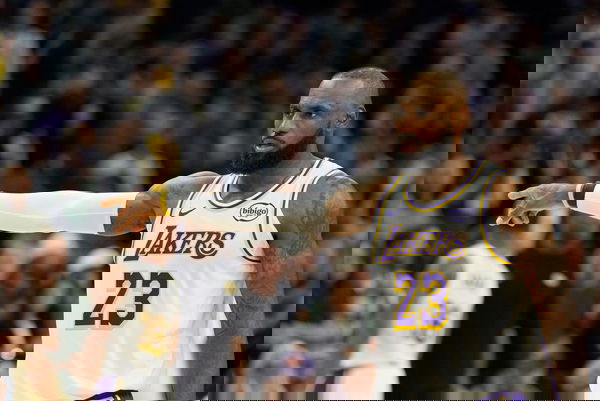
Dec 14, 2025; Phoenix, Arizona, USA; Los Angeles Lakers forward LeBron James (23) reacts after a foul during the second half of a game against the Phoenix Suns at Mortgage Matchup Center. Mandatory Credit: Allan Henry-Imagn Images
Fouling at the end doesn’t guarantee a win. It still depends on some variables, particularly the team’s free-throw shooting, to keep the lead at three. However, it does make more sense when you factor in the quality of shooters. In today’s league, every position can shoot the ball if given a clean look. We’ve even seen Andre Drummond develop and use his three-point shot for the Philadelphia 76ers.
Rather than leave it to one shot and swing momentum, fouling allows teams to still be in control. In crunch time, having leverage means teams have one foot in the winning door. However, for LeBron James, opting for this method is more personal.
LeBron James doesn’t want another five minutes
James came into this argument with proof. He referred to the Hornets’ overtime win over the Cavaliers. Brandon Miller generated a look from three in regulation to take it into overtime. All of a sudden, the Hornets were swelling with confidence while the Cavs felt they shot themselves in the foot.
That feeling in itself is discouraging for a team. But James would rather foul because playing overtime would see his recovery go haywire.
“I don’t want to go through that. For me personally, I’m about to be 41 years old. First of all, another five minutes to me right now, another five minutes to messes up my whole day the next day,” James added on the podcast.
That’s the price of playing in a historic Year 23. But the argument itself of whether teams should foul or not depends entirely on comfort. A team like the Thunder, who have impeccable perimeter defense, might allow opponents to run the clock while denying them a good enough look. Or if a team doesn’t have the most consistent free-throw shooters, they would opt for getting a defensive stop.
Neither of the two strategies safeguards teams from a dramatic finish. But it’s always better to have the lead than to be even in these situations. Understandably, fouling at the end takes some of the thrill away. Simultaneously, it also creates an edge.
If you know LeBron James, he’s always trying to gain an upper hand. So it’s not surprising that he prefers an approach that statistically gives his team a better chance at winning the game while eliminating the chances at a devastating dagger.
