
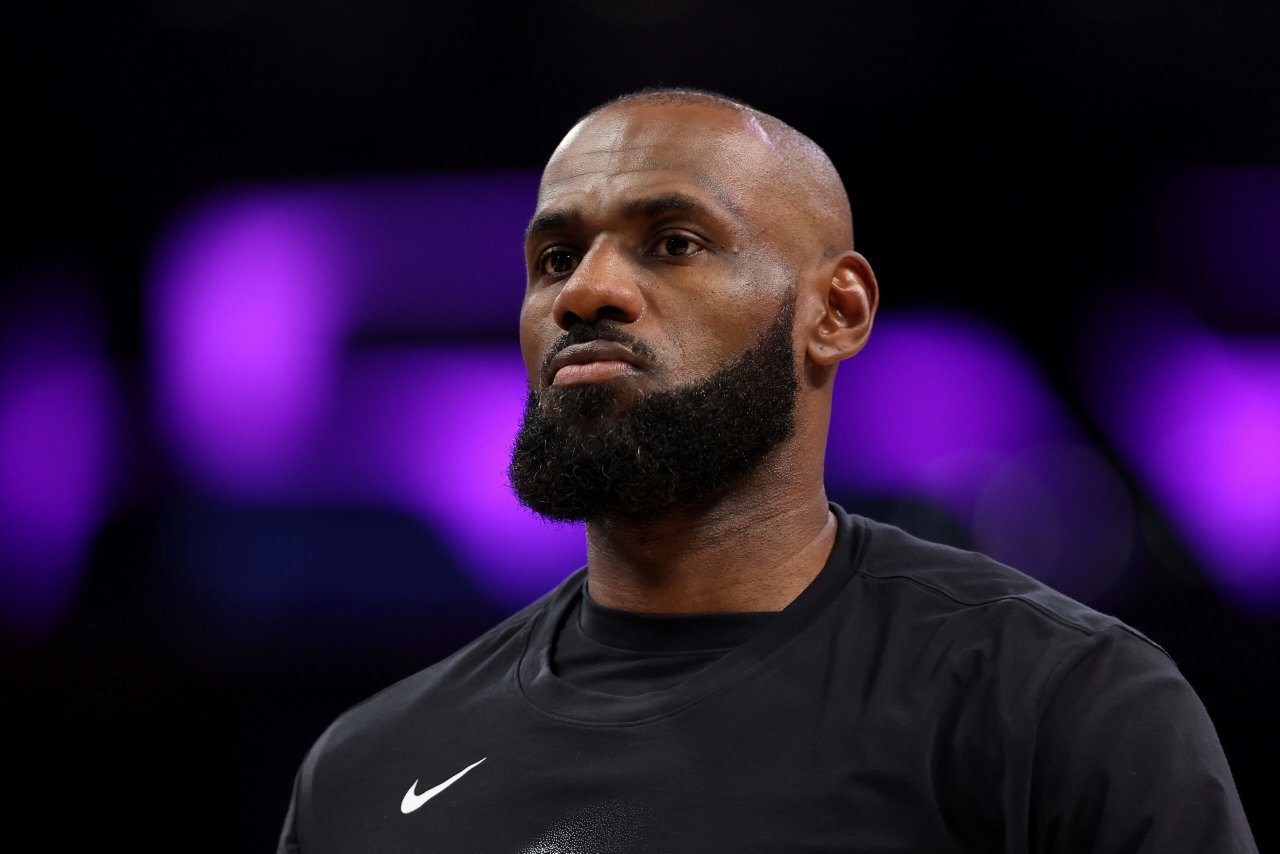
LeBron James has become the latest major sports figure to partner with Polymarket, joining a growing celebrity campaign for the prediction market platform as its approach to real-world events faces renewed scrutiny.
Watch What’s Trending Now!
James first teased the partnership on Sept. 5 with a 14-second video showing him inside a stylized “Polymarket HQ” elevator. The buttons were labeled “sports,” “politics,” “crypto,” “economy,” “culture” and “weather.” James selected “sports” before the video ended. His caption read: “Welcome to Polymarket HQ. Coming soon. In partnership with @Polymarket.” The full commercial was released Tuesday, with James carrying an American football as part of the campaign.
But the partnership arrives as questions about what prediction markets should allow have moved well beyond sports. Joshua Pederson, a Boston University associate professor whose 12-year-old son relapsed with a rare pediatric cancer and entered an experimental clinical trial, has criticized markets that allow people to wager on medical outcomes. Speaking to NPR’s Bobby Allyn on Aug. 7, Pederson said: “A clinical trial failing is a more sanitized euphemism for, people are going to suffer, people are going to die, people are going to have one fewer clinical option available to them in one of the most difficult medical situations of their entire life.”
That concern is part of a much wider debate surrounding Polymarket. During the January 2025 Southern California wildfires, the platform hosted contracts tied directly to the progression of the Palisades and Eaton fires. More than $1.2 million was traded across fire-related markets, including one asking, “Will the Palisades Fire reach Santa Monica by Sunday?” Other contracts focused on acreage burned and containment dates. The fires killed 31 people, destroyed more than 16,000 structures and burned more than 59 square miles.
Caitlin Cooper, an Indiana Pacers beat writer and basketball analyst, later shared screenshots from a July 20 CNN investigation into those markets. The CNN report, titled “People are making wildfire bets on prediction markets. Experts say it could lead to disaster,” examined concerns from forensic psychologists and law enforcement officials, including retired Los Angeles County Sheriff’s arson investigator Ed Nordskog, who warned that putting financial value on the spread of disasters could create moral hazards and potential incentives for arson.
Cooper then criticized James directly following his Polymarket announcement, writing: “There’s a lot of NBA fans who may struggle to afford basic needs, let alone tickets. From the aspiration stuff to an agent saying ‘athletes have the toughest job in the world,’ and now the game’s biggest star stanning for polymarket — it’s been a tone deaf offseason.”
The controversy is not limited to disasters. Between February and April 2026, Polymarket contracts predicting U.S. and Israeli military strikes against Iran generated more than $529 million in trading volume. Blockchain analytics firm Bubblemaps and a New York Times investigation identified six newly created wallets that made roughly $1.2 million by betting on strikes hours before public announcements. One account, “Magamyman,” turned an $87,000 position into $553,000 about 71 minutes before strikes began. Public Citizen subsequently filed a complaint with the CFTC seeking an investigation into possible insider trading involving classified military information.
Medical markets have also drawn concern. Both Polymarket and Kalshi offer contracts tied to Phase III clinical-trial results and FDA approval decisions. David Tsai, who oversees clinical-trial execution at a Bay Area biotechnology company, launched a petition calling for such markets to be banned. It has gathered more than 600 signatures. “Binary bets invite direct manipulation… reducing life-saving science to binary, high-stakes gambling,” Tsai wrote.
An NPR-interviewed clinical researcher also described how a person involved in a trial could theoretically manipulate variables while holding a prediction-market position. The researcher stressed a possible vulnerability, not an established case of trial sabotage.
Polymarket, meanwhile, argues that its markets provide useful information rather than simply encouraging gambling. “When tragedy unfolds, people turn to the news for commentary and they come to Polymarket for information. While we are not blind to the risks, removing these markets does not prevent a tragedy but makes the most accurate information less accessible to the people who need it most,” a company spokesperson said.
The company is also expanding rapidly. Its weekly trading volume reached $3.7 billion during major 2026 news cycles, while it signed a four-year, $300 million deal to become Major League Baseball’s exclusive prediction market partner. It has also struck commercial deals with the NHL and TKO Group.
Polymarket’s regulatory picture is more complicated than simply calling it “unregulated.” Its offshore crypto protocol was geoblocked for U.S. users following a 2022 CFTC settlement and $1.4 million civil penalty over unregistered binary options. In 2026, the company launched a domestic U.S. operation under a CFTC-compliant event-contract framework, while state regulators continue to challenge prediction markets over whether sports contracts amount to unlicensed gambling.
For James, the partnership puts one of the biggest names in sports at the center of that debate. Polymarket is betting on celebrity power to bring prediction markets further into the mainstream. The backlash shows that, for some fans and critics, the bigger question is what exactly they are being asked to normalize.