
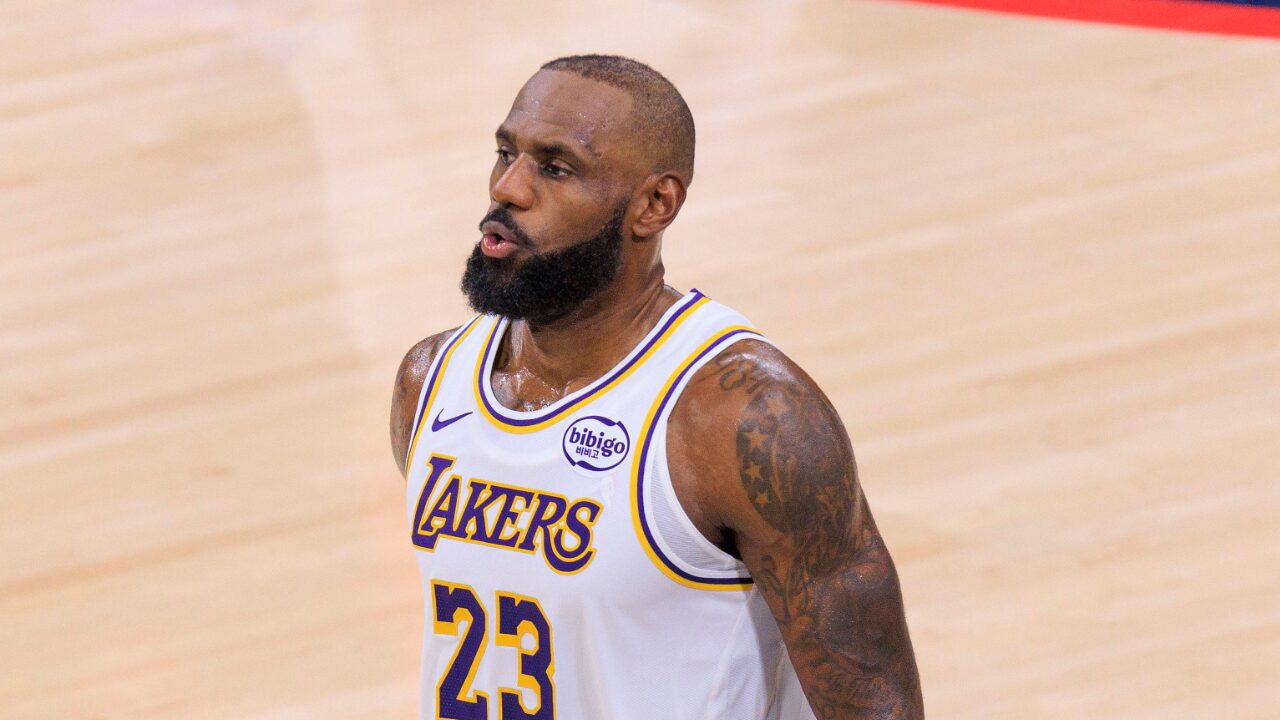
It was already obvious that King James was not in Philly for monetary gain. Now we know that LeBron James will make significantly more money from his brand-new endorsement deal than he will from playing basketball for the Philadelphia 76ers this upcoming season. One of the other big moves he made this offseason was also signing with the prediction-market platform Polymarket. That raised some eyebrows because he’s an active player. However, Front Office Sports just confirmed the nature of the deal.
Watch What’s Trending Now!
FOS reported Polymarket is paying the 4x NBA champion $15 million annually as part of a recently announced multi-faceted partnership. That’s nearly four times his player salary for the 2026–27 campaign.
Under the terms of the deal, James acts strictly as a paid endorser, debunking speculation that he is an equity investor in the company. His promotional role will center on content creation, social media deliverables, and advertising campaigns dedicated exclusively to American football and the NFL, carefully avoiding any direct promotion of NBA basketball.
“LeBron James will make more money from his Polymarket partnership than from playing for the 76ers, Front Office Sports has learned,” Ryan Glasspiegel and Ben Horney reported. “The prediction-market platform is paying James $15 million a year under the recently announced partnership, sources tell FOS… Under the deal, James will focus on promoting football, not basketball.”
Under this deal, James has already released his pick for the NFL’s opening week.
Sources further revealed that sports icons Derek Jeter and Eli Manning, who starred alongside James, Spike Lee, Reggie Bush, and Alexandra Daddario in a viral star-studded commercial, signed smaller endorsement agreements, with several participating celebrities receiving one-time appearance fees.
The financial breakdown highlights a staggering contrast in modern professional sports compensation: James is set to earn $3.876 million from Philadelphia during the 2026–27 season after signing a discounted two-year, $8 million deal with a second-year player option in July.
Consequently, Polymarket is paying the 41-year-old superstar approximately 3.9 times his court salary to promote its platform.
LeBron James didn’t chose money in free agency
The jarring contrast between LeBron James’ off-court business earnings and on-court salary stems directly from his free-agency priorities this summer.
Following weeks of retirement speculation and deep personal reflection after the Los Angeles Lakers’ First-Round playoff exit, James stunned the basketball world by not just joining the 76ers alongside Joel Embiid, Tyrese Maxey, and newly acquired wing Jaylen Brown. He was also stunned by taking a dramatic pay cut.
Addressing his monumental free-agency decision in July, James made it abundantly clear that financial gain played zero role in selecting his next destination:
“This is my last decision. I’m not going for money. I’m not going for family. What am I really playing for at this point? I still want to sacrifice. I still want to work. I still want to grind. I still want to compete, to win and to have a chance at the feeling of winning another championship. I believe I can help make the Philadelphia 76ers a championship team and I am so excited to energize a new fan base and start this incredible journey one last time.”
By accepting less than $4 million annually, James allowed the 76ers front office to maintain critical roster flexibility, granting the all-time leading scorer an opportunity to be on a championship contender roster one final time.
Despite the non-basketball facet of James’ contract, his alignment with Polymarket has sparked instant public backlash.
Industry critics, consumer watchdogs, and fan bases pointed to the glaring irony that prediction platforms spent much of James’ summer taking active bets on his exact free-agency destination, generating over $270 million in total trading volume, including over $40 million on Polymarket alone.
While the NBA currently allows players to endorse federally regulated prediction platforms, provided they do not promote basketball-specific markets, the broader industry remains entangled in legal controversies.
These platforms face several lawsuits in multiple states about regulations and legalized sports betting.
Despite the polarizing background, Polymarket continues to aggressively expand its footprint across sports media.
Yet, as prediction markets vie against rivals like Kalshi and Novig for dominance ahead of the NFL season, James’ $15 million payday underscores how top-tier athletes can leverage global brand power off the floor to subsidize historical title chases on it.