Imago
unlicensed images
Imago
unlicensed images
For all the excitement around record scoring and global expansion, the NBA may be facing a quieter crisis. The biggest threat to the league’s credibility might not be player movement or superteams.
Watch What’s Trending Now!
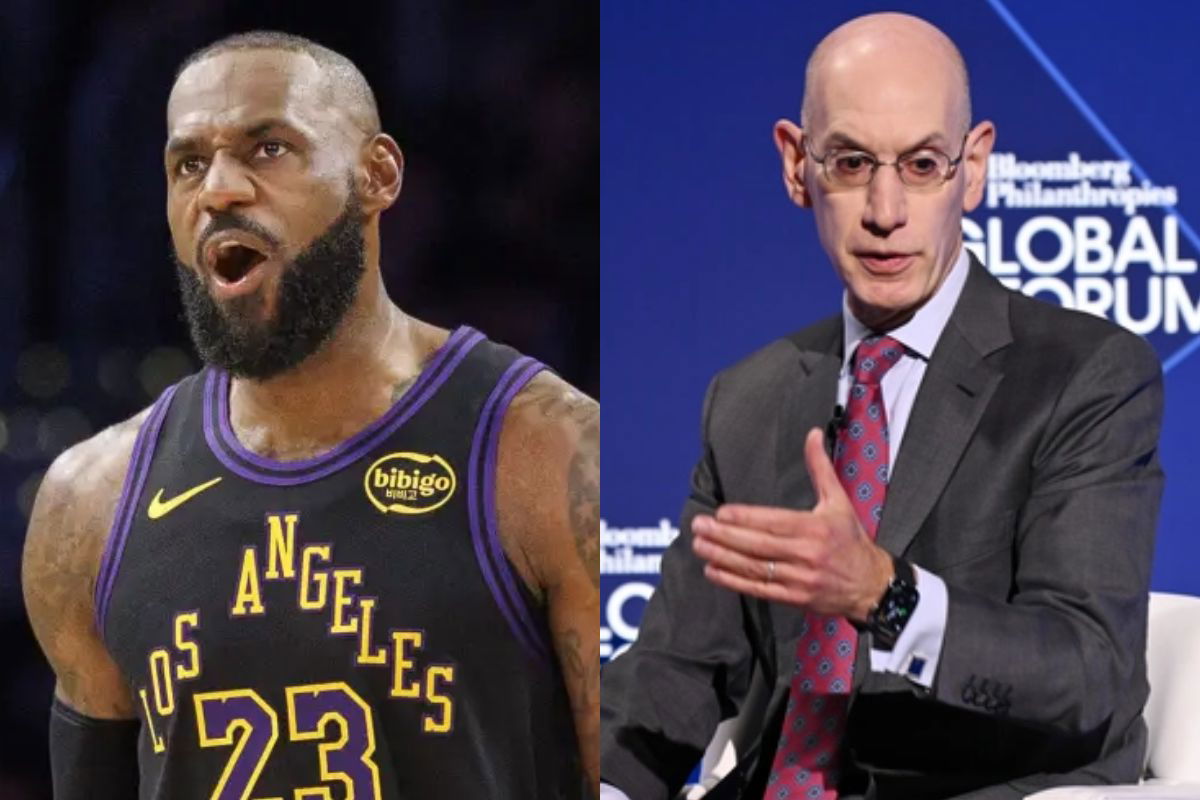
Instead, it could be the whistle. Los Angeles Lakers superstar LeBron James put that issue directly into the spotlight on March 10, 2026. Speaking on the Mind the Game podcast he hosts with Steve Nash, the NBA’s longest-tenured player openly questioned the league’s officiating consistency.
According to James, the problem has reached its worst point. “As a player, it’s so inconsistent the way it’s called,” James said on “Mind the Game,” a podcast the NBA superstar does with Hall of Famer Steve Nash. “And as players, we just want consistency. On any given night, you can have one official telling you one thing, and then another official telling you another thing.”
That frustration did not appear out of nowhere. It reflects a growing tension between players and officials that has become impossible for the league to ignore.
Imago
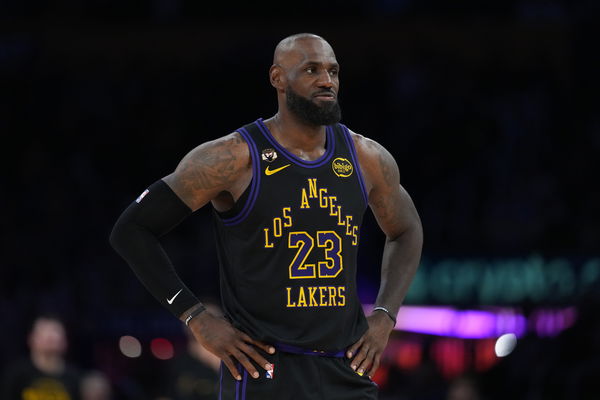
Mar 3, 2026; Los Angeles, California, USA; Los Angeles Lakers forward LeBron James (23) reacts against the New Orleans Pelicans in the second half at Crypto.com Arena. Mandatory Credit: Kirby Lee-Imagn Images
James’ perspective carries unusual weight. He has played through multiple NBA eras across 23 seasons. Early in his career, the league eliminated hand-checking after the 2003-04 season to open up offensive movement and increase scoring.
The rule change transformed the league’s style. However, it also created a faster, more spaced-out game that has become increasingly difficult to officiate consistently. Today’s NBA offenses stretch the floor to extreme distances. Guards attack with gather steps, euro-steps and hesitation dribbles that happen in fractions of a second.
Because of that speed, the traditional three-referee crew is often forced to interpret contact in real time. The result can feel unpredictable to players.
Is today’s officiating hurting the game? @KingJames provides his stance on how it changes on a nightly basis.
Tap into the new ep. out now on Youtube: https://t.co/FNX6V3BMqR pic.twitter.com/o4669KBviX
— Mind the Game (@mindthegamepod) March 10, 2026
“That’s the most frustrating part when you’re out there, and sometimes you can get away with certain things,” he said. “Even defensively, some games you’re allowed to get away with completely bear-hugging guys and holding them, and then two nights later you can barely put your hands on guys.”
A recent example illustrated the issue. During a matchup against the Denver Nuggets in early March 2026, James drove to the rim and collided with Nikola Jokic. The contact sent him to the floor, but officials ruled it “marginal contact” and allowed play to continue.
On another night, the same collision could easily have resulted in free throws. That kind of variance is exactly what players say makes officiating frustrating. The inconsistency also carries real consequences. Dallas Mavericks star Luka Doncic, who frequently argues calls, has accumulated 15 technical fouls this season, leaving him one technical away from an automatic suspension.
Why the Problem Has Bigger Stakes Than Complaints
Officiating debates are not new to basketball. However, the stakes around them are increasing. Commissioner Adam Silver has spent the past decade modernizing the league with initiatives like the Play-In Tournament and the NBA Cup. Those formats intentionally create more high-pressure games throughout the regular season.
When stakes rise, the impact of a single blown call rises with them. In today’s NBA environment, officiating mistakes can directly influence playoff positioning, tournament bonuses and television ratings.
Meanwhile, the league is expanding its relationship with sports betting markets and global audiences. That reality raises a deeper concern about integrity. If fans believe outcomes hinge on inconsistent whistles rather than basketball performance, trust in the product begins to erode.
That is why James’ criticism resonates beyond a single missed call. It highlights a structural issue the league may eventually need to address.
What Adam Silver Could Actually Do to Fix the Problem
LeBron James himself floated one possible solution. He suggested that the NBA could consider adding a fourth referee to help manage the speed and spacing of the modern game.
However, simply placing another official on the floor may not solve the root issue. More referees could create overlapping responsibilities and conflicting interpretations of contact. If each official views physicality differently, adding another whistle might actually increase confusion.
Instead, several other solutions may offer a more realistic path forward. First, the NBA could expand its use of optical tracking technology to automate certain objective calls. Systems similar to Sony Hawk-Eye already help other sports determine boundaries, ball placement and other measurable events with precision.
Applying similar systems to basketball could assist with calls like out-of-bounds touches, goaltending or three-point line positioning. Second, the league could introduce an off-court officiating assistant, sometimes described as an “eye in the sky.” That official would monitor replay feeds in real time and immediately correct clear errors without stopping the flow of the game.
Global soccer leagues already use a comparable system through Video Assistant Referees. Finally, the NBA could standardize how officiating crews communicate their physicality threshold before games begin. “Every crew is different,” James noted. “But if we set the tone and say, ‘This is how we’re going to play,’ you know it from the first two possessions.”
Players are often willing to adapt to physical or whistle-heavy games. The frustration comes when the rules appear to shift from night to night. Commissioner Adam Silver has repeatedly shown he is willing to reshape the league when necessary.
He pushed through new competitive formats. He enforced rules targeting tanking. He modernized the NBA’s media and broadcast model. Now the officiating debate may represent his next major challenge.
The modern NBA moves faster than ever. Offensive creativity and spacing have outpaced the human eye in some situations. If the league wants to maintain trust in its competitive integrity, it may eventually need to combine human officiating with modern technology.
LeBron James did not just complain about a missed call. Instead, he forced the NBA to confront a question it cannot avoid forever. Can the league modernize its officiating system before inconsistency becomes its biggest credibility problem?