
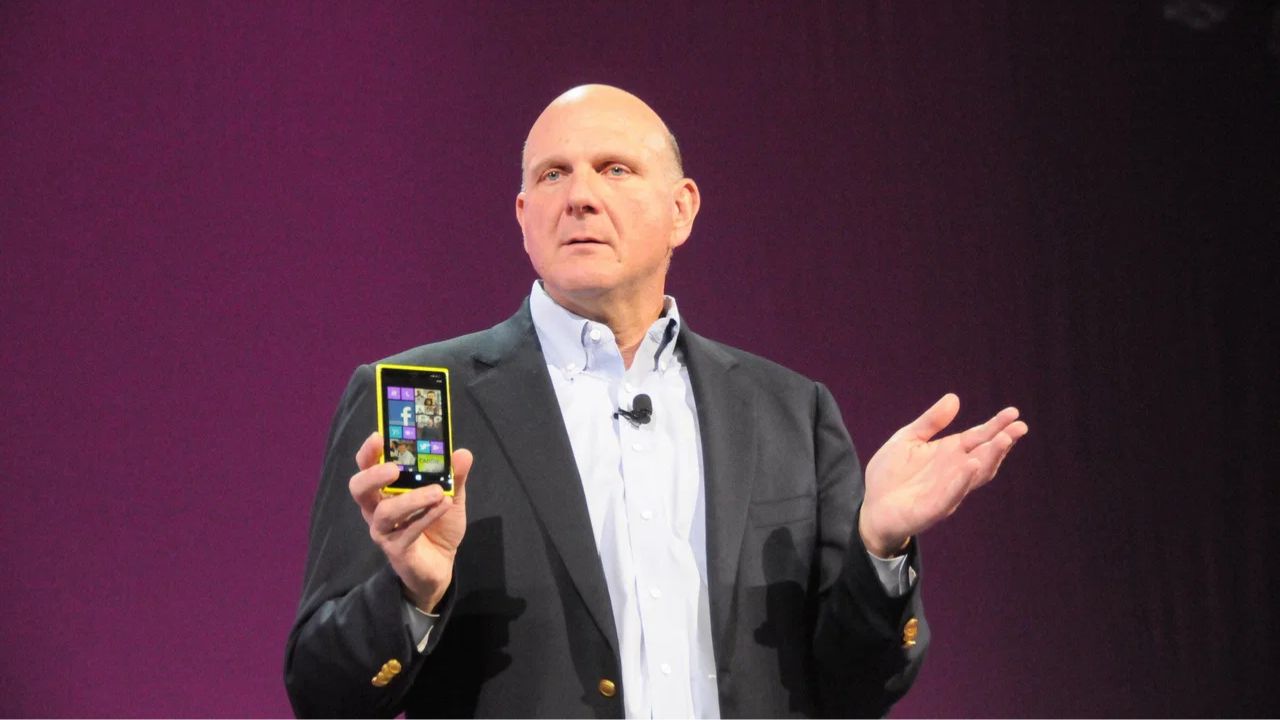
Everyone’s forgetting about something crucial… All eyes have been on the NBA’s historic $30 million penalty on the Los Angeles Clippers and how owner Steve Ballmer reacted. But not enough is being said about what actually accelerated the yearlong investigation. After a league insider pored over Adam Silver and Co.’s findings, it shone new light on how individuals on the inside played a secret, pivotal role in helping sink their own team’s defense.
Watch What’s Trending Now!
Brian Windhorst strongly believes the league’s independent investigation conducted by law firm Wachtell, Lipton, Rosen & Katz, gained the “cooperation” of not just third-party vendors under endorsement tie-ups, but also the Clippers President of Basketball Operations.
“Lawrence Frank, their team president, he handed over notes that he took, making illicit deals with Dennis Robertson six years ago,” Windhorst said on Get Up. “He held the notes for six years and turned them over. And in response, he was given leniency.”
That’s completely true because while Ballmer and President of Business Operations Gillian Zucker received full one-year bans, with Zucker cited for providing false and misleading statements, Frank was handed a reduced six-month suspension without pay.
Investigators noted Frank openly cooperated, recalled key events, took responsibility and was “generally consistent” across interviews, contrasting sharply with the rest of the front office’s posture.
Frank, though, wasn’t the only party that cooperated, and multiple vendors reportedly lined up to cooperate with Wachtell Lipton to avoid straining future business interests and relationships with the rest of the NBA.
“For the last year you’ve heard the word Aspiration said a lot, because that was where this began,” Windhorst continued. “I’m just going to tell you, you can put Aspiration aside. Even the investigators say we don’t find them to be honest brokers, because the guy who’s directing all of it is in federal penitentiary.
“They got cooperation from the other three companies. They didn’t have subpoena power here. But these companies came forward and gave this information because they want to keep doing business with the NBA. Specifically, the scoreboard maker, Daktronics. They want to do business and sell scoreboards for the rest of the NBA. They were highly incentivized to cooperate, and they did.”
Daktronics, which manufactured the Intuit Dome’s Halo-Board and jumbotrons for arenas, was named as a second vendor to give Kawhi the ‘no-show’ deal a month ago. The NBA’s findings confirmed two more commercial entities, Boingo Wireless and Lockton Insurance, were involved. By securing theirs and Frank’s cooperation, Wachtell Lipton no longer needed the defunct green-banking firm Aspiration’s singular cooperation to prove any illicit deals.
The matter, however, doesn’t end after the NBA found out the Clippers had “initiated, facilitated and induced” these companies to enter endorsement deals with Leonard under the pretext of just consultancy. It’s worth knowing why the LA franchise secured these engagements in the first place…
Lawrence Frank’s cooperation uncovered a deep Kawhi Leonard family secret, in turn badly exposing the player as well
The Clippers reel from a huge fine, the loss of five first-round draft picks and internal suspensions to the owner and top executives. Steve Ballmer, Lawrence Frank and Gillian Zucker are also accused of “failing to report” and instead facilitating Kawhi Leonard’s uncle Dennis Robertson’s illegal requests, according to Joe Vardon of The Athletic.
Wachtell Lipton’s yearlong investigation uncovered that Robertson had been “pressing” the Clippers front office for more money since 2019. During the pandemic, Robertson reportedly complained to Ballmer that Zucker was making “introductions” for “bulls— deals,” and that “I have to get paid.”
Investigators cited Frank’s notes as saying Ballmer told Robertson that Clippers staff were “collective workers to try and help [Leonard] achieve his financial goals.”
It led them to find third-party sponsors, including Daktronics, Boingo Wireless, and Lockton Insurance, as additional channels for off-the-books agreements with Leonard, which is against NBA rules.
The Clippers have also been accused of paying out undisclosed sums of money to cover “improper” expenses tied to Robertson and Leonard, “for personal air and ground travel, accommodations, gifts, and tickets without then properly deducting the amounts of these expenditures from Mr. Leonard’s pay [as it was required to do by CBA rules].”
Robertson demanded at least $10 million annually in supplemental income for Leonard. These findings are strangely similar to when he reportedly sought perks, something that Jeanie Buss shut down when the Lakers were pursuing Kawhi in 2019.
The findings prompted Adam Silver to levy some of the most stringent sanctions in professional sports history. Beyond the team’s fines, suspensions, and draft-asset forfeiture, the NBA banned Dennis Robertson from engaging with any NBA team or personnel for five years. Leonard himself was ordered to pay $700,000 in restitution to settle his role in the violations, while the organization will be subjected to an intense five-year league monitoring program.
Silver’s investigation and Leonard himself mentioned he had “no knowledge” about any salary cap circumvention agreements. Investigative journalist Pablo Torre, though, revealed an image of a consent form signed by Leonard himself and Aspiration’s Andrei Cherny, contradicting the veteran’s statement.
Insider Brian Windhorst sarcastically called Leonard an “unmitigated winner” after the investigation alleging the veteran “collected tens of millions of dollars in endorsement deals, which are not permitted by the NBA, and he was fined $700,000 in restitution,” deeming it “better than a Ponzi scheme” and the “greatest investment.”
Meanwhile, despite the paper trail provided by Frank and corporate partners, the Clippers front office has vehemently rejected the NBA’s conclusions. The franchise and Ballmer issued a scathing response, accusing the league’s investigation of being heavily biased and intent on justifying a predetermined narrative.
“We vehemently reject these findings,” the Clippers statement read, vowing to “vigorously challenge these findings and penalties through every avenue available to us and look forward to an ethical and impartial arbitration process.”
While the team attempts to contest the penalties, Frank’s decision to hand over six years of documentation has firmly cemented his role as the internal tipping point in the largest salary-cap scandal of the modern NBA era.