Imago
unlicensed image
Imago
unlicensed image
The message didn’t come from a hospital report or a team statement. Instead, it came directly from Chris Bosh himself, speaking to a camera while visibly recovering. What he described turned an ordinary evening into an emergency within seconds.
Watch What’s Trending Now!
On Wednesday, the Hall of Famer posted an Instagram video revealing he suddenly collapsed at home after feeling numbness in his left leg. Moments later, he woke up covered in blood while his wife called emergency responders. “So I woke up covered in my own blood. It was crazy, it was fast, it was instant. There was no warning.”
That moment is why Bosh now says he feels fortunate simply to still be here.
Top Stories





View this post on Instagram
Bosh explained he had been preparing to go out with his wife before losing control of his body and falling to the ground. He declined to specify the exact medical cause but acknowledged he is still recovering physically. “It was a scary thing, and it came fast… I’m lucky to be alive. Don’t wait to take action.”
Because of the speed of the incident, his reaction afterward focused less on diagnosis and more on awareness. He emphasized how quickly normal routines can change and urged people not to ignore warning signs in their own lives. The episode carries added weight given Bosh’s medical history.
Bosh was named an All-Star 11 times and played a massive role in the Miami Heat’s back-to-back championships more than a decade ago. His role as a stretch big emerged before it became a more widespread trend in the league. However, his NBA career ended after recurring blood clots, including a pulmonary embolism, forced doctors to rule him medically unfit to continue playing in 2016. That background explains why this latest scare immediately drew attention across the basketball world.
Why this matters beyond one incident
Bosh’s experience fits a larger pattern seen in retired athletes whose previous conditions never fully disappear after competition ends. Even years removed from the league, past health risks can remain present without warning.
For Bosh, the episode reinforces a reality he already faced once when doctors advised retirement while he was still performing at an All-Star level. Now, instead of ending a career, the moment reshaped his daily outlook.
He described the event as life-changing, not because of pain, but because of how abruptly it arrived. That distinction matters. Athletes are trained to manage injuries that develop gradually. Sudden medical events offer no adjustment period and demand immediate reaction, which is why his message centered on urgency rather than recovery timelines.
Getty
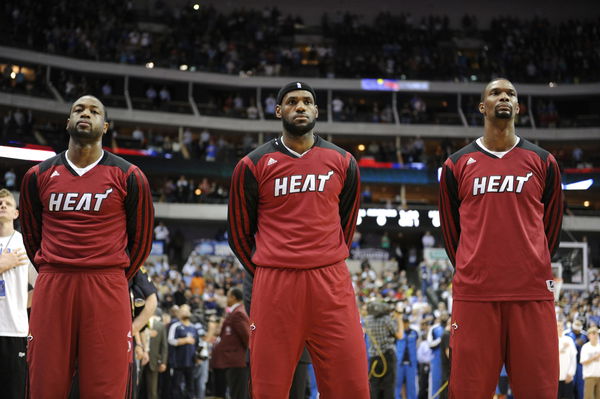
February 18, 2014: Miami Heat shooting guard Dwyane Wade #3, Miami Heat small forward LeBron James #6 and Miami Heat center Chris Bosh #1 observe the National Anthem before an NBA game between the Miami Heat and the Dallas Mavericks at the American Airlines Center in Dallas, TX Miami defeated Dallas 117-106 (Photo by Albert Pena/Icon SMI/Corbis/Icon Sportswire via Getty Images)
Bosh has not announced any ongoing medical complications, but he confirmed he is still in recovery and monitoring his health closely. The immediate focus is stability and prevention rather than returning to any public schedule.
The broader impact is already clear. His warning shifts the story from a single frightening night to a reminder about long-term health after professional sports.
For one of LeBron James’ former teammates, the takeaway is simple and forward-looking. Preparation matters less than response, because some moments arrive without either notice or second chances.
Written by

Edited by

Ved Vaze