Imago
Via LA Times
Imago
Via LA Times
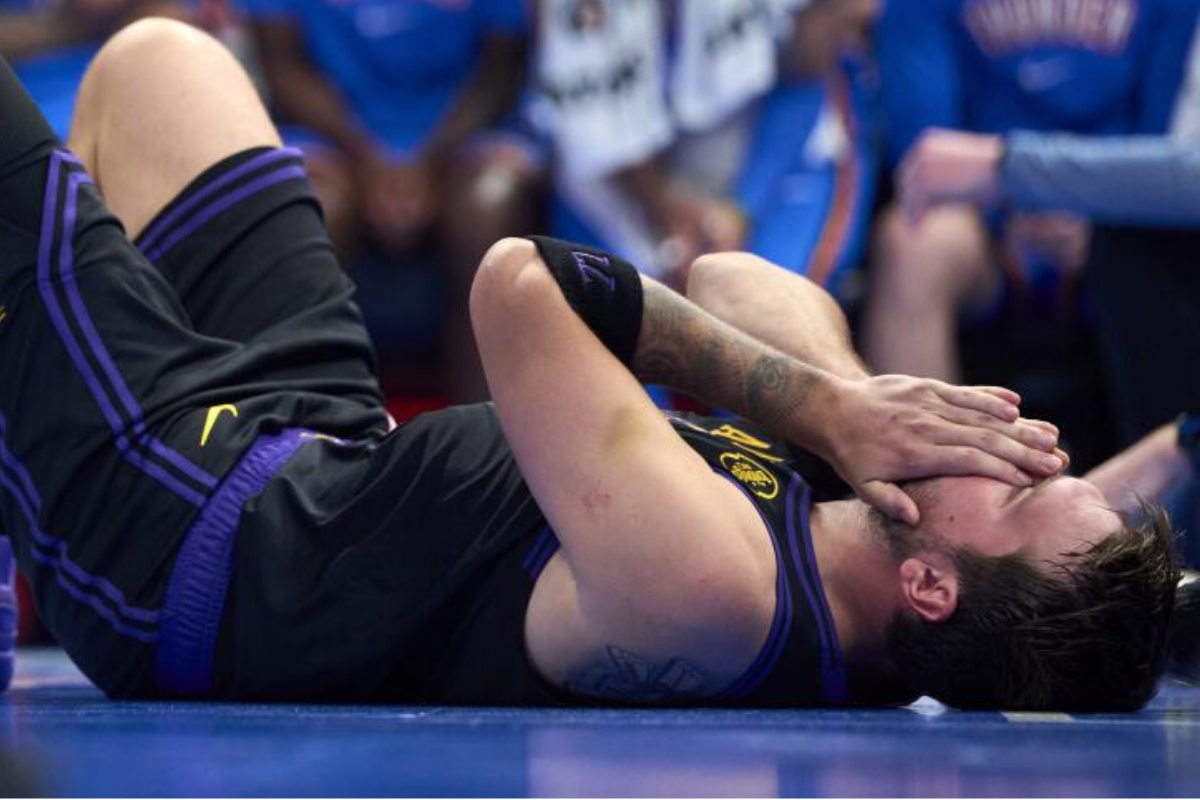
With one awkward twist, Los Angeles Lakers’ Luka Doncic partially tore his left hamstring. Did Doncic’s injury just derail his MVP chances and the Lakers’ title hopes?
Watch What’s Trending Now!
The Lakers officially ruled Doncic out for their five remaining regular-season games after an MRI revealed that he has a Grade 2 left hamstring strain. But what comes next?
EssentiallySports spoke to three outside medical experts for some answers. They offered cautious optimism about Doncic’s return, uncertainty about whether the Lakers can thrive in a first-round playoff series without him and candor on whether the Lakers bear responsibility for playing him in the second half of a double-digit loss to the Oklahoma City Thunder on Thursday.
None of these doctors have worked directly with Doncic or have access to his medical files. All three doctors, however, have worked with patients who have dealt with hamstring injuries.
The roundtable included:
Shaheen Jadidi, primary care sports medicine physician at Endeavor Health
Jesse Morse, sports medicine physician and non-surgical orthopedic specialist
Nirav Pandya, Professor of UCSF Orthopedic Surgery
Editor’s note: The following interviews with Essentially Sports were conducted separately. Each interview has been edited and condensed.
What was your reaction to Luka being diagnosed with a Grade 2 strain in his left hamstring?
Jadidi: “It was definitely disappointing. It’s been an exciting MVP race, and Luka has been in the conversation. So it’s a devastating injury for him this late in the season, his consideration for MVP and how important he is to the Lakers. It’s a shame that this injury might be cutting that short. But this is a non-surgical injury. He should make a full recovery without needing to go under the knife.”
Morse: “Luka has had his fair share of injuries dating back for several years. He’s a dynamic player. But unfortunately, the nature of the game is rough, especially when he plays the volume of minutes that he does. He’s had five different hamstring injuries. We don’t know if it’s been on the same leg and same location. But a new hamstring injury this late in the season is concerning. It’s very hard to return, even if it’s a mild strain.”
Pandya: “I’m definitely concerned with a short turnaround. In general, these Grade 2 strains usually have a three-to-six-week timeframe for players to return from that. When you have a short time period to come back into playoff-level intensity basketball, you really worry about two things. One, can a player come back? Two, even if they come back, how impactful can they be? Those are the two major factors you worry about when you get a hamstring injury like this so late into the season.”
What’s the usual severity of Grade 2 hamstring strains?
Jadidi: “Think of it as a rubber band. Grade 1 is a stretch without structural damage. Grade 2 is more of a moderate tear. The rubber band has a little bit of a tear in it. But the structure itself is still held together. Grade 3 would be a more extensive tear where the entire length or width of the tendon is compromised. Typically, those are the ones that require surgery. As a team doctor for the Chicago Fire, we deal with these very commonly. When we see one, we get an MRI right away to characterize it. Typically, Grade 2 strains usually have a four-to-six-week timeline.”
Morse: “Grade 2s are partial tears. Think of a rope just to have a mental visual. A one-inch wide rope is now half-an-inch wide. You’re asking that half-an-inch tendon to do 100% of the work. This is a minimum three-week injury, but you have to move mountains to get him back in three weeks. Even if he’s sleeping in hyperbaric chambers, doing stem cells and doing around-the-clock physical therapy in red light, he’s going to be at a very high-risk for reinjury. He’s had other hamstring injuries, so he’ll have a lot of scar tissue. The problem is that scar tissue is weaker and less flexible.
Traditionally, that’s what leads to reinjury. When that happens, your body only has the ability to slap new scar tissue. That’s assuming you’re not injecting it with PRP or stem cells. But the problem is this tissue takes a professional athlete about four to eight weeks to heal, never mind that this is someone that is playing most of the game and scoring 33 points a game and just putting up silly numbers. Can he play in three weeks? Maybe. But is he going to play 10 minutes a game? Probably not. So then do you really want to bring back for reinjury if you’re only going to play him for 10 to 15 minutes? So it becomes a very tricky situation. He has been basically carrying the team. So their No. 1 star player is probably not going to be available. When he is, he’s probably not going to be more than 60-70%. This is a tough situation.”
Pandya: “Grade 2 is a blanket term for a partial tear. But there are a lot of degrees of severity in that. A partial tear that occurs lower down in the leg may not involve much of the muscle and doesn’t have as much inflammation. So best-case scenario could be this is like Aaron Gordon’s injury last year [played in Game 7 in second round vs Oklahoma City after suffering Grade 2 left hamstring strain in Game 6]. But a Grade 2 strain that is higher up near the pelvis, that has a lot more inflammation and involves more muscles. There, you’re potentially looking at a six-week injury. Luka had injured this hamstring earlier in the season, and that’s another concern. We did a study looking at this that said that 80% of players that have a hamstring injury get another injury at some point. So maybe he comes back from his hamstring injury, but does he hurt his calf or hurt his knee?
There’s so many factors with this. But the best-case scenario for him would be this: the hamstring injury is lower down and not as severe, he rests up and comes back maybe not as explosive, but is able to shoot and all the things that make him well. He carries that through a series and then feels better in week four. Worst-case scenario is that he is bad and can’t even come back. Or he comes back and aggravates it.
Looking at timetables for other players that had Grade 2 injuries, it’s a useless endeavor. There is so much difference in Grade 2 injuries. Every player is different. Every existing injury is different. So just watching how he’s progressing with the team and what he’s reporting is going to be the biggest thing.”
After Luka’s injury, the Lakers fielded some criticism on why they played Luka in the second half against the Thunder. He was showing discomfort earlier in the game. He’s had other hamstring injuries. And the Lakers were trailing by a lot to open the second half. From your outside medical perspective, how do you look at that?
Jadidi: “Those things all play a role. That’s a perfect storm for any injury in an elite athlete. Every time you exercise, whether you’re a superstar like Luka or a weekend warrior, you’re breaking down your body. With proper rest, nutrition and sleep, your body builds back up. If you’re going into an injury like this with over training or having a high training load, you can have a downward trend. Then you can have the perfect combination of events that Luka had when he was driving to the basket where he rapidly accelerated and decelerated. That just put a lot of eccentric load on the tendon while he was extending. That’s how these injuries happen. He’s been having a season of a lifetime here and had been vying for an MVP spot. It’s easy for an athlete like him to push the limits. Not to say they’re doing anything wrong, but I’m also sure the Lakers are pushing him as much as they can. Everyone has limits.”
Morse: “I was a little surprised that they actually allowed him to return. They were down by a lot when he came back in there. I thought they were playing with fire. They’re locked into the No. 3 seed. One of my favorite phrases is that ‘the greatest predictor of future injury is past injury.’ That’s just the nature of it. That tissue is predisposed to injury. Whether or not that’s the same location as an older injury or a new location, the team knew that this was stressed.”
Pandya: “Unless there is a traumatic event where they’re running full speed and slip, the vast majority of basketball players have a hamstring injury when there are increased workloads. Usually, it’s because they had several days of workload coming in and that hamstring is just waiting to fail. Or there is another injury that they’re compensating for. I think that hindsight is always 20-20. But if you already have a workload and are already dealing with something, that is the setup for a hamstring injury to occur. That’s why you see a lot of these clusters of players having these soft-tissue injuries at the end of the regular season and into the playoffs.”
What do you make of this counterpoint: injuries can happen at any time in sports and the Lakers’ medical staff examined Luka and cleared him to play?
Jadidi: “Typically a sideline assessment like that mainly revolves around ruling out hydration-related injuries or absolutes. Obviously, players like him ultimately have the decision with whether they feel comfortable going back in. You have to take the whole story into account on how the player is feeling. On the sideline, you’re not really getting an MRI to characterize things. You’re going by feedback and examining him. Even mild strains can manifest into injuries like this because you’re compensating in ways that you don’t even realize. You might be exploding not as quite as much into one side. And then that puts more stress on another structure. Anytime you’re playing with a mild injury, you’re at risk of a bigger injury.”
Morse: “The best you can do is provide recommendations to the player. Then they have to make the decision on their own. You take it out of their hands for life-threatening stuff, such as concussions. But for soft-tissue injuries, you say to the player, ‘You know your body better than anybody. Can you go?’ These guys want to play. That’s the nature of who they are. Sometimes, you have to protect them from themselves. Unfortunately, they didn’t here.”
Pandya: “That’s very reasonable. Hindsight is always 20/20. The medical staff often has the players go through their functional tests, asks them how they feel and examines their strength. Based on that evidence at the time, absolutely it’s understandable for him to keep playing. Unless there are objective signs that he’s actually hurt at that point, there are tons of players that have the same thing and then don’t pull their hamstring. We just don’t know how many people there are. Then if it happens to someone, you say, ‘Oh it’s the players’ workload’ when one of the other players on the same team had the same workload. So it’s always easy to point back to that when someone gets injured.”
What’s the usual rehab for a player that has a Grade 2 hamstring strain?
Jadidi: “Typically, these first few days are all about rest and no aggressive stretching or sprinting. Just so the athlete doesn’t get deconditioned, they do some exercises for the core, such as a plank. You progress based on pain level and tolerance. Probably in the next few days, he’ll progressively load the tendon and work on core strength and other parts of the body that are around his hips and hamstring. Then that progresses into stretching and pain-free range of motion. These elite athletes have quite a team around them. Luka probably has a world-class physical therapy team and strength coaches. He probably has access to cutting-edge technologies to accelerate recovery. We even do injections into the affected area with PRP. That is a way to accelerate healing by taking the blood of the individual, spin it down and concentrate it into platelets to jumpstart the body’s healing. Rehab phases usually start with pain control and range of motion. Then you build up strength gradually once you have pain-free range of motion.”
Morse: “They have to go back to the basics. They have to address compensation patterns. They need to allow the hamstring to heal, which takes about two to three weeks. Then they need to start ramping him up so it’s not stressing that tendon. They have to break up all the scar tissue around the area to optimize blood flow and prevent reinjury. They’ll use shockwave therapy. They’ll use red light therapy. They’ll use PEMF (Pulsed Electromagnetic Field). They’re going to throw the kitchen sink, as they should.”
Pandya: “The first three to five days is about getting swelling down and making sure there’s not a lot of inflammation. You’re trying to prevent scar tissue from settling into the area where the partial tear is. The more scar that sets in, the more likely that scar tissue will reinjure in that area. So it’s about getting the swelling down. Then the next phase is getting your mobility back so you’re not stiff. Once you get the mobility back and the pain is under control, then you are trying to get that strength and explosiveness back. That’s where the least predictable part of this is. Some athletes can function with less explosiveness and their hamstring feels fine. For some, this takes a little bit longer.
So for Luka, I think it’ll be once he gets back those first seven to 10 days, how is it feeling and how impactful can he be on the court? One thing working in Luka’s favor is that he’s not necessarily the explosive, go-to-the-basket and vertical kind of player. He’s more about passing and shooting. So if you are going to have a player that is still going to be impactful and can adapt a little bit to how he plays, it’s Luka. The question will be how can that hamstring hold up to sustain stress in a playoff series? But there is a leadup potentially for him to return. It’s just a matter of how his body responds.”
Given the usual timetable, do you expect that Luka’s likely return is if the Lakers are in the second round of the playoffs?
Jadidi: “It’s hard to predict when his individual benchmarks will be reached. Let’s say that in four to six weeks that he has pain-free range of motion, the tendon is scarless and he’s building his strength. The next step will be how much strength is he going to build, how fast and how early do the Lakers want to pull the trigger on him coming back? Let’s say in week two of the playoffs that he has 80% strength, he’d be okay to return to play and able to perform explosive movements without pain. But the closer you get to 100%, that would be more ideal for him to return especially in a high-stake game.”
Morse: “That becomes much more palatable. He’ll have to be smart. He’ll have to not be jumping after balls and pushing it. These hamstring injuries are known to reinjure. By that point, he would be pretty good. If he returned in four weeks, that’s playing with fire. At six weeks, that’s pretty good. Us mere mortals would need eight or 10 weeks. But for him, he’s a high-level athlete. He’s dealt with this many times and knows what he’s doing. It’s just unfortunate. He would probably be okay and be at 80-85%.
If this was mid-season or early season, they would probably hold him for six or eight weeks. But unfortunately, they don’t have that luxury. The playoffs start in two weeks. Can they potentially make it in the first round without him? I don’t know. So that’s where it becomes tricky. If they’re down 0-2 in the first series, do they say, ‘We need you. Can you give us something?’ That’s where it becomes challenging.
Pandya: “That’s probably where you’re looking at. This is one of those things where you are in the seedings plays a role. If they’re going to be knocked out of the playoffs unless Luka plays, then maybe you push for late in the first round just to have a chance. But with the Lakers, they could potentially win this first-round series without Luka. So they can give them that extra time so he doesn’t have to play in an early playoff series and overly exert himself. Then in that second round, that lines up nicely for him to return.”
What are your expectations on Luka’s return?
Jadidi: “The key word is ‘fluidity.’ You have to take things day-by-day and week-by-week. He should listen to his body and get back to when he’s feeling up to it when his strength and tests suggest he can keep up in a playoff-level game. I think that will happen, but I would caution Luka not to rush back into things to try to avoid a bigger injury.”
Morse: “I’m cautiously optimistic, if they can somehow make it through the first round without him. I think there is a decent shot that he returns in the second round pretty well. If they’re struggling in the first round and he has to come back a little early, then they’re in a riskier spot. He’s already at increased risk with coming back early, but they would need him to advance. There is a decent chance he returns. But it depends on how the rest of the team fares. If they can hold it off and advance, then I think there’s a decent chance of a good return. Then maybe this gives them the breath they need to continue to push hard.”
Pandya: “What I think happens is that the Lakers get through this first round. In the second round, I think we’ll see him back. If they’re good about managing his minutes and if LeBron [James] takes on more of a playoff workload and take Luka off the stress of being the main focus of the offense, then I think there is a potential for Luka to feel pretty normal. There is a really good possibility that Luka can ease his way into Round 2. Then he’ll look like normal Luka after that if the Lakers make it that far.
But the tough thing to wrap your head around is that the intensity is always the biggest variable. There’s the game intensity. There’s travel. Does he have to exert himself more and even play more minutes? That’s the unknown with how things are fluid. It’s great to say he’s only playing 25 minutes. But if the Lakers are down seven, they need him to play in the fourth quarter. That’s where the medical staff and coaching staff have to weigh that risk-benefit of ‘We need Luka to play 40 minutes because that’s the only way we’re going to win.’ A hamstring is not a career-ending injury and likely won’t linger into the next season. So at what point do you push the exertion and push the minutes to get that performance out of him? But then what does that mean for his next game? That’s the fluidity with this.
A lot of this stuff unfortunately goes on the player. The medical staff can do tests and assess strength. But Luka has to say, ‘This hurts and this doesn’t feel right.’ NBA players in the playoffs are most likely going to want to play. They may not be necessarily truthful with how they are feeling because they want to be out there. That’s when you see problems arise. That’s the tough thing with these injuries in the playoffs. All of the data is based on the regular season. The playoffs are a different beast. You’re playing at a different intensity level. That’s why you see very few players with soft-tissue injuries come back so quickly when the playoffs happen. That will be the difficult part with managing all of this for him and the medical staff.”
Mark Medina is an NBA insider for EssentiallySports. Follow him on X, Blue Sky, Instagram, Facebook and Threads.
Written by

Edited by

Ved Vaze