
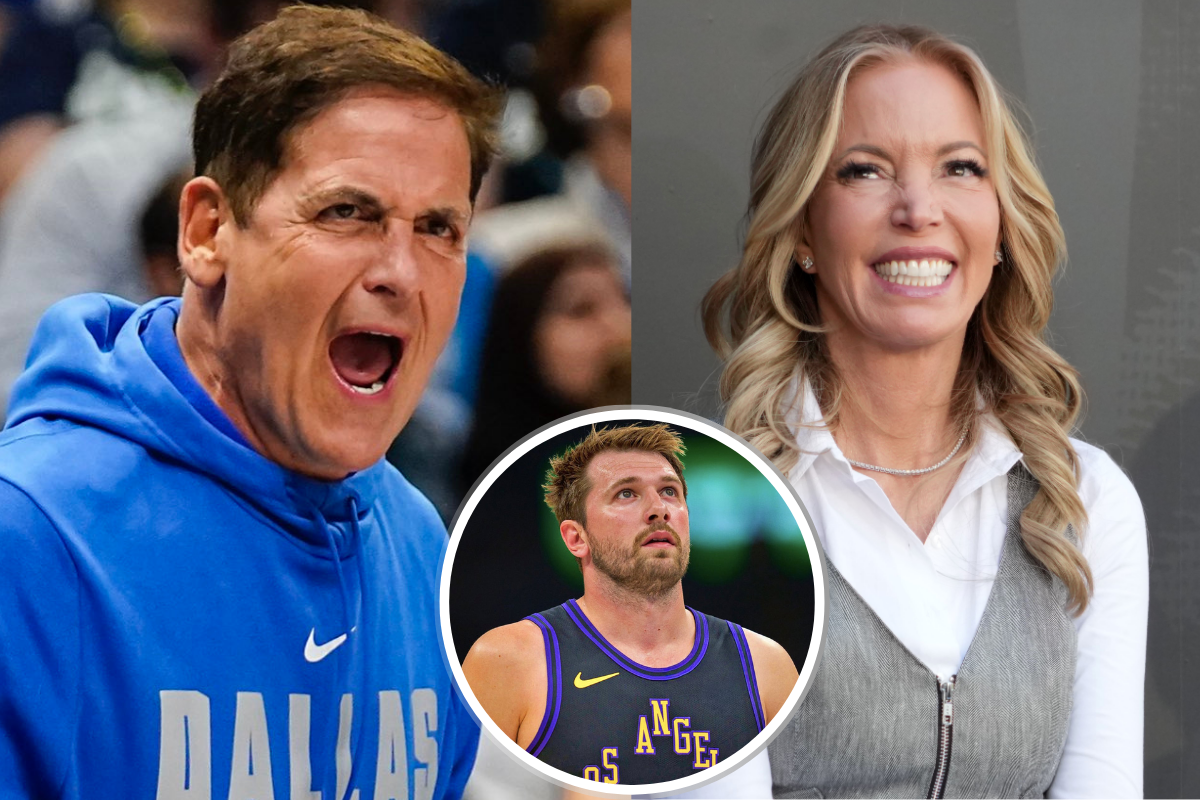
When Rob Pelinka took a call from Nico Harrison in early January 2025, he initially thought the idea was a joke. Harrison proposed a deal centered on Luka Dončić and Anthony Davis. From that moment, the Los Angeles Lakers moved into a tightly controlled, month-long negotiation window that ended with the February 2, 2025 blockbuster. Now, Jeanie Buss is explaining how the deal came together and why complete secrecy was essential.
Watch What’s Trending Now!
Speaking on Pretty Tough with Maria Sharapova, the Lakers minority owner walked through the 24 hours surrounding the deal with a clarity she hasn’t offered publicly before. “In order to get a player of great value, you have to give up a player of great value,” Buss said. “And the Dallas team wanted Anthony Davis. So conversations started, but it was important that they remain private and didn’t leak out to the media, because if a player is made aware of a pending trade, it could crater your entire season.” She confirmed that talks began in early January, the same week the wildfires were consuming parts of Los Angeles, and that she was personally involved in approving the framework, including the first-round pick that accompanied Davis in the package.
The secrecy extended across both organizations. Davis did not know he was being discussed in trade talks and initially believed Dončić would join him in Los Angeles. Buss credited Pelinka for maintaining control of the process. “Rob Pelinka, our general manager, was able to do that all without leaking to the media,” she said. “I think Mark Cuban might have jumped in front of a train to keep it from happening.”
Harrison limited discussions to the Lakers and avoided creating a broader market for Dončić. One factor was contractual leverage. Dončić held a potential 2026 opt-out scenario, which could have influenced negotiations if multiple teams became involved. Within the Lakers, only a small group knew about the talks. Buss confirmed that LeBron James, Dončić, and Davis were unaware. On February 1, the Lakers defeated the New York Knicks at Madison Square Garden 128-112. JJ Redick knew the deal was close but did not inform players during the game. The trade became public hours later.
The Morning That Turned the League Upside Down
The stakes behind the secrecy were tied directly to Dončić’s value. At the time of the trade, he averaged 28.6 points per game for his career, the highest mark for any player traded since Kareem Abdul-Jabbar in 1975. A leak would have introduced competing offers, agent involvement, and external pressure. By keeping negotiations contained, both teams avoided escalation and maintained control over the terms.
Imago
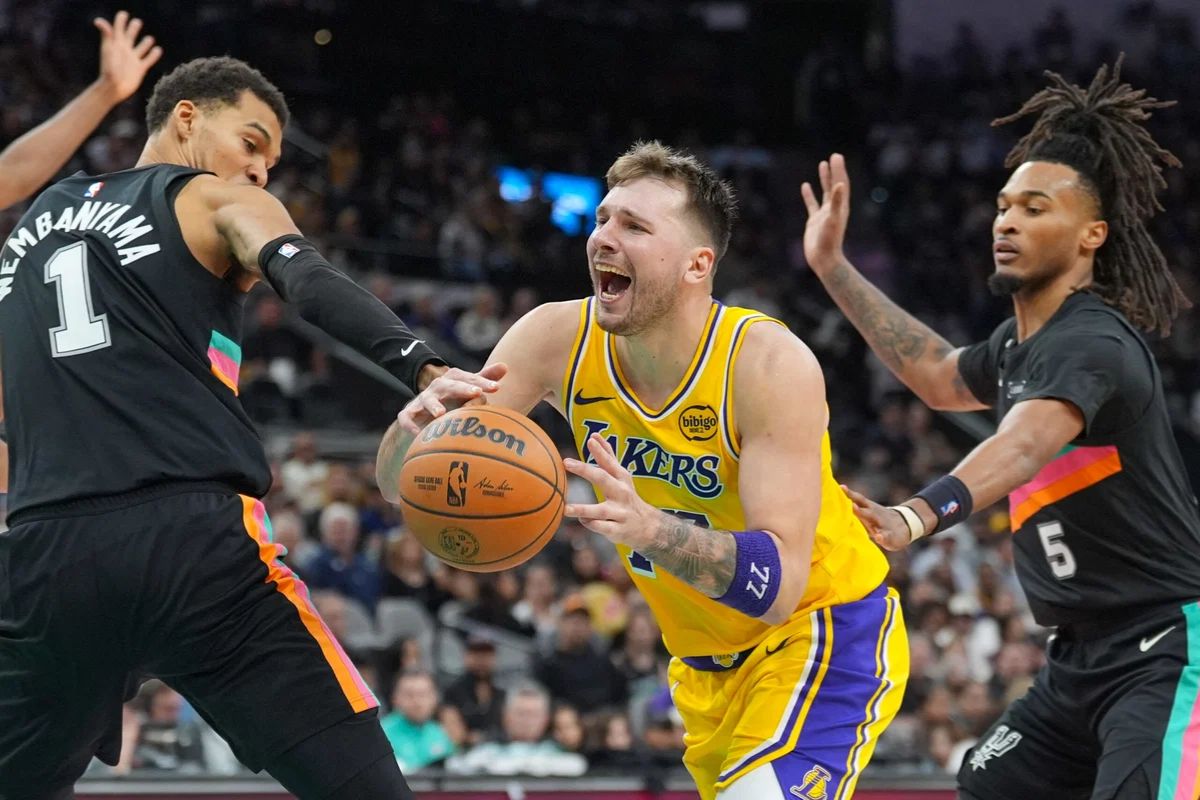
Jan 7, 2026; San Antonio, Texas, USA; Los Angeles Lakers forward/guard Luka Dončić (77) draws a foul in between San Antonio Spurs forward/center Victor Wembanyama (1) and guard Stephon Castle (5) in the second half at Frost Bank Center. Mandatory Credit: Daniel Dunn-Imagn Images
Davis later described the moment he learned about the trade, saying his agent Rich Paul called him with the news. His immediate response was disbelief, followed by asking who Los Angeles had acquired in return. The answer was Dončić, who had just led Dallas to the NBA Finals. On November 11, 2025, the Dallas Mavericks fired Harrison after a 3-8 start to the season, with the trade widely cited as a contributing factor.
Buss’ account frames the trade as a controlled operation built on timing, leverage, and information discipline. From the initial call in January to the announcement in February, the Lakers operated within a restricted communication window that prevented interference. The result shifted the league’s balance of power in a single move.