
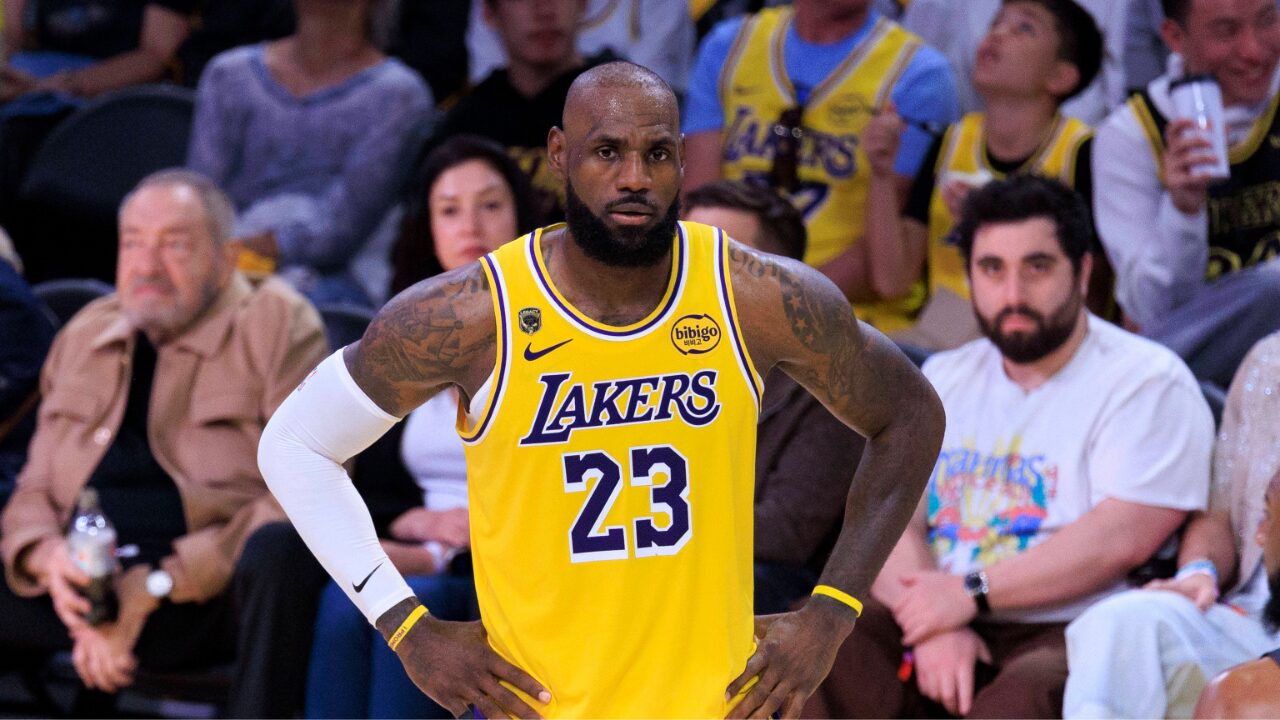
After the Kawhi Leonard-Clippers saga, every NBA player’s off-court deal gets viewed through a different lens now. Under the microscope this week is LeBron James, whose new partnership with Polymarket is raising some eyebrows. On paper, the prediction-market platform is paying four times the Sixers star’s current salary, but there is more to the contract than that.
Watch What’s Trending Now!
Polymarket is reportedly paying him $15 million a year, which is well above the $3.876 million he’s set to earn from the Philadelphia 76ers this season. Fans didn’t waste any time. Social media called it disguised compensation and conflict of interest and joked about the Sixers finding a clever workaround. But the Dan Le Batard Show wasn’t backing this sentiment.
“When you see LeBron James now, I think one of the biggest stories of the day today is, wait a minute, LeBron makes how much beyond his salary?” the podcast host said. “Just sort of on the side in his career now because they’ve opened up the gambling oil wells. And of course, if Kawhi Leonard and Uncle Dennis think they’re worth that from Ballmer, what do you think LeBron thinks he’s worth on the side when he’s, you know, every city he goes to, he improves the city’s economy?”
The timing is especially notable after the NBA found that the Clippers violated salary-cap circumvention rules in their dealings involving Leonard and off-court income opportunities. The league ultimately stripped Los Angeles of five first-round picks, fined the team $30 million, suspended Steve Ballmer for a year, and fined Leonard $700,000. But the co-host on the Le Batard show sees a key difference between the two situations.
“But I think the big difference is, number one, LeBron could have signed for a gajillion dollars in LA or the minimum in Philly or here or Cleveland,” said Amin Elhassan. “That deal was always going to be available for him. There’s no way a brand would say, I don’t know, LeBron for $15 million, I’m not sure, right? That’s number one.
“And number two, he starred in an ad. And every time anyone says anything about any player getting paid on the side by a company or a brand, oh, what about that one? You can’t say that because, A, Quiet Leonard is not the level name stars LeBron, but B, he didn’t do anything and that was the end all, be all.”
LeBron James actually did the sponsorship work. He’s in the Polymarket commercial, right alongside Eli Manning, Derek Jeter, and Spike Lee. The bigger difference is that Leonard’s arrangement with Aspiration involved zero promotional work.
No ads, no appearances, just a check tied to a company with financial ties to Clippers ownership. The eye-opening truth is that LeBron’s deal differs from Kawhi’s because it involves actual promotional work.
NBA insider Brett Siegel recently explained why deals like LeBron James’ could become a talking point around salary-cap rules. He said the current Polymarket agreement does not interfere with those rules but warned that a side deal could theoretically create a pathway.
“A player could take significantly less on a contract knowing they have a potential sponsorship lined up to forgive $10M+. Player then goes to team to let them know they’ll sign for less due to said side deals. Calls are made, and it’s done.”
There is no public evidence that LeBron James’ Polymarket agreement was arranged by the 76ers or that it was used to influence his contract.
The reporting instead describes a commercial endorsement with defined promotional obligations. Still, the Kawhi Leonard case has changed the context around these conversations.
Bron has a lucrative brand partnership, an NBA contract worth significantly less than that partnership, and a commercial role that Polymarket says is focused on football.
FOS also reported that his deal is strictly an endorsement, with no equity stake and no reported connection to the Sixers front office.
So, the circumstances surrounding LeBron James’s recent deal separate it from the conduct punished in the Leonard-Clippers case.