
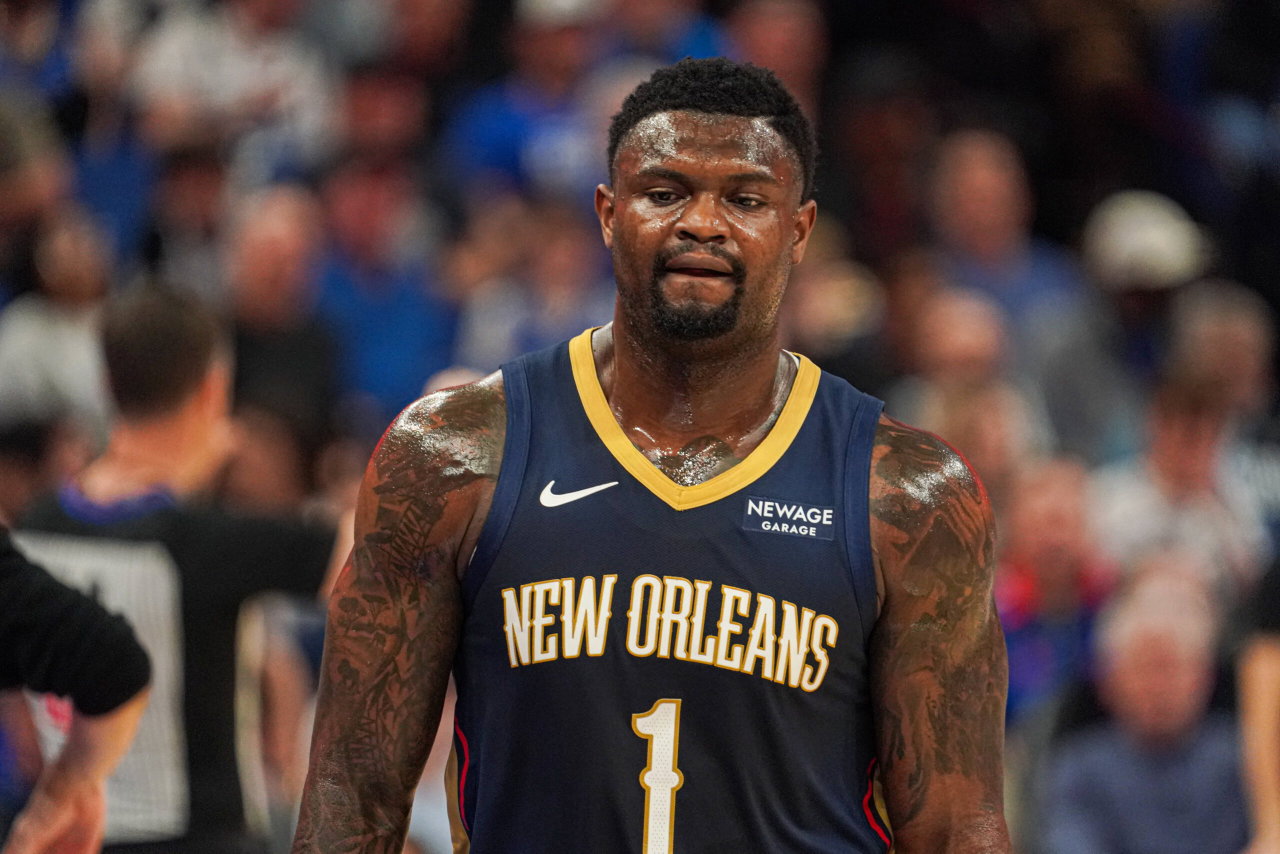
Jordan Hawkins was supposed to be a part of the Pelicans’ future. The No. 14 pick in the 2023 draft arrived in New Orleans after a national championship at UConn, flashed as a rookie, and looked like a piece the franchise could develop. But three years later, he is gone. And for the fans, it’s proving to be a difficult pill to swallow.
Watch What’s Trending Now!
Shams Charania reported that the Pelicans are sending Jordan Hawkins and Micah Peavy to Memphis, along with a future second-round pick and a second-round pick swap. New Orleans will receive AJ Johnson and veteran Taj Gibson in return. Now, on the surface, it looked like a routine offseason deal. But dig deeper, and this really wasn’t about Hawkins at all.
Turns out that the Pelicans had been working towards this particular trade for weeks now. They were trying to create financial room for their two-year, $16 million target, Bennedict Mathurin. But they had a problem, as NBA insider Marc Stein reported on July 23.
The deal couldn’t go through until AJ Johnson’s contract became eligible to be aggregated after his July trade to Memphis. That two-month restriction expired this week, finally allowing the Pelicans and Grizzlies to complete the deal. And Bobby Marks’ cap breakdown shows why the Pelicans were willing to wait.
Hawkins is owed roughly $7 million and can become a restricted free agent in 2027, while Peavy has a team option that rises from about $2.1 million to $2.7 million. Johnson’s salary is $3.2 million, while Gibson is owed roughly $3.8 million, none of which is guaranteed.
Those numbers become more important when you view it against New Orleans’ cap situation. The Pelicans had been operating roughly 7.4 million below the first apron and $5.8 million below the luxury tax line. Mathurin’s first salary is expected to be around $7.8 million, and it leaves New Orleans in a need of additional room so they can complete the two year, $16 million deal without crossing either threshold. The Hawkins deal made it possible.
Once it cleared, Stein reported that the trade unlocked nearly $6 million in cap savings for New Orleans, savings the Pelicans needed to complete their pursuit of free agent Bennedict Mathurin.
The 24-year-old averaged 17.6 points, 5.4 rebounds, and 2.4 assists in 54 games last season between the Indiana Pacers and Los Angeles Clippers. New Orleans probably sees him as a potential long-term piece. For a lot of Pelicans fans, the trade wasn’t really about cap sheets; it was about watching a former lottery pick get moved for spare parts.
Fans Mourn What Jordan Hawkins Was Supposed to Be
One fan summed up the mood bluntly: “I really thought Jordan Hawkins was going to be such a solid role player in that 2023 Draft.”
That expectation isn’t unreasonable. He shot 38.8% from three during his final college season and was expected to become a reliable perimeter option for New Orleans. But his role fell suddenly last season. He simply averaged 5.1 points in 13.6 minutes across 51 games and shot 34.8% from three. Moreover, the crowded backcourt made consistent playing time difficult to find for him.
The reaction to the return package wasn’t much warmer. One fan pointed out something that’s technically accurate and still jarring. “AJ Johnson is 21 and has already been traded four times.”
The math holds up. Milwaukee drafted Johnson 23rd overall in 2024, then shipped him to Washington that same February as part of a four-team deal. From there, he moved to Dallas, then to Memphis, and now to New Orleans — four trades before he’s played two full NBA seasons. It’s less a reflection of Johnson’s talent than of how teams treat non-guaranteed rookie-scale contracts: as flexible ballast to move whenever the numbers need to work.
Some fans are already looking past this trade entirely. One account framed it as the opening move in something bigger:
“The Pelicans now have the necessary space to sign Bennedict Mathurin to their reported offer. Once Mathurin is officially renounced and signed by New Orleans, we’ll probably see the Kawhi Leonard trade go through.”
That part is worth treating with real caution. Unlike the trade itself, confirmed by Charania, Stein, and Marks, all established NBA reporters, there’s no comparable reporting connecting this deal to a Kawhi Leonard trade. It’s speculation from a fan account, not a sourced report.
As front offices get more sophisticated about roster construction, expect more trades like this one deals where the players moving matter less than the math that made the move possible in the first place.