
The NBA once made an example of the Minnesota Timberwolves when it stripped the franchise of multiple draft picks in 2000 over Joe Smith’s under-the-table contract. That punishment established a firm stance against salary-cap circumvention, and more than two decades later, a new situation has sparked similar concerns across the league.
Watch What’s Trending Now!
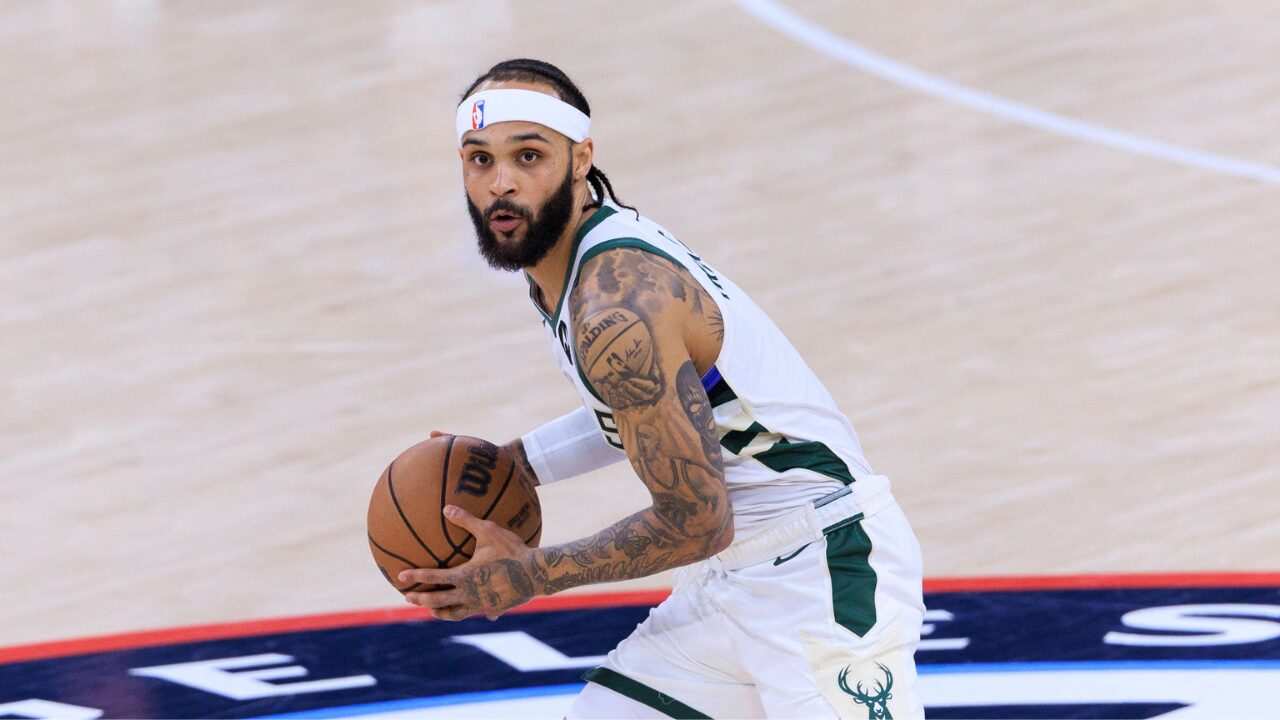
ESPN insider Shams Charania reported that the NBA has opened an investigation into the Milwaukee Bucks’ handling of Gary Trent Jr.’s contract. “The NBA is probing the signed $64 million free-agent deal for Gary Trent Jr. with the Milwaukee Bucks, per a league spokesperson,” Charania noted, immediately putting the deal under a league-wide spotlight.
The scrutiny centers on whether Milwaukee and Trent’s representatives reached an understanding before he signed a series of below-market contracts. Trent first joined the Bucks on a veteran minimum deal worth $2.6 million, then agreed to a two-year, $7.5 million contract. After the team secured his Bird Rights, Milwaukee followed up with a fully guaranteed four-year, $64 million extension, a sequence that has raised eyebrows around the league.
Marc Stein had already pointed to growing skepticism before the investigation became official. Writing on his Substack, Stein described “copious amounts of external noise” surrounding the situation, calling the progression of Trent’s deals “quite curious” given his performance in the 2025-26 season, leaving many to wonder how the league will ultimately respond.
The size of the contract was always going to raise eyebrows because Trent had one of the least productive seasons of his career. The 27-year-old averaged just 8.1 points while shooting 38.7% from the field and 36.0% from the 3-point line, his lowest scoring average since his rookie season. Despite those numbers, Milwaukee committed $16 million annually to keep him.
The Athletic’s Sam Vecenie was among the loudest critics of the agreement, saying, “The NBA should probably take a look at what is a truly nonsensical contract here.”
The insider also questioned the unprecedented nature of the deal, asking, “What other player in the past has agreed to sign for the minimum one year, gone on to have his worst season in seven years where he was a below-average player by any standard, and then received 5x as much money in free agency the following year?”
Here’s what the official 2023 CBA Agreement’s Article XIII, Section 2 states:
(a) At no time shall there be any agreements or transactions of any kind (whether disclosed or undisclosed to the NBA), express or implied, oral or written, or promises, undertakings, representations, commitments, inducements, assurances of intent, or understandings of any kind (whether disclosed or undisclosed to the NBA), between a player (or any person or entity controlled by, related to, or acting with authority on behalf of, such player) and any Team (or Team Affiliate)
(i) concerning any future Renegotiation, Extension, or other amendment of an existing Player Contract, or entry into a new Player Contract.
For now, the NBA has not charged either the Bucks or Trent with any violations. The investigation will assess whether Milwaukee correctly used Trent’s Bird Rights. League officials are expected to review communications between the Bucks, Gary Trent Jr., and his team.
One detail that could prove significant is Charania’s report that “at least one team” explored a sign-and-trade for Trent “at around the same type of number.” If the NBA confirms that interest was genuine, it could strengthen Milwaukee’s argument that Trent’s $64 million contract reflected his market value.
NBA reporter Grant Afseth’s reaction to that was different, tweeting, “Having documented interest, whether truly legitimate or not, is advantageous in the event of an NBA investigation.”
Afseth questioned why the interested team was unidentified, saying, “Not naming the supposed interested team’s name is suspicious at a minimum. It suggests an executive did not want their team’s name attached to the reported interest, which should raise questions about whether the interest is legitimate or was done as a favor.”
However, when the lucrative contract was initially signed, The Athletic reported that rival executives “anticipated” the Trent deal coming for months. Many reportedly predicted that the player would be “handsomely” rewarded for signing with the Bucks at a lower rate previously, despite a strong first season.
In case you’re wondering, Trent averaged 11.1 points on 43% shooting with a strong playoff display in his first Milwaukee year (2024-25), but went on to only sign a two-year $7.5 million contract. And as per his newest contract, which is under investigation, he will make more than double his previous salary.
The Bucks front office utilized the Early Bird rights clause, which gives franchises the chance to re-sign players to a first-year salary up to 175 percent of their previous salary or 105 percent of the league-average salary in the previous season, whichever is greater.
However, these rights are only granted after a player has spent two consecutive seasons with a franchise, without leaving as a free agent or being waived. So, it is clear that Trent could not have signed his current contract with Milwaukee before this summer.
On the other hand, at the center of the situation lies one key question: did Milwaukee and Gary Trent Jr.’s camp plan this sequence in advance? If the league finds no proof of salary-cap circumvention, the inquiry will likely close without consequences, allowing the contract to stand and shifting attention back to the court.
If investigators do uncover evidence of a prior arrangement, the consequences could escalate quickly. The Bucks could face fines, forfeited draft picks, or disciplinary action against team executives, along with any additional penalties outlined in the Collective Bargaining Agreement, which would significantly raise the stakes for the franchise.
The league also holds the authority to void or restructure contracts tied to circumvention and remove the associated cap exceptions. There is no indication yet that Trent’s deal faces that level of risk, but the mere possibility adds another layer of intrigue to the investigation.
The situation inevitably draws comparisons to Joe Smith’s case in 2000, though the distinction comes down to proof. That precedent continues to loom large whenever questions of cap manipulation surface, keeping this case firmly in focus.
In Smith’s case, the NBA uncovered documented evidence of a secret agreement, which led to severe penalties for Minnesota. The league stripped the Timberwolves of five first-round picks, fined the organization $3.5 million, and suspended owner Glen Taylor, setting a benchmark for how harshly such violations can be punished.
The plan itself followed a calculated path. Minnesota signed Smith to a series of low-value one-year deals before intending to use his Bird Rights to secure an $86 million contract. Suspicion deepened when Smith declined an $80 million extension from Golden State, a decision that ultimately helped expose the arrangement and still serves as a cautionary tale today.
As of now, no evidence has surfaced in Trent’s case, and the league’s findings will ultimately determine the conclusion of this situation.