
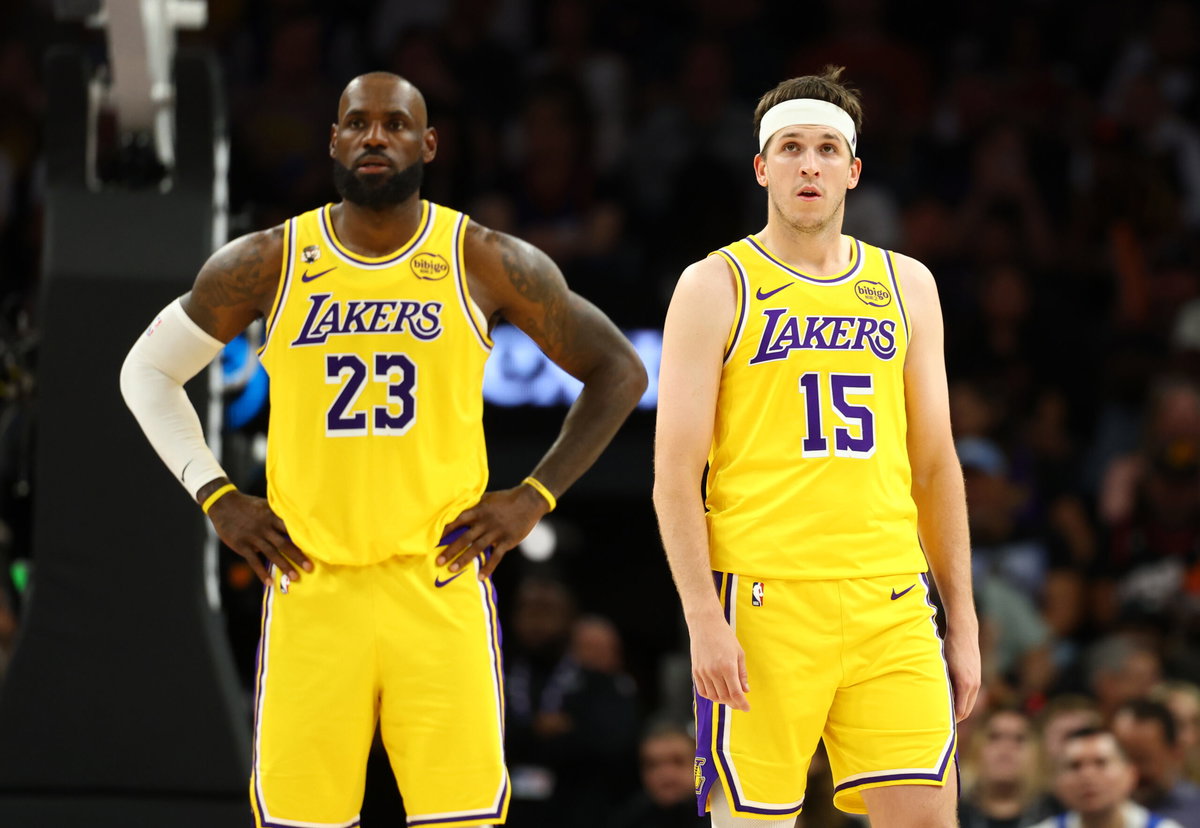
The Crypto.com Arena was ready for the script.
Under three minutes left in Game 5, the Los Angeles Lakers had just ripped off an 11-1 run, the crowd was on its feet, and the ball was exactly where it had lived for two decades, in the hands of LeBron James. Everyone knew what was coming next. And then, just like that, it didn’t.
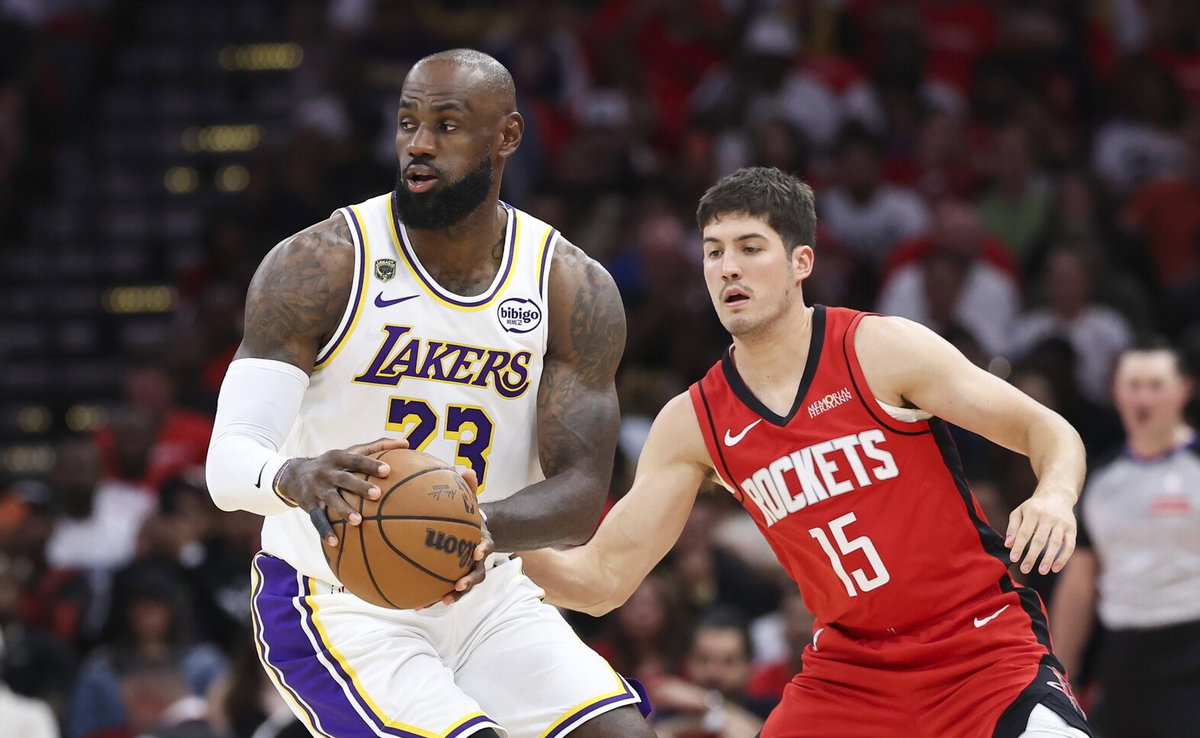
At the 2:20 mark, as LeBron tried to reset the offense, Reed Sheppard darted in, stripped him clean, and took off the other way for a momentum-killing dunk. The building didn’t erupt. It froze. What should have been a takeover moment turned into something far more uncomfortable.
It felt like a warning.
Because this isn’t about one possession, or one turnover, or even one game, it is about something the Lakers are slowly being forced to confront in real time. The best version of this team might not have LeBron as the primary closer anymore. This is not about replacing him. It is about extending him.
The Lakers still had a chance after that turnover. That is what makes the sequence sting more. They had clawed back. They had life. They had momentum in a playoff game that could have closed out the series. And yet, after that strip, everything unraveled just enough to matter.
Imago
Apr 26, 2026; Houston, Texas, USA; Los Angeles Lakers forward LeBron James (23) controls the ball as Houston Rockets guard Reed Sheppard (15) defends during the first quarter during game four of the first round of the 2026 NBA Playoffs at Toyota Center. Mandatory Credit: Troy Taormina-Imagn Images
That single play turned a one-possession game into a two-possession deficit. It shifted the emotional energy in the building. More importantly, it exposed something deeper than just execution.
It exposed how predictable the offense can become in those moments.
For years, defenses reacted to LeBron. In 2026, defenses are increasingly comfortable loading up early and forcing tougher looks. That half-second difference, barely visible in real time, is everything in playoff basketball. Younger defenders like Sheppard are not waiting anymore. They are attacking. And once that shift happens, the entire late-game ecosystem changes with it.
The Numbers Are Pointing Somewhere Else
The eye test still leans toward LeBron. That is instinct. That is legacy. That is two decades of muscle memory.
The numbers, however, tell a very different story. At the same time, the gap is not just about volume. It is about how those possessions are being used.
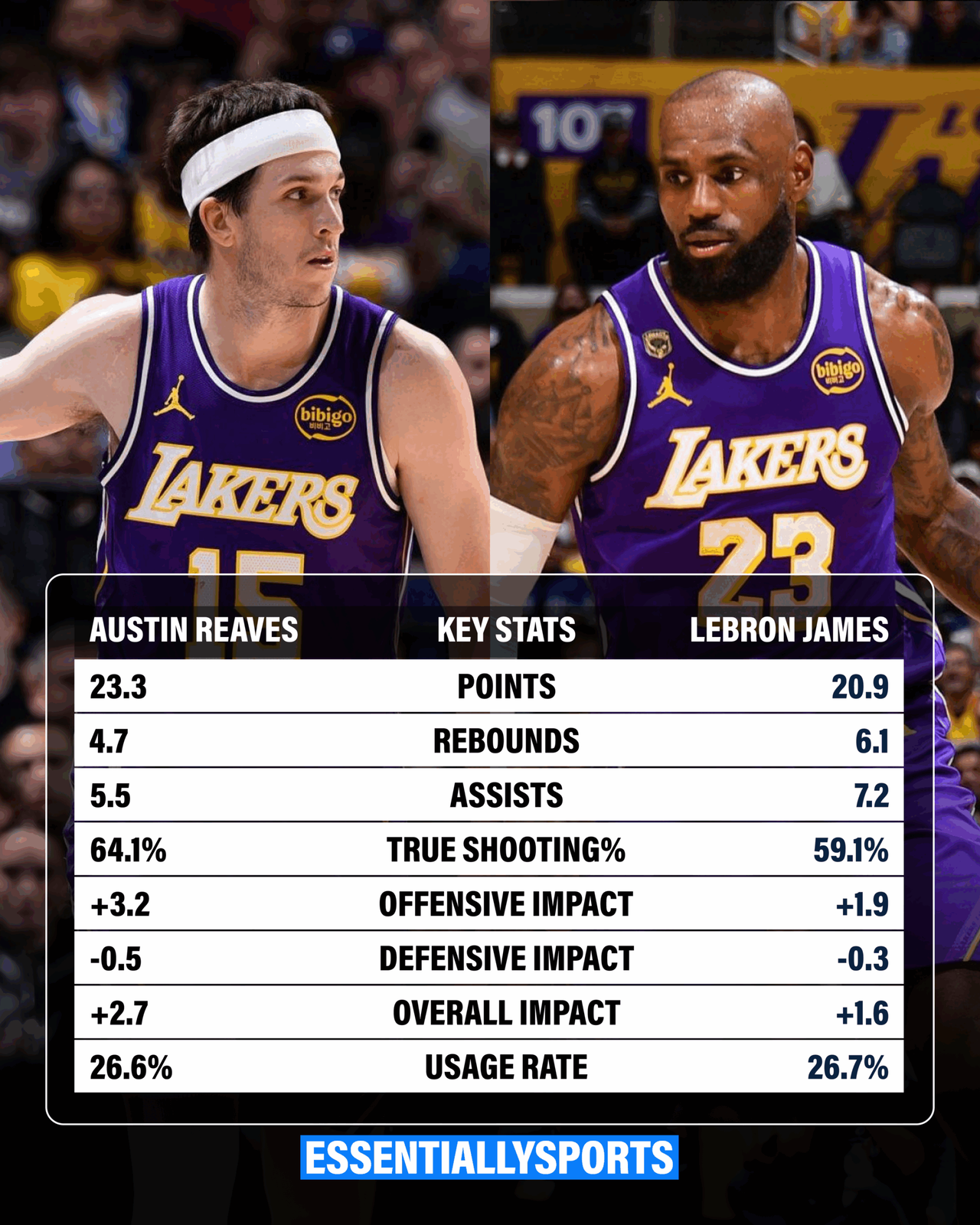
The gap between LeBron and Austin Reaves is noticeable and increasingly relevant.
Over the full 2025–26 season, the difference is real, just less dramatic than social media might suggest. Reaves posted a 64.1 percent true shooting percentage, compared to LeBron’s 59.4 percent, while operating at a slightly lower usage rate. LeBron, meanwhile, still carried one of the heaviest offensive loads on the roster, especially late in games, which naturally comes with tougher shot quality and higher turnover risk.
Imago
austin lebron
So while the exact clutch numbers vary depending on how you define the sample, the trend is consistent. Reaves has been the more efficient scorer, while LeBron remains the higher-volume creator.
That last line matters more than anything. LeBron still dominates the ball late. Reaves produces more with less of it. Because of that, every possession the Lakers run through LeBron right now carries more risk than it used to. Meanwhile, every possession through Reaves carries more efficiency than most people realize. At some point, that tradeoff becomes impossible to ignore.
And it is not just individual efficiency. It shows up at the team level, too.
When Reaves is on the floor, the Lakers post an offensive rating of 119.4, compared to 116.6 when he sits. With LeBron, the picture is more complicated. The offense still scores efficiently at 119.2, but lineups without him have produced higher offensive outputs in certain stretches, and the team’s net rating improves when his on-ball load is reduced.
In fact, combinations featuring Reaves as a primary initiator alongside other creators have consistently ranked among the Lakers’ most efficient lineups this season. However, the issue is not that LeBron is no longer great. It is that the way he creates offense has changed. In crunch time, a larger share of his attempts now come from the perimeter compared to earlier stages of his career. His drives have declined compared to even two seasons ago.
That changes how defenses guard him. Instead of collapsing in panic, teams like the Houston Rockets are loading up early, crowding space, and daring him to settle. They are not reacting to downhill pressure anymore. They are anticipating it.
Players like Tari Eason have been central to that shift. His length and activity allow Houston to crowd driving lanes, deny clean catches, and force LeBron further from the paint. Instead of collapsing late, the Rockets load help early, rotate before the drive even happens, and live with contested jumpers.
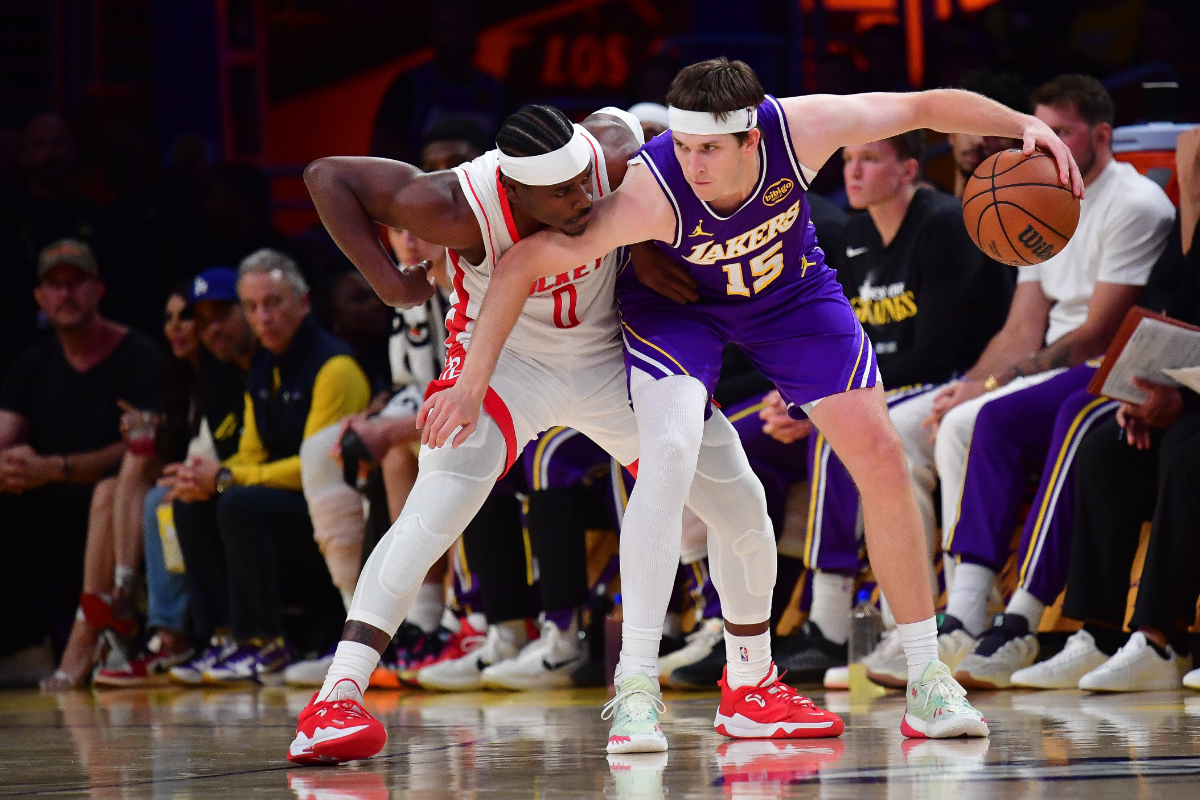
Meanwhile, Reaves flips that dynamic completely. He does not overpower defenses. He irritates them. He slows down, speeds up, changes angles, and forces contact at exactly the right moments. He turns slightly broken defensive possessions into free throws, rotations, and chaos.
That difference is not accidental. It shows up in how each player creates offense. Reaves has thrived as a pick-and-roll ball handler, using pace and angles to force rotations rather than relying on burst. His efficiency and free-throw generation come from constantly putting defenses in compromised positions.
LeBron, meanwhile, still creates at a high level, but more of his offense now starts from the perimeter, which allows defenses to load up earlier and stay organized.
“Reaves doesn’t break defenses… he annoys them into mistakes.”
Game 5 was the perfect example. He shot just 4 of 16 from the field and still finished with 22 points. Why? Because he got to the line 13 times and converted 12 of them.
That is not pretty basketball. That is winning basketball. And in the playoffs, those are not the same thing.
What the Lakers Are Actually Telling You
Meanwhile, the shift is not happening only on the court. It is also showing up in how the team talks. LeBron has been more measured in how he addresses the workload this season, often emphasizing collective responsibility as the roster deals with injuries and shifting roles. That is not frustration. That is acknowledgment.
Reaves, on the other hand, has steadily grown into a more aggressive role, with the coaching staff encouraging him to initiate offense and stay assertive when opportunities present themselves.
And JJ Redick has not hidden his philosophy either. “You have to kill them.” That line is not about emotion. It is about execution. It is about putting the ball in the hands of the player most capable of generating points consistently when everything tightens.
Right now, that player looks a lot like Reaves.
Imago
Credits: IMAGN
Still, let’s be honest. If you need one possession to save everything, trusting LeBron still feels right. He is the smartest player on the floor. He sees passing angles no one else does. He has built a career on delivering in moments exactly like these.
That does not just disappear. And yet, even with all that, the math still leans the other way. Because the version of LeBron that dominated those moments also had fresher legs, more burst, and the ability to collapse entire defenses by himself. That version does not show up every possession anymore.
That is not criticism. That is reality. Relying on LeBron as the primary closer in 2026 is like running a high-performance system on aging hardware. It still works in flashes. But the longer you push it, the more cracks start to show.
Reaves does not carry that burden. He plays freer, faster, and cleaner. And because of that, he fits what the Lakers need right now, not what they needed five years ago.
The Real Solution Isn’t What You Think
Because of that, this is where most people get it wrong. This is not about taking the ball away from LeBron. It is about changing where the possession starts. Let Reaves initiate. Let him collapse the defense. Let him force the first mistake. Then let LeBron do what he might now do better than anyone in the league, finish the play.
As a cutter. As a secondary playmaker. As the smartest release valve in basketball. Because a rested, off-ball LeBron is far more dangerous than an exhausted, predictable on-ball LeBron. That shift does not diminish him. It unlocks him.
We have seen this before. When Tim Duncan aged, the San Antonio Spurs did not force him into the same role. They handed the offense to Kawhi Leonard and let Duncan anchor everything else. The result was a championship.
On the flip side, Kobe Bryant struggled late in his career when the offense refused to evolve around his physical decline. The usage stayed high. The efficiency did not. The timing of that decision matters more than ever.
Imago
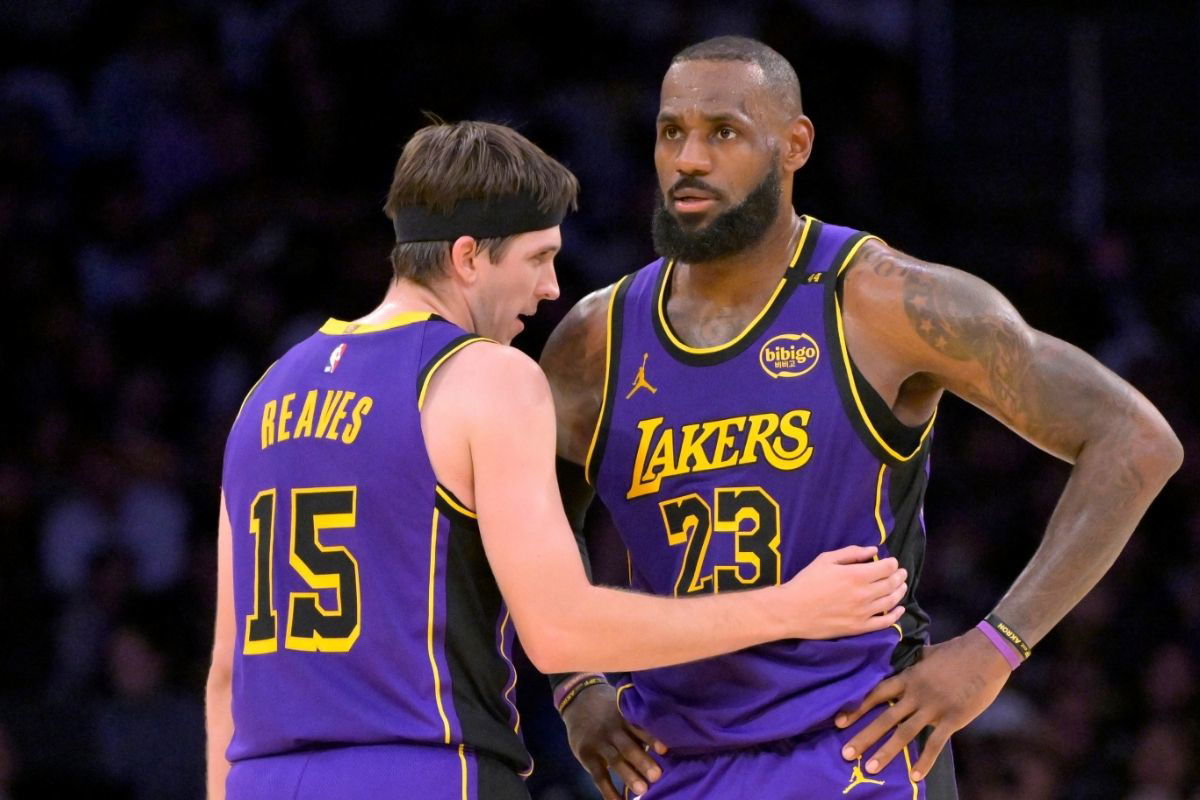
Jan 17, 2025; Los Angeles, California, USA; Los Angeles Lakers guard Austin Reaves (15) and forward LeBron James (23) talk on the court against the Brooklyn Nets at Crypto.com Arena. Mandatory Credit: Jayne Kamin-Oncea-Imagn Images
Through five games, the Lakers are averaging just over 101 points per game in the series, with their offensive output dipping as the games have tightened. The ball movement and rhythm that defined their early wins have given way to heavier isolation in Games 4 and 5. And in the playoffs, when possessions slow down, predictability becomes a problem faster than anything else.
The Lakers now sit at that same crossroads. They can adapt. Or they can pretend nothing has changed. Game 6 in Houston is not just about closing a series. It is about choosing an identity. Do they stick with what has always worked? Or do they lean into what is working right now?
Because the answer to that question might decide more than just this round. It might define how long this version of the Lakers can stay competitive. Reaves is not just part of the future anymore. He is already part of the present. And if the Lakers want to keep their season alive, and maybe extend LeBron’s greatness just a little longer, it might be time to finally play like it.