
Essentials Inside The Story
- A historic Madison Square Garden tradition resurfaced in the most unexpected way.
- One loose-ball hustle play turned a former New York mayor into part of the Finals story.
- While the spotlight drifted courtside, the Spurs may have uncovered a series-changing formula.
More than five decades ago, Willis Reed emerged from the Madison Square Garden tunnel on an injured leg and instantly changed the mood of Game 7 of the 1970 NBA Finals. Ever since, the Garden has built a reputation for producing moments that feel bigger than basketball itself. Twenty-seven years after hosting its last NBA Finals game, MSG once again became the center of the sports world on Monday night. And in a building packed with celebrities, politicians, and New York icons, Madison Square Garden produced another moment nobody could have scripted.
Watch What’s Trending Now!
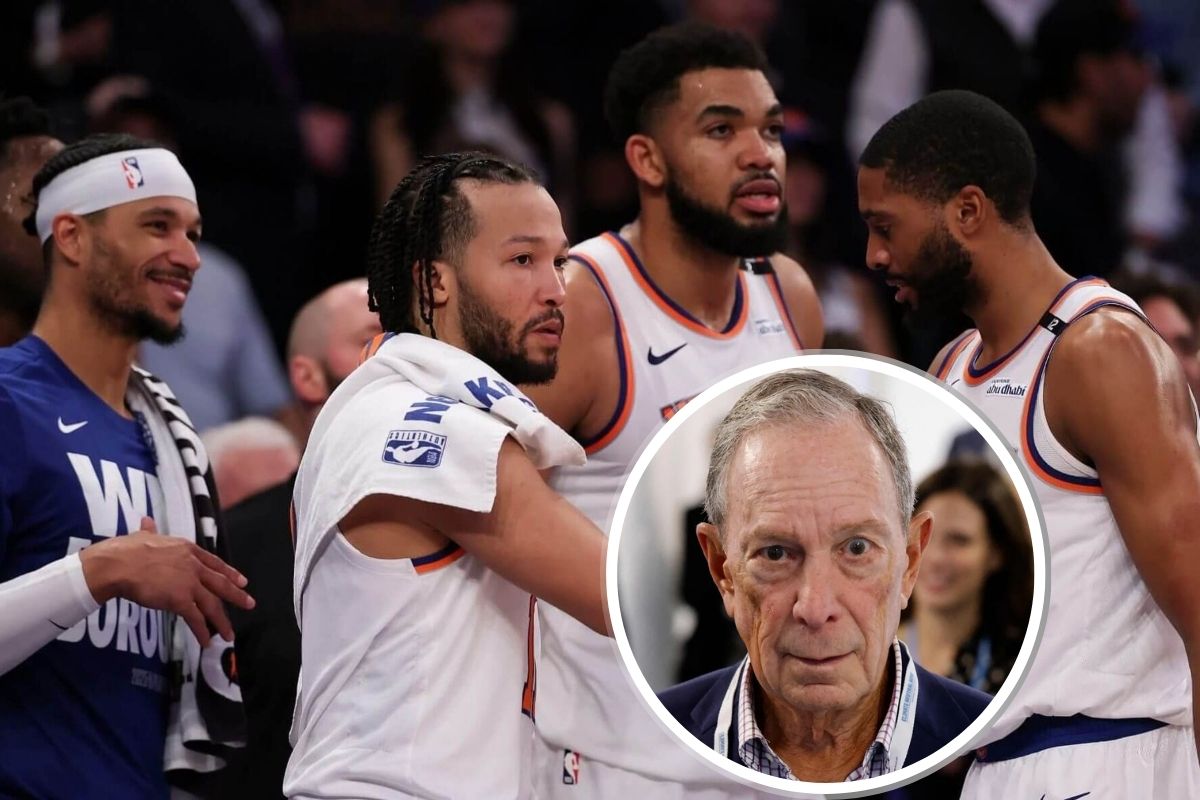
With the Knicks trying to claw back a fourth-quarter deficit, Jose Alvarado launched himself toward the stands in an attempt to save a loose ball. Instead, the Spurs guard crashed into former New York City mayor Mike Bloomberg, who was seated courtside among the sea of high-profile attendees. Alvarado immediately checked on the 84-year-old Bloomberg, who appeared shaken after taking contact near his right eye but remained in his seat and avoided any serious injury.
The sequence perfectly captured what makes a Knicks Finals game different from almost anywhere else in sports. “You never know who you’ll run into at a Knicks game,” Richard Jefferson joked on the broadcast moments later. Madison Square Garden has long blurred the line between sporting event and cultural gathering, with courtside seats often occupied by some of the biggest names in entertainment, politics, and business.


Jose Alvarado crashed into former NYC Mayor Bloomberg sitting courtside at Game 3.
That atmosphere was on full display throughout Game 3. Timothée Chalamet, Ben Stiller, and longtime Knicks superfan Spike Lee were among the familiar faces courtside. New York sports icons Alex Rodriguez, Derek Jeter, and Eli Manning also made appearances, while President Donald Trump watched from a suite. With ticket prices climbing into five figures and celebrities filling nearly every visible row, the game often felt as much like a New York cultural event as an NBA Finals matchup.
That blend of basketball and celebrity is hardly new at Madison Square Garden. During the Knicks’ last Finals appearance in 1999, broadcasters spent almost as much time identifying famous faces in the crowd as discussing the action on the floor. More than a quarter-century later, the tradition remains alive, even if Bloomberg ended up becoming part of the night’s story rather than simply watching it unfold.
None of the spectacle changed what mattered most to the Spurs. Facing enormous pressure after dropping the first two games, Victor Wembanyama and company delivered one of their most disciplined performances of the postseason, ensuring the night’s biggest storyline wasn’t the one unfolding courtside.
The Spurs show a new blueprint in Game 3 win
Ironically, while much of the attention around Game 3 drifted toward the spectacle surrounding the court, the Spurs quietly discovered the formula that may have changed the trajectory of the Finals.
With their backs against the wall, the San Antonio Spurs reverted to the most unstoppable strategy you could think of when there’s a 7’4″ do-it-all star on the team. The Spurs repeatedly established Wembanyama deep in the paint, forcing the Knicks into difficult decisions. When New York stayed home on shooters, Wembanyama generated easy scoring opportunities. When help arrived, he punished the defense by finding open teammates. The Knicks didn’t have an answer except forcefully putting a stop to the sequence.
“I think we turned the ball over a lot, first and foremost. But then also we were fouling a lot and put them at the line about 30 times. And with our live ball turnovers and I got them on transition. No, they were capitalizing off of those. So we were definitely fouling a lot,” Jalen Brunson admitted after the loss.
Head coach Mike Brown pointed to the free-throw disparity afterward, believing the officiating played a role in the outcome. Notably, the Spurs shot 16 more free throws in the second half. But Brunson and even Karl-Anthony Towns looked inwards and took accountability for the loss. The Knicks’ excessive fouling put both Brunson and Mikal Bridges in foul trouble. With Bridges limited by foul trouble, Stephon Castle found room to operate and finished with an efficient 23 points and five assists.
The Spurs’ biggest tactical success came through their team defense. They isolated Jalen Brunson, forcing him to keep the ball and force up shots. That confused the Knicks, who only had 18 assists, their lowest output in the NBA Finals so far. Wembanyama and Co. may have found a blueprint to march back into this series. And they aren’t resting after one win. “The hardest is yet to come,” said the Spurs cornerstone.