
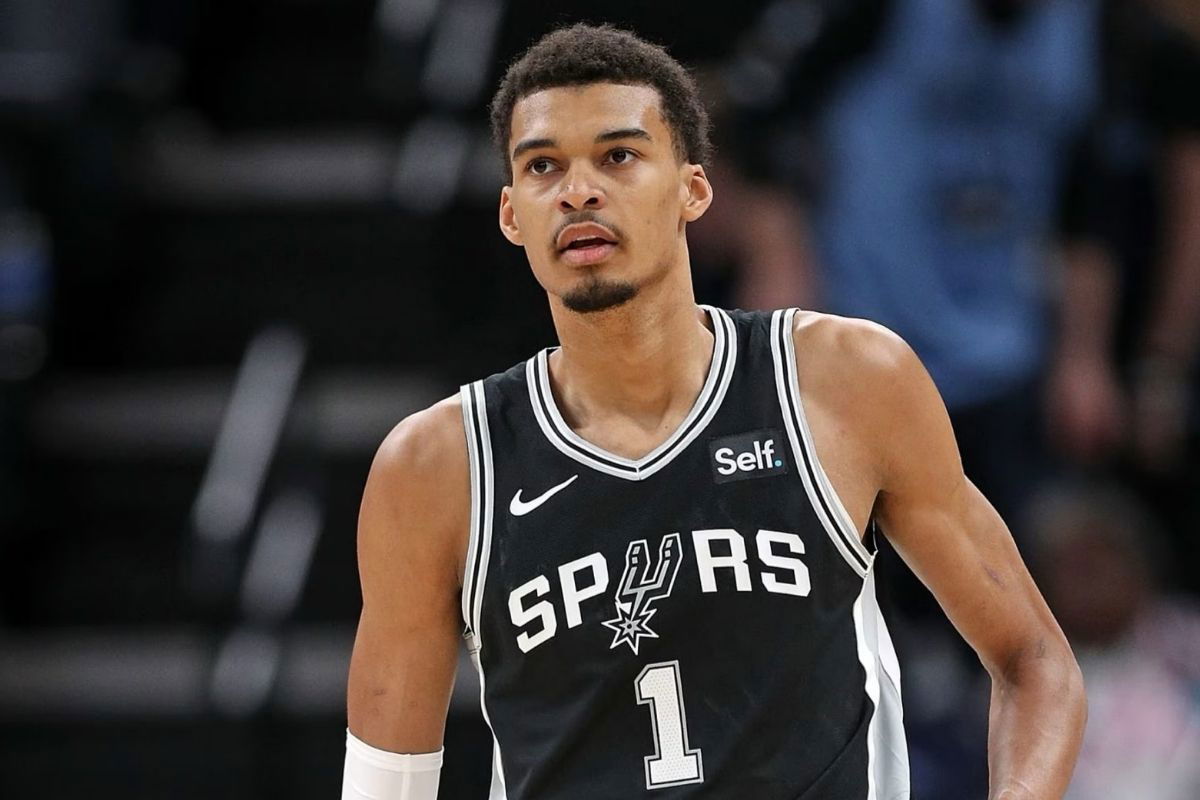
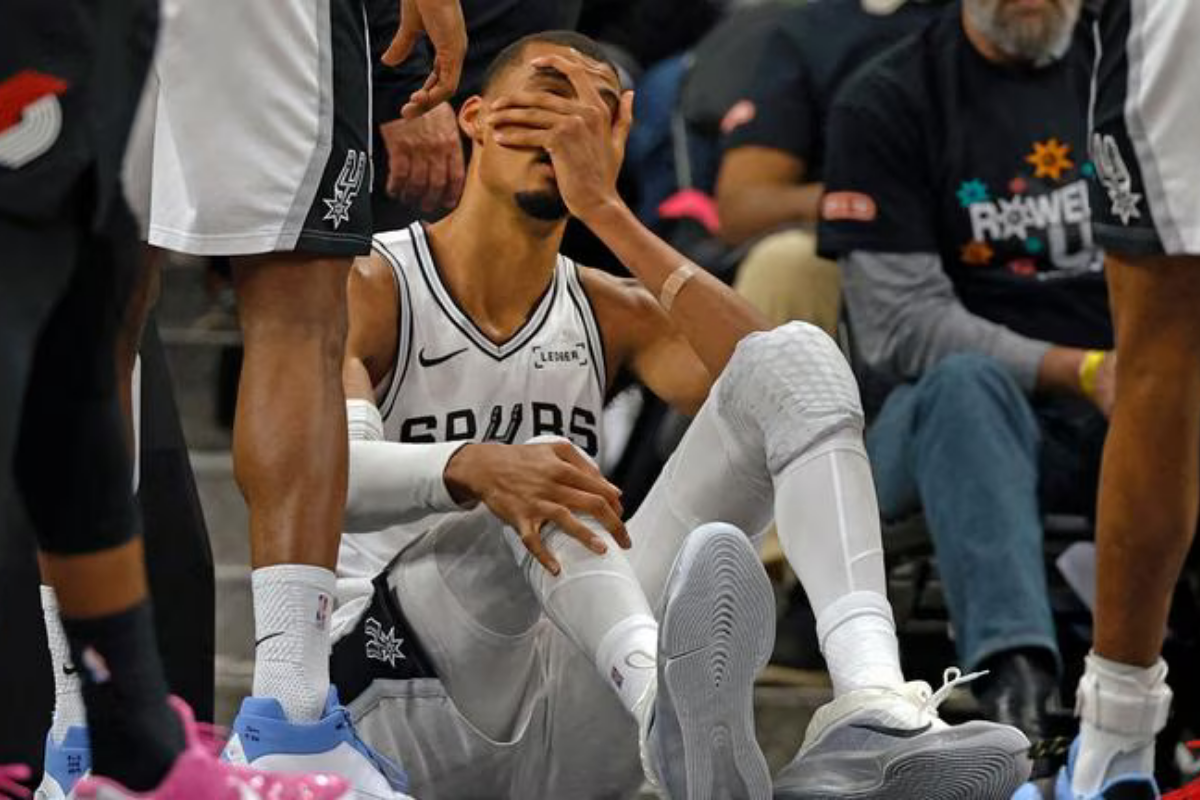
In 2012, the league cleared Kobe Bryant to play just three days after a concussion, a decision that raised eyebrows but never truly shifted the conversation. More than a decade later, that same issue is back in focus, and this time a leading analyst is directly challenging the NBA’s 48-hour rule. The trigger is the most watched young star in the sport, whose violent playoff fall has forced a deeper look at one of the league’s least questioned policies.
Watch What’s Trending Now!
After suffering a concussion in Game 2 against Portland, Victor Wembanyama returned for Game 4 on Sunday and delivered a statement performance with 27 points, 11 rebounds, seven blocks, four steals, and three assists in a 114-93 Spurs win. The production was dominant, but his tone afterward told a different story. Speaking with ESPN’s Malika Andrews, Wembanyama made it clear he was frustrated: “The Spurs have done an amazing job. I’m very unhappy about the way the protocol has been handled by other parties. My staff has been amazing. I’ve been really healthy starting on Day 1 after the injury. It was weird, though. It was funny.”
Wembanyama did not get into specifics, but he made one thing clear, his frustration was not aimed at San Antonio’s medical staff. He even asked reporters to revisit the topic at the end of the season, signaling there is more to come. What stood out immediately is that he believed he was ready sooner than the league allowed. Under current NBA rules, a player must wait at least 48 hours after a diagnosed concussion and then complete a multi-step, symptom-free return process before clearance. Wembanyama’s injury came Tuesday night and he returned Sunday, a timeline that has now drawn scrutiny from a neuroscience perspective, especially from analyst Tom Haberstroh on Yahoo Sports Daily.
“I mean, we’re talking about a guy who suffered that concussion in game two on Tuesday and returned in time for Sunday’s action. The NBA’s 48-hour rule that they have in place after a concussion, isn’t necessarily backed by the neuroscience. There isn’t anything magical that happens 49 hours after a concussion versus 47 hours. And he reminded me, hey, this is more, that 48-hour window is more about the NBA’s schedule, the game schedule compared to football. They don’t have this 48-hour protocol.”


“An NBA player suffered a brain injury on Tuesday and was ready to play on Sunday. That’s still a very close window.” @tomhaberstroh reacts to Wemby clearing concussion protocol to play in San Antonio’s Game 4 win in Portland. (via Yahoo Sports Daily)
Clearing protocol requires a player to move through a step-by-step return process while remaining symptom-free, but Haberstroh’s issue is with the fixed 48-hour minimum itself. He argues that timeline is not rooted in how the brain actually recovers. Even without Wembanyama, the Spurs handled Game 3 with a 120-108 win as Dylan Harper and Stephon Castle combined for 60 points, but his return in Game 4 sharpened the real question. If recovery is truly individualized, what exactly is a fixed 48-hour window protecting?
The NBA Built Its Concussion Window Around a Calendar, Not a Brain
Haberstroh put it bluntly. “The NBA’s 48-hour rule isn’t necessarily backed by the neuroscience. There isn’t anything magical that happens 49 hours after a concussion versus 47 hours.” His point is simple, the rule aligns more with scheduling than recovery. Neuroscientist Christopher Nowinski backed that idea, noting the window is not a defined neurological marker but more of a safety buffer built around the NBA’s every-other-day schedule. Unlike the NBA, leagues like the NFL and MLB do not rely on a fixed two-day minimum.
Imago
Fox Sports, AFP
The NFL, by contrast, does not operate on a fixed timeline. Instead, it requires players to clear a strict five-step return-to-play progression, with at least 24 symptom-free hours between each phase. Nowinski has pointed out that NBA players historically return faster than NFL players, which raises additional concerns. The NBA still requires multiple neurological evaluations and comparison against preseason baseline testing, but its system remains anchored to that minimum time threshold rather than being purely symptom-driven.
The league uses SCAT6, the most current standard in concussion evaluation, which focuses on symptoms, cognition, and balance, especially within the first 72 hours of injury. Still, the system keeps that fixed time minimum in place. The situation took another turn postgame when the broadcast abruptly cut Wembanyama’s audio as he began to expand on his concerns, sparking immediate backlash from fans online.
Wembanyama called the situation “very disappointing” and told reporters to revisit it at season’s end, making it clear this story is not finished. His frustration is personal, but the issue it highlights is much bigger. In a league that prides itself on player health, a system tied partly to scheduling instead of fully individualized neurological recovery raises serious questions. As the Spurs move toward closing out the series, the more compelling battle may not be on the court, but between one of the league’s brightest stars and the NBA’s own rulebook.