
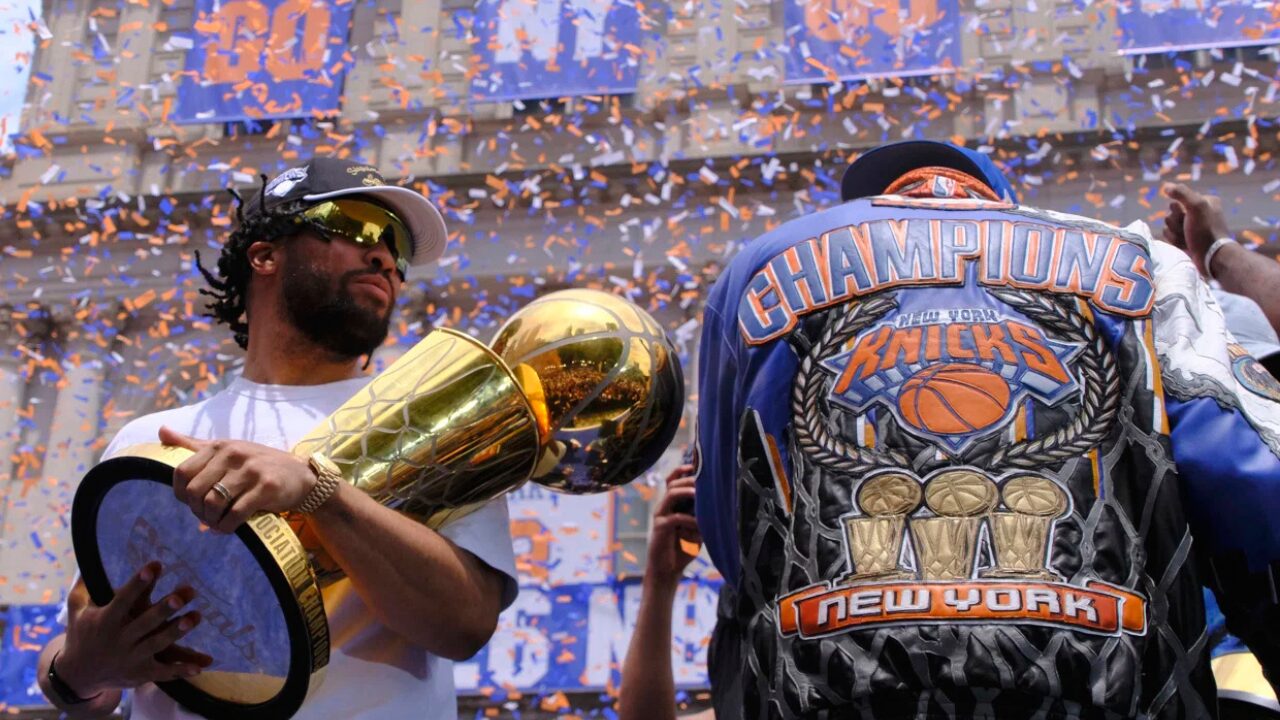
Madison Square Garden has seen some unforgettable ticket stubs over the years. On May 8, 1970, fans could watch the Knicks win their first NBA championship in the building for just $5 from the upper deck. Willis Reed’s famous return through the tunnel, followed by the Knicks’ 113–99 victory over the Los Angeles Lakers, remains one of the defining nights in franchise history.
Watch What’s Trending Now!
More than five decades later, the Garden is preparing for another celebration. The Knicks are set to raise their championship banner on October 20, 2026, before facing LeBron James and the Philadelphia 76ers. But when fans tried to buy seats for that night, the price of admission created a very different kind of headline. The team now says those prices were never supposed to be that high.
“After their individual game tickets were listed Wednesday with eye-popping prices — including a $1,000-plus minimum for the season opener against the Sixers — the Knicks suspended sales because of an internal mistake,” The New York Post reported .
MSG then confirmed the correction in a statement to The Post:
“We are pausing Knicks individual ticket sales due to a mistake in our pricing,” an MSG spokesperson told The Post. “We are rolling back to last year’s prices plus an average increase of 12%. We will restart sales with new prices shortly, and anyone who already purchased individual tickets will be refunded the difference. Our intention was never to overcharge our loyal fans, and we thank everyone for their support of the Knicks and their patience as we get this right.”
That statement changes the story. This was not simply a case of fans discovering that a championship team’s home opener would be expensive. MSG acknowledged that the prices listed for individual-game tickets did not match the pricing structure it intended to use. The team paused sales, promised to correct the rates, and said buyers who had already checked out would receive the difference back.
The original numbers explain why the issue spread so quickly.
A $1,000-plus ticket for the upper deck
Individual-game tickets opened to the general public on Wednesday, September 16, after an earlier Chase Fan First cardholder presale on September 14. The sale took place through Ticketmaster, where standard admission prices for the October 20 home opener quickly reached levels that stood out even in New York’s expensive sports market.
A seat in Section 418, in the upper-deck area, was listed at $1,039.50. Prices in the 300 level climbed as high as $1,550, while tickets in the 200 level went beyond $2,000. TicketData reported that primary-market get-in prices during the initial sales window reached between $1,363 and $1,408, while the average asking price for the home opener was around $2,500.
These were not merely resale listings from fans or brokers. The Section 418 figure was reported as a standard-admission price on Ticketmaster, making the distinction important. The controversy was about what the team itself appeared to be charging through the primary market.
Tommy Beer, who reported on the pricing, highlighted that distinction in a post shared on September 16:
“Knicks tickets officially went on sale this afternoon. Loyal Knicks fans supported this franchise through two decades of darkness… losing season after losing season. Now, after a championship, MSG is charging more than $1,000 per ticket on Opening Night for the worst seats in the building (400 section in the upper-deck). Mind you, this is NOT resale. These are Standard Admission via Ticketmaster… MSG itself, directly, is charging fans $1,039.50 apiece for seats in the 400s. That’s $4,158 for a family of four… Shameful.”
That last calculation made the issue easier to understand. A single ticket was already a major expense. For a family of four, the listed cost of simply getting into the building crossed the $4,000 mark before considering travel, food, parking, or other game-night costs.
And MSG’s own correction gave fans a benchmark against which to view those numbers.
The 12% increase is the key detail
The Knicks were expected to raise ticket prices after their championship season. MSG has historically tied season-ticket pricing decisions to team success, and the organization had set an average 12% increase for full-season ticket packages entering 2026–27.
That increase, however, is very different from listing an upper-deck seat at more than $1,000.
MSG’s stated plan is to return individual-game prices to last season’s baseline, with an average 12% increase applied. The company has not publicly released a technical breakdown explaining exactly how the original pricing error occurred. Ticketmaster, meanwhile, does not independently set the face-value rates for the team’s standard admission inventory. Those parameters come from the team and venue.
That leaves an important part of the story unresolved: what caused the mistake in the first place?
There is no confirmed public explanation establishing whether the issue came from a software configuration, a pricing formula, or a manual administrative error. It would be premature to label it a technical glitch or blame Ticketmaster without that information. What is confirmed is that MSG accepted responsibility for the pricing and decided to stop the sale.
The size of the gap becomes clearer when placed against the previous season. The 2025–26 Knicks home opener against Cleveland had a reported secondary-market get-in price of $215. Historical upper-deck face-value tickets for comparable regular-season games generally opened in the range of $100 to $180, according to the research compiled for this story.
Using an approximate $200 upper-deck baseline, a 12% increase would produce a price of about $224. That is not an official Section 418 price, and it should not be treated as an exact calculation of what every seat would have cost. But it shows why the listed $1,039.50 figure was so far removed from the team’s stated intended increase.
The distinction matters: a championship premium was expected. A four-figure upper-deck entry point was the issue MSG said it needed to correct.
The market was already pricing in a historic night
The demand for October 20 did not come out of nowhere.
The Knicks are entering the season as defending NBA champions after ending a 53-year wait for the franchise’s next title. The home opener is scheduled to include the championship banner ceremony and ring presentation, giving fans a chance to celebrate the title inside Madison Square Garden.
Then there is the opponent.
LeBron James’ move from the Los Angeles Lakers to the Philadelphia 76ers has added another major draw to the night. October 20 will mark his first official regular-season game at Madison Square Garden as a member of Philadelphia, placing a major star in one of basketball’s most recognizable venues on the same night the Knicks celebrate their championship.
That combination helps explain why demand was unusually high. But the secondary market also shows that fans and resellers had already placed a premium on the matchup before the Knicks paused their own sale.
According to TicketIQ data published before the primary-market error became public, the secondary get-in price for the October 20 home opener reached $1,346, including required service fees, on September 13. That was a 526% increase over the reported $215 get-in price for the previous season’s home opener against Cleveland.
TicketIQ CEO Jesse Lawrence summed up the market shift in a statement:
“The championship has completely reset the Knicks ticket market.”
That is an important piece of context. The home opener was already expected to be expensive because of the championship celebration, the opponent, and the Garden’s demand. The secondary market was reflecting that interest before the primary-market controversy. But high demand does not erase the difference between a resale price and a team’s intended face-value pricing.
The primary-market listing made that distinction impossible to ignore.
Fans wanted to be there. The price made that difficult
The reaction was not limited to sports reporters. During the presale, fan account Lisha (@batghouls) posted:
“That’s just the entirety of one month’s rent yall… I guess I won’t be in the building during ring night.”
The reaction captured the consumer side of the controversy. The championship had created a night many fans wanted to attend, but the initial prices placed it beyond what some could reasonably afford.
Sam Amico of Hoops Wire also addressed the tension between the team’s success and the cost of attending:
“The Knicks won the championship. For a moment, it appeared they wanted every fan to help pay for it… Charging four figures merely to enter the building would qualify as a fairly aggressive loyalty test.”
The language is commentary, not an official finding about MSG’s intentions. The team’s own statement says the opposite: that it did not intend to overcharge fans. But the reaction explains why the correction became necessary from a public-relations standpoint. A championship can raise demand, but fans still notice when the price of a standard seat appears disconnected from the increase the team says it planned.
That is also why the Philadelphia comparisons need to be handled carefully.
The Knicks and 76ers are scheduled to meet in Philadelphia during the preseason on October 5, followed by the regular-season matchup at Madison Square Garden on October 20 and another regular-season meeting in Philadelphia on October 30. Those games may all attract interest because of LeBron, but they are not interchangeable ticket markets. The October 20 game is the Knicks’ home opener, includes the banner celebration, and involves MSG’s primary ticket inventory. The Philadelphia games do not establish what the Knicks should charge for their own home opener.
The central issue remains the same: MSG said the original prices were a mistake, not the intended premium for the game.
What happens when sales reopen?
The Knicks have said individual-ticket sales will restart with corrected prices early in the week of September 21. No exact relaunch time has been publicly confirmed in the reporting available for this story.
For fans who already purchased tickets, MSG has promised to refund the difference between the inflated price and the corrected price. The statement does not indicate that those buyers must cancel their orders and start over. Instead, the company says the difference will be refunded.
That gives the incident a clear next step. The Knicks are not saying the home opener will be priced like an ordinary regular-season game. They are saying the tickets will return to the intended pricing framework: last season’s prices plus an average 12% increase.
The real test will come when the corrected inventory goes live. Fans will finally see what the team considers the proper championship-season premium, rather than the prices that briefly appeared on Ticketmaster.
For a franchise that waited 53 years to celebrate another championship, the October 20 home opener was always going to be a major event. MSG now has to make sure the ticket sale does not become the lasting memory of the night.