
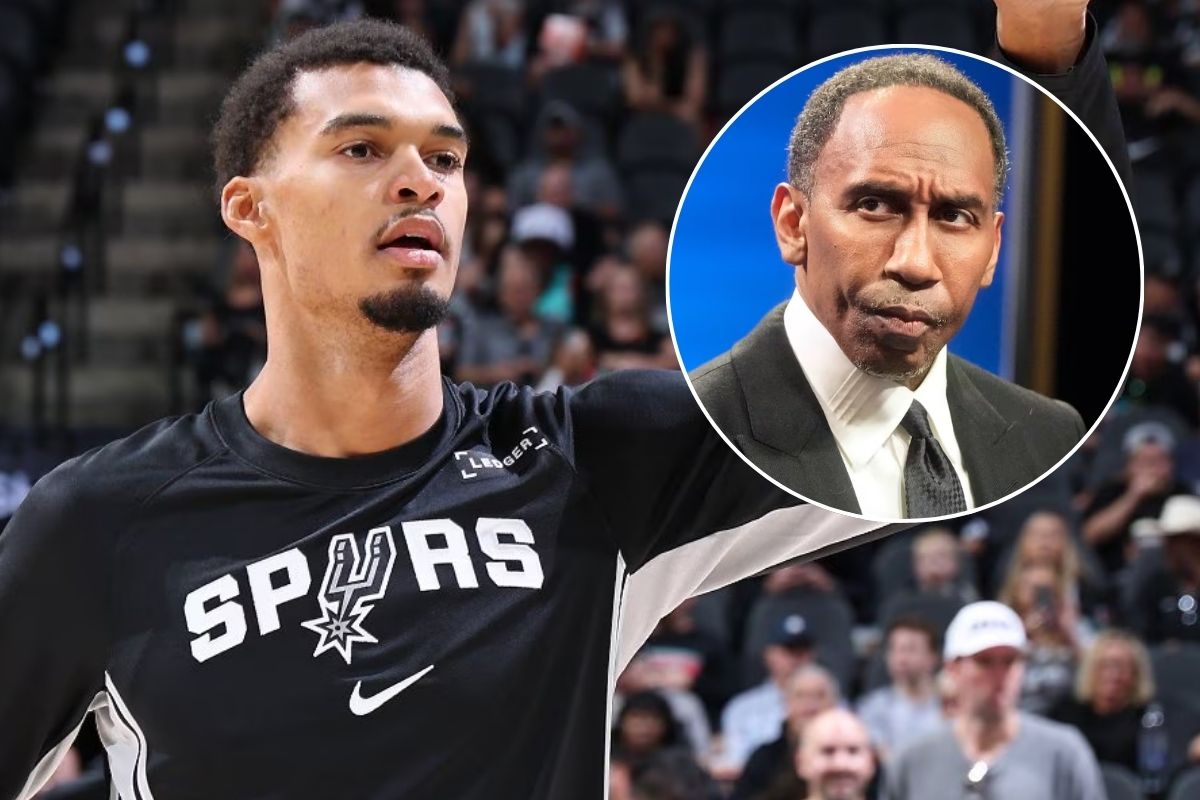
Amidst the 95-105 Game 1 loss, the San Antonio Spurs have more things to worry about. Precisely because social media went berserk on the players for alleged disrespect of the National Anthem, it all started when conservative journalist Matt Wallace shared a video of Victor Wembanyama & Co. standing straight with their arms at their sides during the pregame anthem. But now, ESPN veteran Stephen A. Smith is pushing back on the criticism.
“This is patently false. There are plenty of people who listen to the Nat’l Anthem and simply bow their heads with their hands in front of them or behind their backs and pay respects,” Stephen A. quote-tweeted. “Holding your hand over your heart is not a requirement. The Spurs were not being disrespectful in anyway. Who is anyone to say they were just over that gesture? That is utterly ridiculous!!!”
For most Americans, the national anthem comes with a familiar set of traditions. When the music begins, people generally rise, direct their attention toward the American flag, and remain respectful throughout the performance. If no flag is in sight, the focus usually shifts toward the source of the music. Meanwhile, people view placing the right hand across the chest as a sign of respect and appreciation for the moment.
Most importantly, everyone observes the anthem in quiet reflection rather than conversation or movement. While these practices are codified in the United States Flag Code, they function more as long-standing social traditions than as rules backed by legal penalties.
Therefore, Stephen A. Smith’s defense of the San Antonio Spurs’ stars made sense because placing your hands over your chest isn’t obligatory. Now, what did Matt Wallace say that triggered Smith to take to his social media and defend the Western Conference giants?

This is patently false. There are plenty of people who listen to the Nat’l Anthem and simply bow their heads with their hands in front of them or behind their backs and pay respects. Holding your hand over your heart is not a requirement. The Spurs were not being disrespectful in Show more

Spurs players REFUSE to put their hands over their hearts for the national anthem! They are making millions of dollars to play a child’s game and still feel oppressed somehow… Only 2 players covered their hearts. Take note of which ones!
Wallace shared a clip of the Spurs stars during the pregame national anthem.
He captioned, “Spurs players REFUSE to put their hands over their hearts for the national anthem! They are making millions of dollars to play a child’s game and still feel oppressed somehow… Only 2 players covered their hearts. Take note of which ones!”
Unsurprisingly, the footage ignited a firestorm of criticism, and not just about the gesture, but about how it stacked up against basketball royalty.
An ESPN footage showed the King “working on his golf swing” during the national anthem. Back then, fans rushed in to call out the 41-year-old. They drew parallels between LeBron and Michael Jordan, stating that the Chicago Bulls legend would never have done such a thing.
Now, what’s more intriguing is that the Spurs didn’t mean to disrespect the national anthem or the country. However, not maintaining etiquette during “The Star Spangled Banner” has always been athletes’ means of protest over the years.
Maybe not the San Antonio Spurs stars, but athletes have protested over the national anthem
Public discussion around the American national anthem in sports has surfaced on several occasions, particularly when athletes have chosen to express personal or social views during the ceremony.
One of the most widely recognized examples arrived in 2016, when Colin Kaepernick drew national attention by altering his participation during the anthem as a statement on issues he believed deserved greater public focus.
The former 49ers quarterback Colin Kaepernick sat on the bench and later knelt as a sign of protest against police brutality and racial discrimination.
Similar demonstrations appeared across professional sports. By 2017, the movement had expanded significantly. Numerous NFL players adopted different forms of symbolic expression during the anthem. What began with a single athlete evolved into a broader discussion involving teams, leagues, fans, and public figures across the country. Meanwhile, the conversation extended beyond football.
In 2016, the Indiana Fever participated in a similar demonstration, while Denver Nuggets guard Mahmoud Abdul-Rauf had already generated headlines two decades earlier in 1996. He cited both personal beliefs and religious convictions when explaining his stance.
The issue again took center stage in 2020 inside the NBA’s Orlando bubble following the killing of George Floyd. Players, coaches, and staff across the league knelt during the national anthem, and teams wore social justice messages on their jerseys as part of a league-wide effort to raise awareness of racial inequality and police reform. The demonstrations stressed how the anthem had become a recurring platform for athletes seeking to raise awareness of social issues.
While the San Antonio Spurs didn’t intentionally “disrespect” the national anthem, players across different sports and over many years have used the same occasion to solidify their protests. Moreover, Stephen A. Smith clarified that Wembanyama & Co.’s composure wasn’t in any way insulting.