
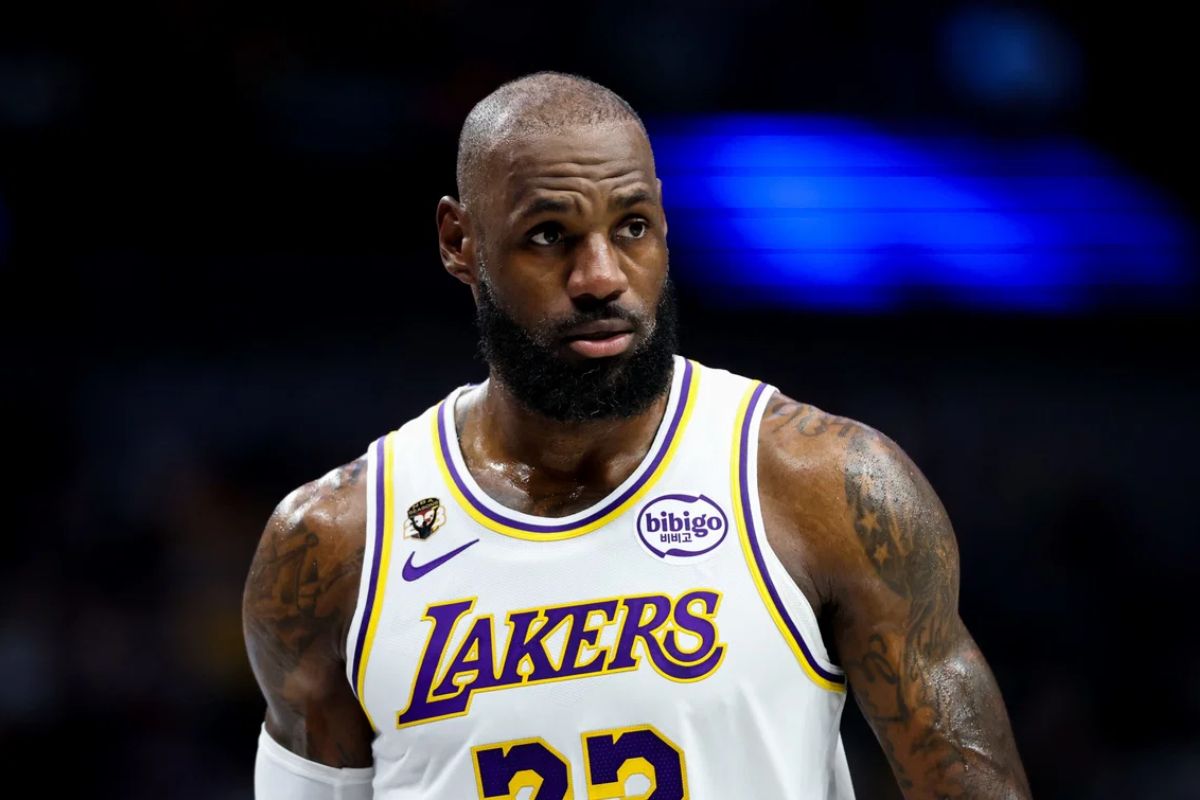
After Game 4 of the 2011 NBA Finals, LeBron James had eight points on 3-of-11 shooting in a 86-83 loss to the Dallas Mavericks, including just one shot attempt in the fourth quarter across 45 minutes. The Miami Heat fell behind 3-1 in the series, and that performance became the defining reference point for critics questioning his ability to close. Speaking to Dave McMenamin of ESPN in April 2026, the 41-year-old four-time champion explained how the weight of his six NBA Finals losses stayed with him early in his career and when his perspective began to change.
Watch What’s Trending Now!
“When I was younger, I used to have the notion of like, people were getting on me for losing in the Finals, and when I was younger, I used to listen to it,” James told McMenamin. “Like, people will really rather you not make the playoffs or lose in the first round than to lose in the Finals, which is crazy to me. And I almost feel like, is it because it’s me? Everybody has to say something about my career: ‘Oh, well, he made eight straight Finals, but he was only able to win three.’” James reached eight consecutive Finals from 2011 through 2018 and has made 10 appearances overall, posting a 4-6 record. His comment directly addresses how that record has been framed throughout his career.
James has repeatedly identified the 2011 Finals as the lowest point of his career. At 26 years old during that series, after leaving Cleveland Cavaliers the previous summer at age 25, he averaged 17.8 points, 7.2 rebounds, and 6.8 assists on 47.8% shooting against Dallas, a drop from his 26.7 points per game in the 2010-11 regular season. In later interviews, he said he allowed the external narrative after “The Decision” to affect him mentally, adding that it placed him in “a dark place” during that stretch. The Game 4 performance became the most cited example used by critics questioning his ability to perform in high-pressure moments.
James has said that during that period, his focus shifted toward responding to criticism rather than playing freely, which he later identified as a factor in his performance during that series.
The shift, according to James, came when he began to contextualize the criticism alongside his career achievements. “Yeah, but I am also fastest to 1,000. Fastest to 2,000. Fastest to 5,000. Fastest to 10,000,” he said. James reached 10,000 career points at 23 years and 59 days, the youngest in NBA history, and remains the league’s all-time leading scorer. “So when I started realizing it was just a knock on me, I started to appreciate it a little bit more. Like, I am pissed off that I didn’t have a better winning percentage individually in the Finals, but for people to try to turn it into a negative, it doesn’t bother me like it did when I was younger.”
The 4-6 Record That Follows Him Everywhere
The comparison most often used against James is Michael Jordan’s 6-0 record in the NBA Finals. Critics frequently contrast that with James’ 4-6 mark across 10 Finals appearances from 2007 to 2020. James’ point to McMenamin directly challenges that framing, arguing that repeated Finals appearances should not be treated as failures in the same way early playoff exits are.
James’ argument highlights a recurring debate in how NBA legacies are evaluated. His critics continue to reference the 2011 Finals, particularly Game 4, as evidence in those discussions. Since that series, James has won four championships in 2012, 2013, 2016, and 2020, earned four Finals MVPs, and became the NBA’s all-time leading scorer while remaining active into his 40s. Despite those accomplishments, his Finals record remains a central point in GOAT debates.
Similar criticism has followed other elite athletes in different sports. Peyton Manning faced repeated scrutiny for his playoff record earlier in his career despite multiple MVP seasons. Before winning his second Super Bowl in 2016, Manning held a 1-3 record in Super Bowl appearances and was frequently labeled a postseason underperformer. That pattern, where postseason results are weighed more heavily than sustained success, mirrors the type of evaluation James referenced in his comments.
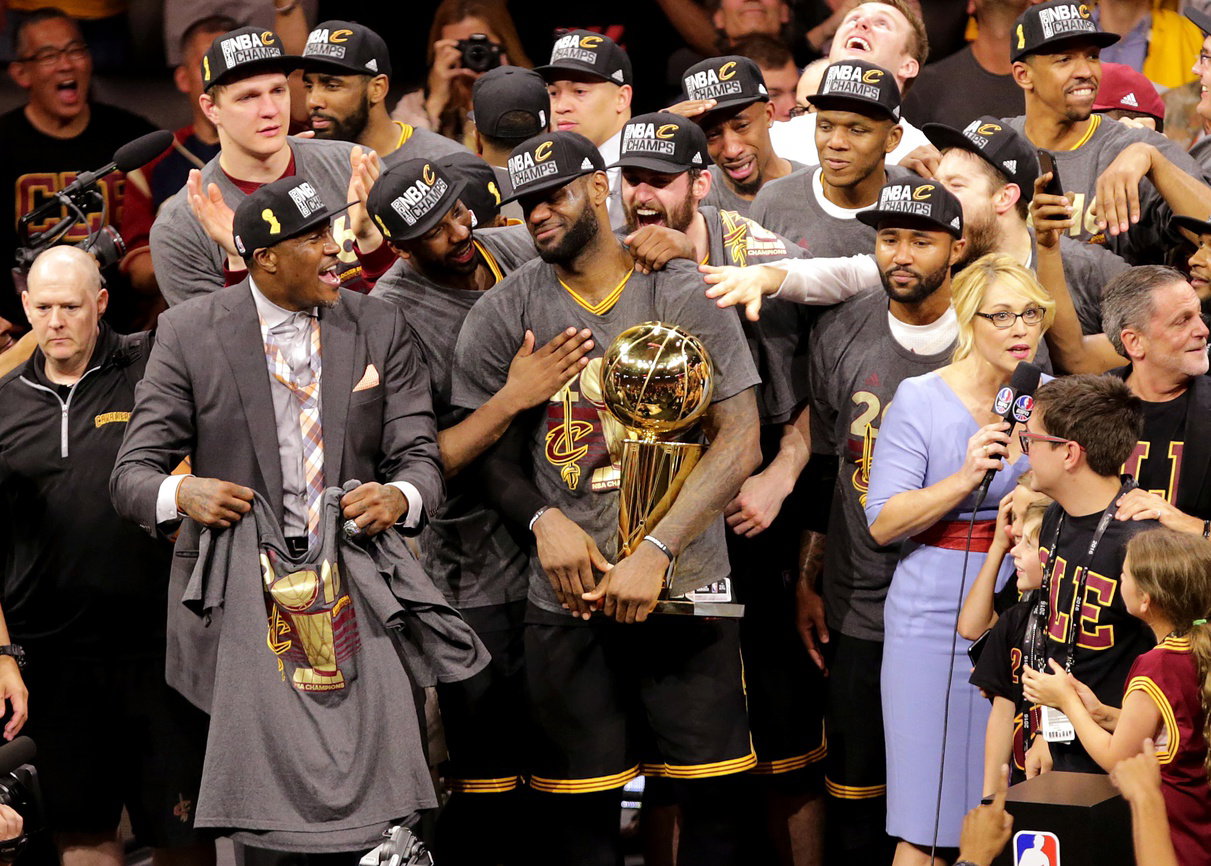
USA Today via Reuters
Jun 19, 2016; Oakland, CA, USA; Cleveland Cavaliers forward LeBron James (23) celebrates with the Larry O’Brien Championship Trophy after beating the Golden State Warriors in game seven of the NBA Finals at Oracle Arena. Mandatory Credit: Kelley L Cox-USA TODAY Sports
James has consistently described the 2011 Finals as the lowest point of his career, openly stating that he “played badly” in that series. His comments to McMenamin do not dispute the losses or the record. Instead, they clarify how his perspective has changed over time. While he acknowledged frustration with his Finals winning percentage, he also made clear that he no longer allows external narratives to define his career.