“Shame on You”: Chet Holmgren Gets Called Out for Passing Off Victor Wembanyama Challenge by Stephen A. Smith

Add us on Google
“Shame on You”: Chet Holmgren Gets Called Out for Passing Off Victor Wembanyama Challenge by Stephen A. Smith
Add us on Google
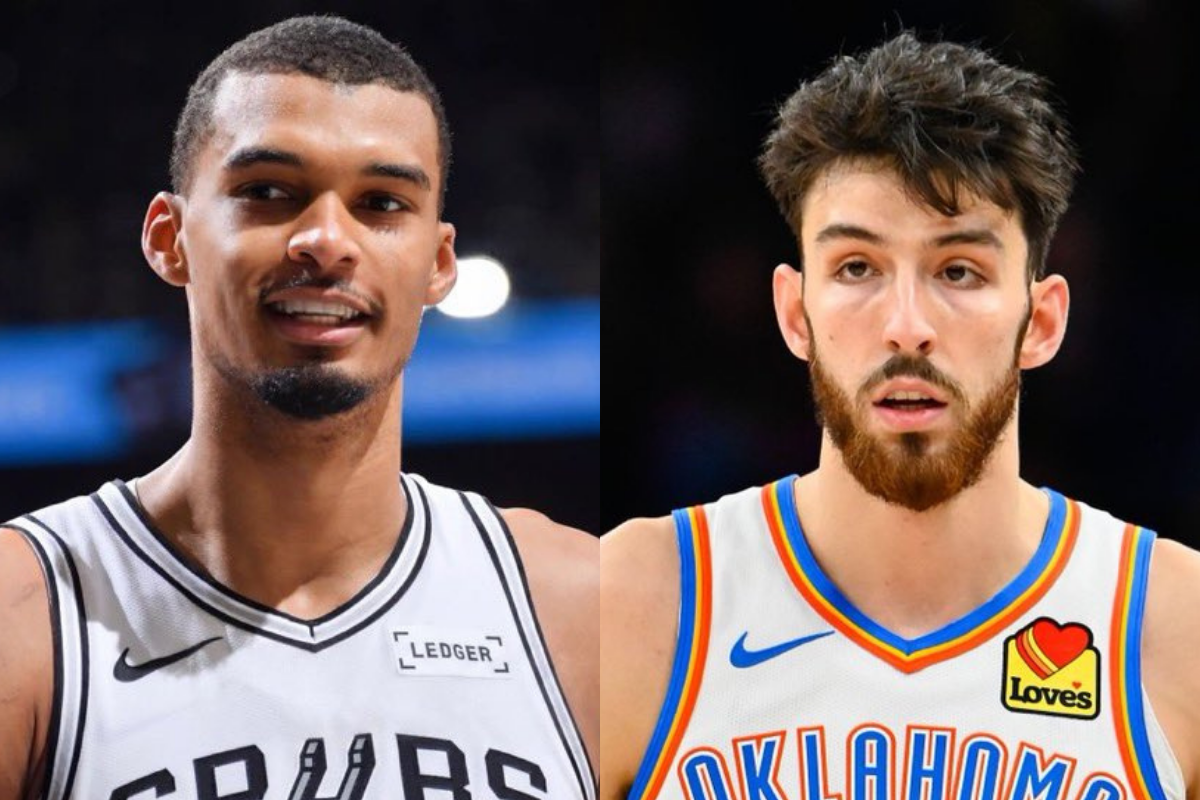
Imago
Credit: X
Imago
Credit: X
Before Game 1 of the Western Conference Finals even began, Victor Wembanyama had already been forced to watch another man celebrate the award he believed should have been his. As Shai Gilgeous-Alexander accepted his second straight MVP trophy at center court inside Paycom Center, Wembanyama stood silently on the opposite sideline watching the ceremony unfold.
Watch What’s Trending Now!
Forty-nine minutes later, the Spurs superstar responded by turning Oklahoma City’s home floor into a nightmare. Holmgren’s late block to force overtime briefly gave the Thunder life, but Wembanyama eventually finished with 41 points, 24 rebounds and a game-sealing and-one dunk over the Thunder big man in double overtime. By the end of the night, nearly every lasting image belonged to San Antonio’s 7-foot-4 superstar.
The backlash arrived almost instantly. By Wednesday morning, ESPN’s First Take had effectively turned into a public intervention for Holmgren. “Wemby bust your a**, 41 points, 21 rebounds, and you respond with four points on two of eight shooting. That’s egregious,” Stephen A. Smith said.
He didn’t stop there. “What the hell are they doing on Wemby in the post? They can’t do anything against him in the post. You’re 7-1, and you’re leaving that responsibility to somebody else. Shame on you. Chet Holmgren has to step up.”
“You’re 7’1”, and you’re leaving that responsibility to somebody else. Shame on you. Shame on you. Chet Holmgren has to step up.”
—@stephenasmith goes off on Chet Holmgren 😳 pic.twitter.com/LlTjFuEiVG
— First Take (@FirstTake) May 20, 2026
Wembanyama finished with 41 points, 24 rebounds and three blocks across 49 minutes, becoming just the second player alongside Wilt Chamberlain to post a 40-point, 20-rebound game in a Conference Finals debut. Somehow, the box score still undersold how overwhelming he looked.
He buried a transition three late in overtime, erased Oklahoma City possessions with his length and eventually sealed San Antonio’s 122-115 victory with an and-one dunk directly over Chet Holmgren in the second overtime. By the end of the night, the Spurs had outscored the Thunder 52-38 in the paint, the exact area Holmgren was supposed to help control.
The criticism only escalated from there. Kendrick Perkins accused Holmgren of “ducking smoke.” DeMarcus Cousins said the Thunder big man had “tucked his tail.” Even Dwyane Wade publicly challenged Holmgren to “look him in the eye.”
Less than 48 hours into the series, the matchup that had once been framed as the NBA’s next great big-man rivalry was suddenly starting to feel painfully one-sided.
The frightening part for Oklahoma City was that some of the criticism wasn’t entirely wrong.
Film from Game 1 showed the Thunder repeatedly placing smaller defenders like Alex Caruso and Jalen Williams onto Wembanyama while Holmgren floated around the play as a weak-side helper. The idea was to crowd Wembanyama’s dribble and let Holmgren roam as a shot blocker.
It failed spectacularly. Wembanyama simply caught passes over the top, established deep position and punished Oklahoma City before help could even arrive. By the time Game 2 arrived, the Thunder had already decided something needed to change.
Even Daigneault hinted after Game 1 that Oklahoma City’s approach could not stay static. “Everything is on the table,” the Thunder coach said afterward. “You can’t just throw one pitch throughout the whole series.” Less than 48 hours later, Oklahoma City effectively abandoned its original Wembanyama coverage plan altogether.
How OKC Changed Everything to Slow Down Victor Wembanyama
Oklahoma City did not answer Victor Wembanyama with Chet Holmgren. They answered him with force. After playing Isaiah Hartenstein just 12 minutes in Game 1, Mark Daigneault dramatically expanded the veteran center’s role in Game 2 and unleashed him directly onto Wembanyama. The assignment was simple: turn every Spurs possession into a wrestling match.
“I’m just kind of one of those players that brings physicality to the game,” Hartenstein said afterward. “I think that’s just kind of what we needed.”
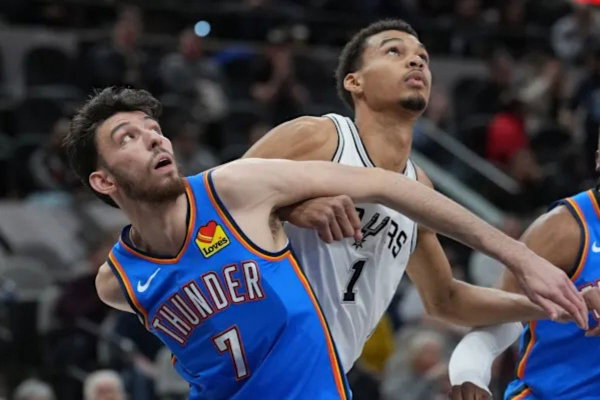
Hartenstein grabbed, fronted, bumped and denied deep catches on nearly every possession. Sometimes it looked like playoff basketball. Sometimes it looked like offensive line drills.
Wembanyama himself indirectly acknowledged the toll afterward. “It’s spending so much energy on catching back up,” the Spurs superstar said postgame. “Then letting it go away.” Oklahoma City may not have stopped Wembanyama. But for the first time in the series, they successfully forced him to spend energy surviving possessions instead of destroying them.
By normal standards, Wembanyama still dominated. By his Game 1 standards, Oklahoma City considered it survival. After detonating for 41 points and 24 rebounds in Game 1, the Spurs superstar finished Game 2 with 21 points, 17 rebounds, six assists and four blocks on 8-for-16 shooting in Oklahoma City’s 122-113 win.
The real difference wasn’t the box score. It was where the damage happened. In Game 1, Wembanyama lived at the rim. In Game 2, Oklahoma City dragged him away from it.
Imago
Unlicensed image
The adjustment also revealed something Oklahoma City may not have wanted to admit publicly after Game 1: Wembanyama’s physical pressure was changing the series.
Hartenstein’s wrestling-match defense allowed Holmgren to spend far less time absorbing direct post punishment and far more time rotating as a secondary rim protector. The Thunder big man looked noticeably freer offensively in Game 2, finishing with 13 points on 5-for-10 shooting as Oklahoma City finally found functional balance around its frontcourt.
But surviving Wembanyama came with a cost. By the end of Game 2, the series already looked physically exhausted. Jalen Williams aggravated his hamstring. Dylan Harper suffered a significant leg injury. Nearly every possession between Oklahoma City and San Antonio started feeling less like playoff basketball and more like controlled chaos.
The Thunder found a way to slow Wembanyama down in Game 2. The terrifying part is that slowing him down still required 21 points, 17 rebounds, four blocks, a lineup overhaul and borderline wrestling-level physicality just to survive.
The series is tied. The fear isn’t.
Written by

Edited by

Ved Vaze