
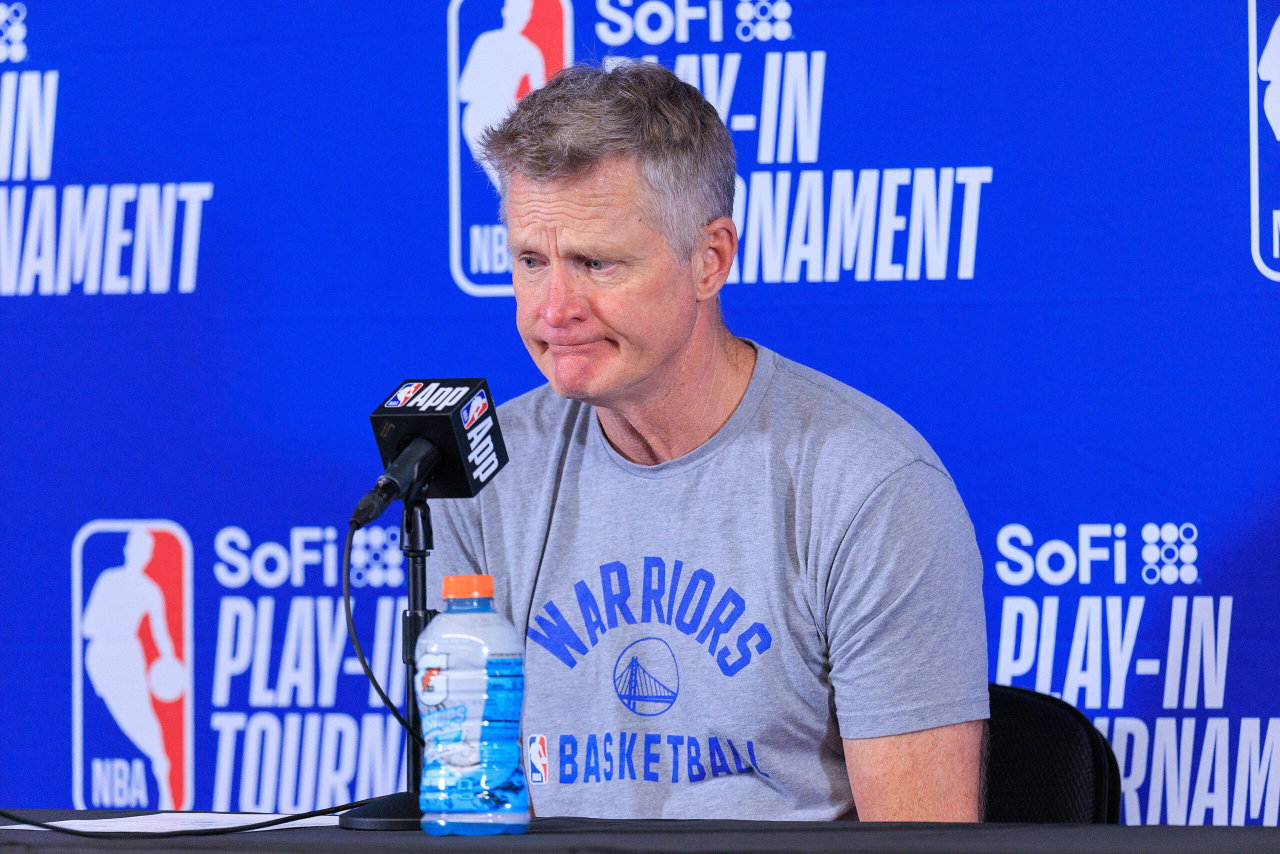
Steve Kerr’s lighthearted comment about LeBron James during NBA Summer League quickly went viral, but the joke ended up raising a much bigger question. After another quiet offseason and multiple missed opportunities to add another star alongside Stephen Curry, what exactly is Golden State’s long-term plan?
Watch What’s Trending Now!
The Warriors were linked to LeBron James, explored the trade market for Jaylen Brown and spent much of the summer at the center of blockbuster speculation. Yet when the offseason settled, Golden State had largely chosen continuity over aggression, leaving many wondering whether the franchise was protecting its future or wasting what remains of Curry’s championship window.
Kerr, however, insisted the quiet offseason was entirely intentional. Speaking to ESPN’s Anthony Slater, the Warriors coach said, “You have to understand your place in the league and where everybody else is and what the future looks like. Mike is really smart and prudent. He understands the landscape. Joe’s in agreement on that. We’re all pretty much really on the same page in terms of just being wise… [Sometimes] not making a move can be the best thing to do for your future. And you keep stacking up good moves and eventually you pounce when you’re ready.”
Kerr’s comments also clarified another offseason talking point. Explaining the viral Summer League clip in which he joked, “Oh, we got him,” when asked about LeBron James, Kerr later told Slater, “I was having a little fun. I didn’t even think we were realistically in the running for LeBron. It’s just that everyone kept saying we were. It never seemed serious to me despite all the reports.”
That philosophy comes at a pivotal point for Golden State. The Warriors are coming off a 37-45 season that ended in the Play-In Tournament, while Curry enters his 18th NBA season with the franchise still trying to build another contender around him. Following the season, Curry struck a measured tone, saying, “We don’t have to keep saying ‘championship, championship, championship’ every day… Can we build the foundation again?”
Rather than chasing another blockbuster, the Warriors prioritized roster depth and financial flexibility. They drafted Yaxel Lendeborg with the No. 11 overall pick, re-signed Draymond Green to a one-year, $27.7 million contract, retained Al Horford, extended Kristaps Porziņģis on a trade-friendly deal and signed De’Anthony Melton, while keeping their long-term payroll and draft assets largely intact.
The strategy preserves flexibility, but it also leaves unanswered questions entering the season. Jimmy Butler continues his recovery from a torn ACL, while Golden State’s aging core will again shoulder much of the burden early in the year. The organization believes preserving flexibility today positions it to strike when a true franchise-changing player becomes available.
Why Golden State chose patience over blockbuster moves
Despite speculation surrounding several stars, Golden State’s biggest offseason decision ultimately became the one it didn’t make. According to Slater, the Warriors consistently prioritized preserving future draft capital over sacrificing long-term flexibility for moves they viewed as short-term upgrades.
One of the clearest examples came during discussions with the Boston Celtics involving Jaylen Brown. According to Slater, Boston’s asking price included four unprotected first-round picks, a first-round pick swap and young rotation pieces. Golden State ultimately declined, determining that the cost conflicted with its long-term asset strategy.
That decision reflected a broader organizational philosophy rather than hesitation over Brown himself. Kerr explained the Warriors believe in “stacking up good moves” until the right opportunity arrives instead of exhausting future assets for a move they don’t view as transformational.
The same approach shaped Golden State’s pursuit of LeBron James. The Warriors presented a formal recruitment pitch built around pairing James with Curry, but internally never believed they were serious favorites. “I didn’t even think we were realistically in the running for LeBron,” Kerr told Slater. “It never seemed serious to me despite all the reports.” Team sources also indicated communication from James’ camp faded before his eventual decision to join the Philadelphia 76ers.
Whether Golden State’s patience proves wise will ultimately be judged by results. Kerr insists the organization is preserving its flexibility for the right moment, while Curry continues to focus on “building the foundation again.” If that next opportunity arrives, the Warriors believe they’ll have the assets to act. If it doesn’t, questions about whether they maximized the final years of Curry’s championship window will only grow louder.