Every June after the hustle of the postseason, the NBA shifts focus to matching prospects to respective teams, which is the draft. It may not be the playoffs, but various strategies are also in play before draft night. Teams that tanked for the most of the previous season pin their futures on one name called first and hope they land the No. 1 pick.


In reality, most consensus overall picks deliver something — championships, MVPs, NBA All-Star nods, deep playoff runs, at least a decade of serviceable minutes. A precious few become LeBron James, Tim Duncan or Shaquille O’Neal. But some become punchlines that echo for decades and are called “busts.”
Watch What’s Trending Now!
Most times, it’s down to foresight from the organizations wanting to select the best from the draft when other prospects below ended up being much better. Then there are the injury factors and raw high-school projects who crumbled under the spotlight, making the No. 1 pick seem like the most overrated prize in the sport.
Fans always anticipate the draft to see who the franchise is betting their hope on, and every draft cycle, the same debates resurface on whether the prospect is the next bust or the next superstar.
Several criteria were consulted in the formulation of this ranking, including deviation from hype; how massive the prospects were pre-draft, to when the real business of the NBA started. Then we have total career production and longevity; short careers with zero impact rank higher on the disappointment scale. Third is opportunity cost; looking at the players the team passes on to get the No. 1 pick. This is one of the biggest criteria because it diminishes the value of the overall first pick when players below perform better. The fourth criterion is franchise impact; the No. 1 pick is expected to be the face of a franchise. When that is not achieved, it raises a lot of eyebrows. Fifth is cultural legacy; if the draft name still triggers bust labels, debates, or “never again” rules in scouting meetings.
The 10 Most Disappointing No. 1 Picks in NBA History
Joe Smith (1995, Golden State Warriors): Smith built a respectable 16-year career, but only two and a half of those were for the team that drafted him No. 1 in 1995, the Golden State Warriors.
Looking at a draft class that had Jerry Stackhouse, Rasheed Wallace, and Kevin Garnett, the Warriors took a bad bet with the power forward who ended up being a journeyman.
Deandre Ayton (2018, Phoenix Suns): Ayton might escape the “bust” tag for some reasons. But looking back at 2018, the Phoenix Suns are biting themselves on how they held the top pick and missed the chance to draft Luka Doncic, Jaren Jackson Jr., Trae Young, Shai Gilgeous-Alexander, or even Jalen Brunson, who was selected in the second round.
Ayton has posted some very solid seasons and has always been a double-double player. But joining the Los Angeles Lakers in 2025 as a role player meant his value hadn’t diminished totally, but Phoenix didn’t reap the biggest reward with its selection. The Suns did make the NBA Finals in 2021 with Ayton playing impactful minutes, but that was all they got from him in terms of making Ayton a franchise cornerstone.
Kwame Brown (2001, Washington Wizards): Brown was Michael Jordan’s handpicked high-school project. But the Hall of Famer would realize, much like everyone else, that the same judgement on the court can’t be applied in a front office role.
The pressure was immense from day one for Brown, and that was the origin of the problem that saw him become the label for “bust.” His rookie season saw him play garbage minutes, which increased throughout the season, but things never clicked. He would go on to play 12 seasons as a journeyman and didn’t hit double figures in career averages in points, rebounds, or assists.
Brown was a high-school-to-NBA transition misstep, and Jordan’s Wizards paid the price in wasted development years. After a season with the Philadelphia 76ers in 2013, he retired.
Michael Olowokandi (1998, Los Angeles Clippers): Olowokandi was a project pick being a 7-footer from Pacific with raw athleticism. But it was a massive blind spot for the Clippers in a draft class that included Dirk Nowitzki, Paul Pierce, Vince Carter, and Mike Bibby.
The Clippers were so desperate for franchise-building blocks and, by all accounts, wanted to do that with a big. Instead, they got a player who never appeared settled in L.A. Okowokandi did have injury issues that limited him to just 500 career games in nine seasons. However, the Clippers paid the higher price as they fell into mediocrity during those years.
Pervis Ellison (1989, Sacramento Kings): Drafted No. 1 by the Kings, “Never Nervous Pervis” became “out of service Pervis.” He was a college champion with the University of Louisville, coming into the NBA with a pedigree as a 6-foot-9 center. But in reality, he was just another big man who couldn’t defeat injuries.
Knee and ankle injuries limited him to 474 games over 11 seasons. He did have one big year in 1991-92 when he won the NBA Most Improved Player award, averaging 20 points and 11.2 rebounds, but that was as good as it got for the former No. 1 pick.
Andrea Bargnani (2006, Toronto Raptors): Bargnani was the Italian stretch big experiment for the Raptors. He did play significantly for the franchise, giving it seven seasons, which peaked in the 2010-11 season, where he averaged 21.4 points per game. But aside from making the NBA All-Rookie First Team, his career was below average for a No. 1 pick.
The Raptors never really got what they wanted in the big, which was a defensive identity, and were never a playoff team. They only made the postseason during Bargnani’s first and second year in the league.
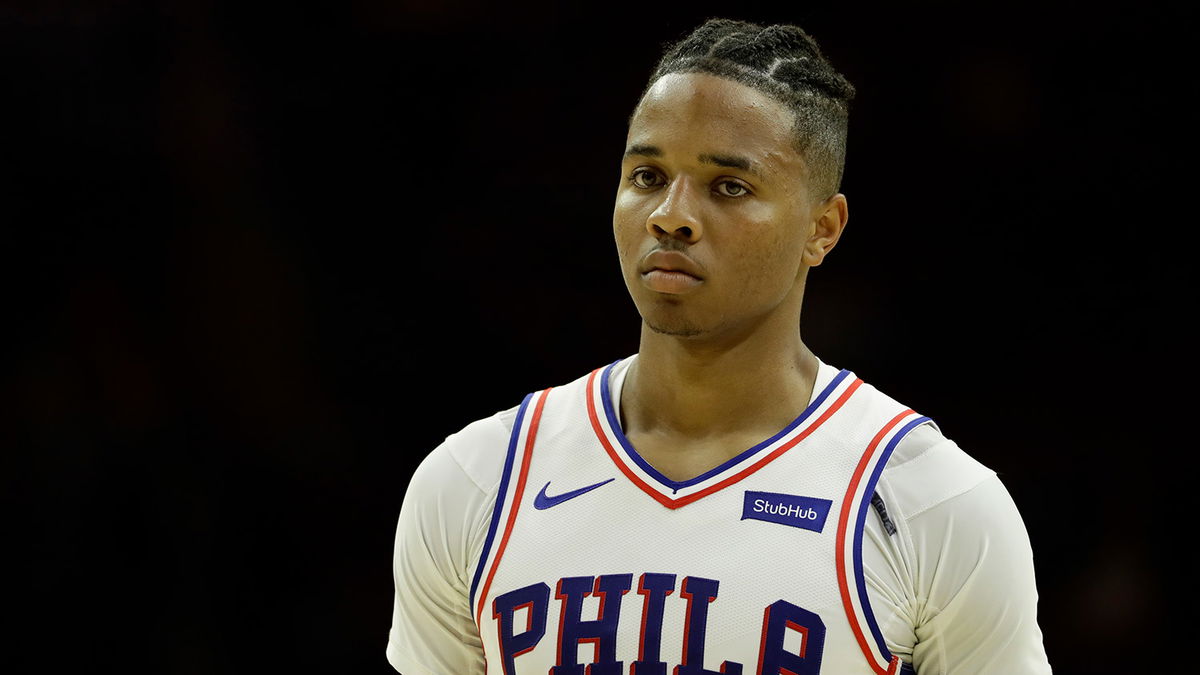
Markelle Fultz (2017, Philadelphia 76ers): Fultz was an offensive threat in college, and the Philadelphia 76ers wasted no time in taking him as the top pick in 2017. This was a class that saw the likes of Jayson Tatum, De’Aaron Fox, Lauri Markkanen, Donovan Mitchel, Bam Adebayo, and even Jarrett Allen selected after Fultz.
A mysterious injury ruined the shot form he had in college, and after two seasons and only 33 games for the Sixers, he was traded to the Orlando Magic, where he stayed for five seasons. He last played for the Kings a season ago.
Greg Oden (2007, Portland Trail Blazers): Oden was drafted before Kevin Durant, and it didn’t take long for the Trail Blazers to realize that it was a mistake. Knee injuries saw Oden miss his entire rookie year, and he played just two seasons with Portland and three seasons overall in his NBA career.
He was yet another seven-footer projected to be a franchise cornerstone, but Oden’s body betrayed them. Portland’s medical team took the heat in what many viewed as hindsight during the pre-draft medicals. But it was a big one because the center played every game for Ohio State in college.
Ben Simmons (2016, Philadelphia 76ers): Simmons is the only controversial addition to this list. He won the Rookie of the Year award and started 81 games for the Sixers. He is a three-time All-Star, made the All-NBA Third Team, made the All-Defensive First Team on two occasions, and led the league in steals in a season. That is already an elite resume for a top pick.
However, Simmons is here because of what he didn’t do, which was unlocking his full potential and capitalizing on the Sixers’ championship window, which slammed shut in 2021 with superstar big man Joel Embiid in his prime. The Simmons-Embiid will always be one the hotly-discussed “what-ifs” of this generation, but there’s no debating which of the two was the reason for a steep downfall.
Simmons is high at No. 2 on this list because of how his career tapered off. He went from the next LeBron James or Magic Johnson to an afterthought seemingly overnight.
Anthony Bennett (2013, Cleveland Cavaliers): Bennett could be described as the undisputed number one of No. 1 draft busts. He came in with a huge hype from the University of Nevada, Las Vegas, where he averaged 16.1 points and 8.1 rebounds in one college year. In what has been described as one of the weakest draft classes ever, the Cavaliers took him as the first pick.
Playing just 151 career games and starting just four, Bennett was out of the NBA by 2017, having the least minutes and points of any No. 1. A four-year unproductive career is unforgivable, because Cleveland bet the farm on unproven flash in a class that also produced Giannis Antetokounmpo, who ended becoming the best player from that draft, came in 15th and Rudy Gobert 27th.
Bennett simply wasn’t an NBA player at that level, and the Cavs were guilty of over-drafting one-and-done hype in a thin class. They thought they could really apply same principle they used for Kyrie Irving just a couple of years earlier but failed.
Why Failed No. 1 Picks are Significant to NBA History
These 10 picks are serious missed opportunities that have denied franchises championships or a solid rebuilding phase. It shows that holding the No. 1 pick card doesn’t always translate to picking the best talent from a draft class. That noted, the draft is like a mirror for organizations to evaluate raw talent from the intangibles that can survive the actual business, which is the NBA’s season-to-season grind.
Accountability should be demanded from NBA scouts and front offices before the players when these so-called projected No. 1 failed to meet up to draft projections. The weight of the disappointment of these 10 overall picks lands in the context of what could have been.
If Cleveland had picked Antetokounmpo first instead of Bennett, the entire Eastern Conference power structure in the 2010s would have been different. A healthy Oden would have transformed Portland’s fortunes. Bennett matching expectations may have altered LeBron James’ decision to return home. Simmons continue to scale upward after the 2020-21 season, may have created a three-headed monster out in Simmons, Embiid and Tyrese Maxey — whom the Sixers selected with the 21st pick in the 2020 NBA Draft — out East. Maybe Ayton and Devin Booker go down as the next iconic guard-big man duo.
There are so many what-ifs, so many ways the course of history could have been altered had any of these picks reared a different result. Now, we can only be left wondering how an uncelebrated list like this will change after five or 10 years.
Written by

Edited by

Ved Vaze