Imago
IMAGN
Imago
IMAGN
In an NBA dominated by superstar headlines, the most important changes are often happening in the shadows. And as always, it’s young players who end up shifting a franchise’s future — just not always in obvious ways.


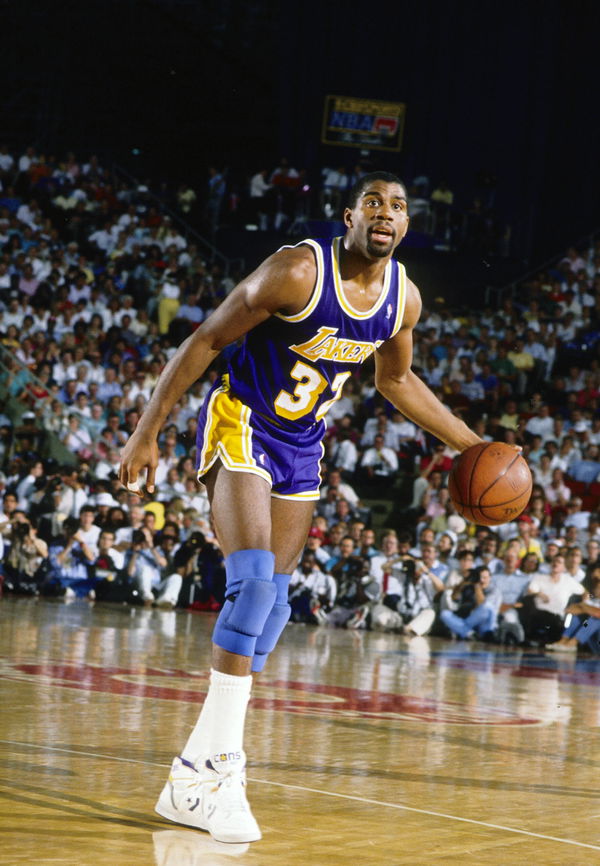
Back in the day, franchises like the Los Angeles Lakers with Magic Johnson or the Chicago Bulls with Michael Jordan, bet big on raw, unproven talent that flipped their fortunes overnight.
Watch What’s Trending Now!
USA Today via Reuters
Jun 1988; Detroit, MI, USA; FILE PHOTO; Los Angeles Lakers guard Magic Johnson (32) in action against the Detroit Pistons during the 1988 NBA Finals at the Silverdome. Mandatory Credit: MPS-USA TODAY Sports
Sure enough, some of these players were top prospects in college, and it was only natural that they lived up to their college hype. However, most stumble on a mediocre team and make them competitors. Jordan came into a franchise that had made only two playoff appearances in its history and made Chicago a regular playoff team and from a regular playoff team to contenders, then champions and a dynasty.
For every Jordan, there have been a number of talents who have followed suit and emerged to change the fortunes of their franchises. Not every player’s impact is loud immediately … or even ever. Some players simply go without the spotlight and continue to thrive. That’s exactly how the NBA is set up today, more and more of these “quiet” players are getting the job done for their teams.
But it is time we finally acknowledge them.
So instead of focusing on established stars, this list zeroes in on players still early in their careers — guys who weren’t expected to carry this kind of weight yet, but are already shifting outcomes. Whether it’s through defense, versatility, or simply winning their minutes, these are the names quietly forcing franchises to rethink their future.
Ten Risers Quietly Changing the Fortunes of Their NBA Franchises
Neemias Queta (Boston Celtics, Center)
Neemias Queta is 26 and is in his fifth NBA season, but it hasn’t seemed like it, because the Portuguese center has been a non-existent role player for much of his career until this season. He’s the definition of a late-bloomer turning heads. Drafted 39th in 2021, he has exploded into Boston’s rotation this season after two unmemorable years for the Sacramento Kings. He is averaging a career high 10.1 points, 8.4 rebounds, 1.5 assists, 1.3 blocks and 0.9 steals on a 64.5% field goal percentage, which is the third highest in the league.
Having started only six games in four seasons, he has started 56 of Boston’s 61 games this season, second only to Derrick White. The Celtics are clearly not missing Kristaps Porzingis at all and it looks like their center position is settled for years. Queta’s impact is felt in the paint and Boston’s defensive rating is in the top five, allowing the fewest opposition points this season. Queta is helping the Celtics maintain their championship contention after a gap year.
Jalen Johnson (Atlanta Hawks, Forward)
The Hawks traded Trae Young this season, which would have felt dejecting had it not been for the emergence of Johnson, who has been the face of Atlanta’s youth rebuild. In his fourth season, the 24-year-old is averaging a career-high 22.7 points, 10.6 rebounds, 7.9 assists, 1.3 steals and 0.5 blocks on 49.3/34.0/77.9 shooting splits. He is close to a triple-double territory, which only a handful of players in the league can match.
He is a huge reason why the Hawks are just a few wins short of a direct playoff spot even forcing his way into the All-Star conversation this year. He has evolved from raw prospect to all-around force, revitalizing Atlanta’s offense. His playmaking, with 7.9 assists, up from 5.0 last year, pairs perfectly with the young and energetic supporting cast, creating deadly pick-and-roll situations. Defensively, his length disrupts passing lanes, leading to fast breaks where he thrives. The Hawks stuck with him through injuries and now he is their main star.
Dyson Daniels (Atlanta Hawks, Guard)
Daniels is another young emerging star for the Hawks. His breakout last season was no accident; it was the reward for betting on upside. The 22-year-old is Atlanta’s defensive key and offensive facilitator averaging 6.2 assists. His 1.9 steals average is top five in the league. Their defensive rating is 114.4 with Daniels on the court and without him, it jumps to 123.3.
Offensively, Daniels’ growth as a facilitator has unlocked the Hawks’ transition game, where they rank top-five in pace. He was last season’s Most Improved Player — and for good reason.
If the Hawks are going to continue leaning on youth, Daniels is a key piece, especially if he can work his way from a rather poor outside shooter to an adequate one. That is the only weak point of his otherwise brilliant game.
Onyeka Okongwu (Atlanta Hawks, Forward)
Yes, another Hawk.
Okongwu is Atlanta’s secret weapon for its youth movement, stretching the floor while anchoring the paint. At 25, he’s averaging 16.1 points, 7.9 rebounds, 3.3 assists, 1.0 blocks and 1.1 steals. His progression from backup to starter has revolutionized Atlanta’s spacing, boosting its offensive rating from last season with him in the starting lineup. He can shoot as well, averaging 2.1 3s per game on a 38.5% range, which is not bad for his size.
Defensively, Okongwu’s mobility neutralizes pick-and-rolls and his rebounding fuels fast breaks. This has balanced Atlanta’s frontcourt, complementing Johnson perfectly. He is the underrated proof that versatile bigs are the future of the NBA.
Cason Wallace (Oklahoma City Thunder, Guard)
Cason Wallace is not the most flashy player and not the most standout when looking at the Thunder roster, but one thing he brings is a solid overall setup for the team that has made him the defensive anchor of the league’s best defense despite being only 22 years old.
Starting 49 of 59 games due to Jalen Williams’ injury, he has slotted in nicely and elevated OKC’s net rating. The Thunder haven’t felt the defensive absence of their All-NBA star as Wallace’s versatility and ability to guard multiple positions fit the team’s switch-everything scheme. Wallace was a lottery pick, and Oklahoma City snatched him for his defensive upside in the 2023 draft. His rise keeps the Thunder atop the West, especially as he averaged close to 15 points and 4.8 assists per game on 47% shooting from the floor in 12 games last month.
Much of this came during a stretch the Thunder were missing Shai Gilgeous-Alexander, who’s somewhat of a juggernaut himself.
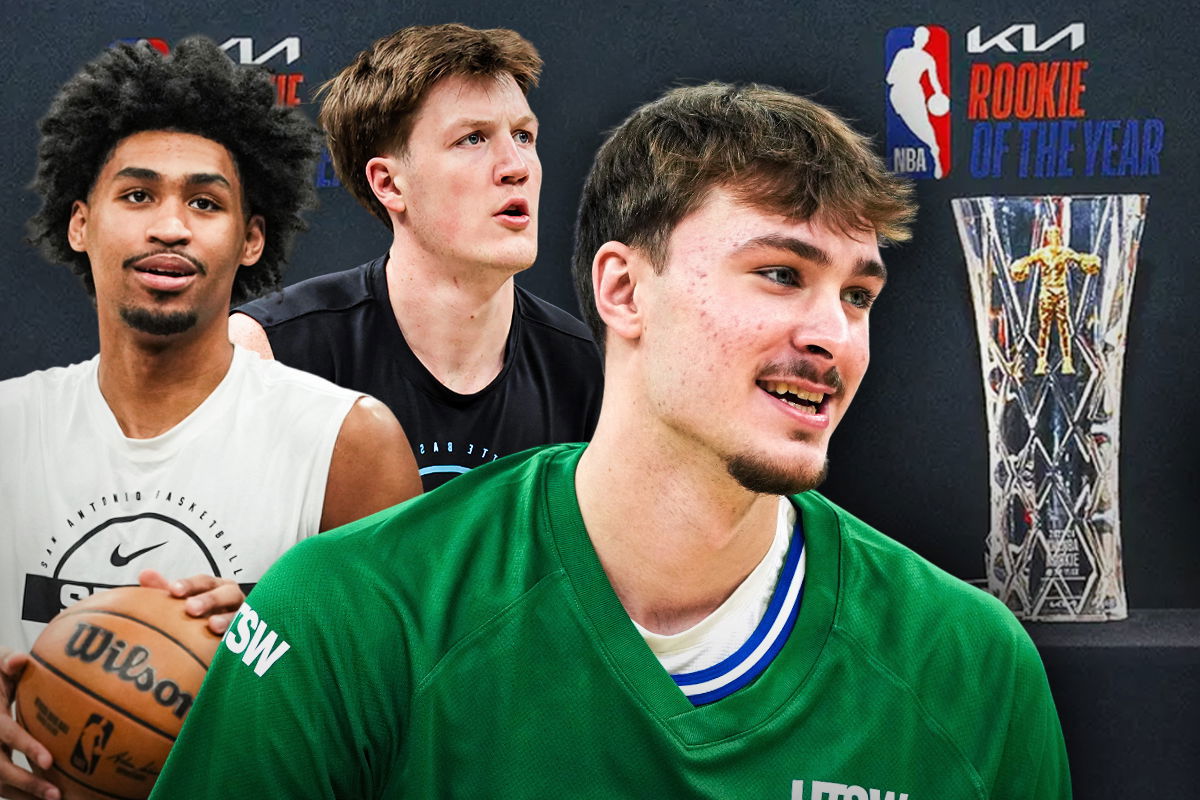
Cooper Flagg (Dallas Mavericks, Forward)
Flagg came in with massive expectations as the No. 1 pick in 2025 and the plan in Dallas was that he would ease into the league under the guidance of veteran stars Anthony Davis and Kyrie Irving. However, that never happened as Davis was traded to the Washington Wizards in February 2026 and Irving has been sidelined all season recovering from ACL surgery, leaving the rookie to shoulder a massive load in a post-Luka Doncic era.
He has fared in ways no one could have imagined. Sure, he came in with a lot of promise being No. 1, however, the 19-year-old is playing like he has been in the league for quite some time. He has quietly become Dallas’ most reliable player night after night, averaging 20.4 points, more than any rookie in the league.
He has been playing at an All-Star form level for much of the season. Flagg is the future for the Mavs. He has the versatility and can generate high-efficiency shots, positioning him as the cornerstone to rebuild around, but the franchise will have to add a strong supporting cast.
Dylan Harper (San Antonio Spurs, Guard)
Harper was the No. 2 pick last year and joined a Spurs team already building around young talents Victor Wembanyama and Stephon Castle. It has been a seamless fit even though most of his games have been off the bench. He has managed to average double figures in points per game despite zero starts this season.
Harper has improved the Spurs’ depth in playmaking and perimeter defense, something they lacked in the past few years. They are now one of the league’s top defensive units and the second-best team in the West.
Their 20-year-old rookie is thriving in a supporting role while showing flashes of star potential. When he jumps into the starting lineup, he could be one of the most influential players on their roster.
Kon Knueppel (Charlotte Hornets, Guard)
Knueppel also came in last year and has been a revolutionary player for a Hornets team looking to take some offensive load off LaMelo Ball. The 20-year-old immediately showed his sharpshooting skills that have improved Charlotte’s offensive spacing and overall performance this season. He is leading all rookies with his efficiency and is on pace to break the rookie 3-point records.
Charlotte has never really had a reliable outside threat until now as Ball is shooting at 36.5% from 3 in his career. Knueppel is shooting 44% and he opens driving lanes for teammates. His shooting volume and accuracy will position him to anchor the offense long-term and if surrounded by complementary pieces, he could elevate Charlotte from a lottery franchise to a playoff contender in the coming years.
VJ Edgecombe (Philadelphia 76ers, Guard)
The 76ers are coming to terms with the fact that Joel Embiid will not make them a contender and have turned to the future with Tyrese Maxey and his rookie backcourt partner, VJ Edgecombe. The Sixers took him third overall as one of the most promising rookies of the 2025 draft. Through 56 games so far, he is averaging 15.5 points, 5.6 rebounds and 3.9 assists per game.
He can score in the perimeter and has defensive upside, making him an ideal fit while providing two-way play. As he develops, Philadelphia should bank on his explosive athleticism and growing playmaking if the franchise is finally looking to redirect itself to a winning path.
Stephon Castle (San Antonio Spurs, Guard)
Castle is just in his second season with the Spurs and is indispensable in their rise as a title contender. He is averaging 16.6 points per game shooting at 46.6% from the field, up from his rookie numbers. He has also started more games than he did last year and the Spurs’ overall ratings have jumped to the highest since their championship days.
The core of Wembanyama and Castle together with De’Aaron Fox and Devin Vassell all have contributed to the rise. What Castle brings is all-around impact as he has grown into the Spurs’ primary ball-handler and point-of-attack defender, which positions him to steal the offensive keys.
Postseason will be a new territory for San Antonio, making it very interesting to see how the franchise fares with all these star young players when it really counts.
The Death of the “Face of the NBA” Era
The NBA has come full circle over the years, from Magic Johnson’s and Michael Jordan’s era-defining arrivals to today’s youth investment, which shows how the game has evolved.
It is no longer one or two players being the main talking point of the league and franchises having to rely on their solo superstar to compete and win. It has become somewhat of an even playing field and not the Cleveland Cavaliers and Golden State Warriors in four straight Finals we saw in the 2010s.
Franchises like Atlanta, with three players on this list, and San Antonio are surging because they are developing talent through the draft. Other teams that followed a different path and chased the criticized “superteam” blueprint have mostly flopped in recent years.
Remember the 2021-22 LA Lakers? How about the 2020-2021 and 2021-22 Brooklyn Nets? The 2022-23 Phoenix Suns?
To sustain success in this era, franchises have to build cultures around adaptable young stars who evolve with the game.
It might take some time and a lot of losing records, but teams eventually get there. Just take Oklahoma City, which lost over 60 games just four years ago but are now the defending champions knocking on the door of a coveted repeat.
Strategic roster construction has never mattered more in the NBA.