
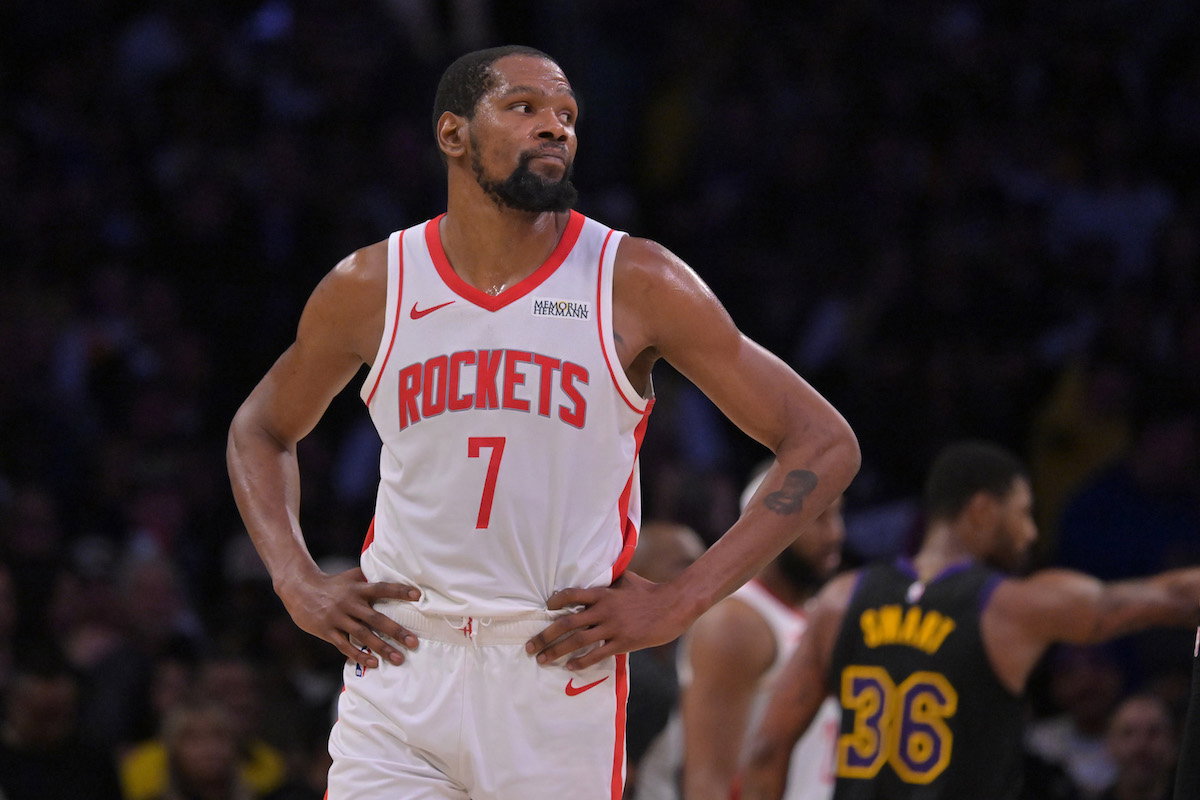
For 18 years, the SuperSonics name sat in a filing cabinet in Seattle, protected by a legal settlement that prevented Oklahoma City from taking it when they relocated the franchise in 2008, and preserved for the day the city got its team back. On March 26, the NBA Board of Governors voted to formally explore expansion bids in Seattle and Las Vegas, with franchises expected to command between $7 billion and $10 billion each. The city is getting its basketball back. And the man who was there for the final season before it all disappeared is now open to being there when it returns, as a player.
Watch What’s Trending Now!
Sports and entertainment reporter Landon Buford caught up with Kevin Durant amid the expanding conversation around Seattle’s NBA return and put the question directly to him: would he consider finishing his career where it all started? The response was measured but meaningful. “That sounds good, but we will have to see,” Durant said. Five words of genuine openness from a player who has spent two decades carefully managing his public commitments, and who, until recently, had framed any Seattle involvement in terms of ownership and front office roles rather than playing ones.

Kevin Durant on possibly finishing his career where it all started as a @SeattleSonics: “That sounds good, but we will have to see.” #bringbackoursonics #nba

The shift in framing matters. As recently as 2024, Durant had said that his dream was to help run the Seattle franchise when it returned, “to help run the team and guide the team as they come back into the league, I would absolutely love that. That’s a dream come true. That’s probably one of the only things that I would lock in like I was really playing again.” The language then was executive, not athletic. In March, when the expansion vote was approaching, he told reporters after a Rockets loss in Chicago: “About time Seattle gets some basketball back. I don’t know if I’ll be around when the Seattle team comes, but I’m still thinking about it.” Buford’s report now suggests the thinking has evolved, from “I don’t know if I’ll be around” to “that sounds good.” That is not a commitment. But it is a door that was previously closed, now visibly ajar.
The arithmetic that makes the scenario plausible is tight but real. Durant’s current contract with the Houston Rockets expires after the 2027-28 season, the same window in which a Seattle expansion franchise is targeting its first season, with the NBA’s stated goal being a 2028-29 debut. Durant would be 40 years old at the start of that season, a younger age than LeBron James, who is currently carrying a playoff team in 2026. Durant has already been described by NBA.com as one of just two active players, alongside Jeff Green, his current Rockets teammate, who played for the original Seattle franchise, making any return a full-circle moment of the kind that rarely presents itself so neatly in professional sport.
What a Durant Return Would Mean for Seattle and the NBA
The sentimental case for Durant finishing in Seattle is self-evident. He arrived in the city as the No. 2 overall pick in 2007, won Rookie of the Year, and was relocated to Oklahoma City just 12 months later, before his career had fully announced itself to the world. Everything that followed, two championships, four scoring titles, 16 All-Star appearances, a place in the conversation for greatest scorer in NBA history, happened elsewhere, often against the franchises and cities that Seattle fans still resent.
Imago
Credits: IMAGN
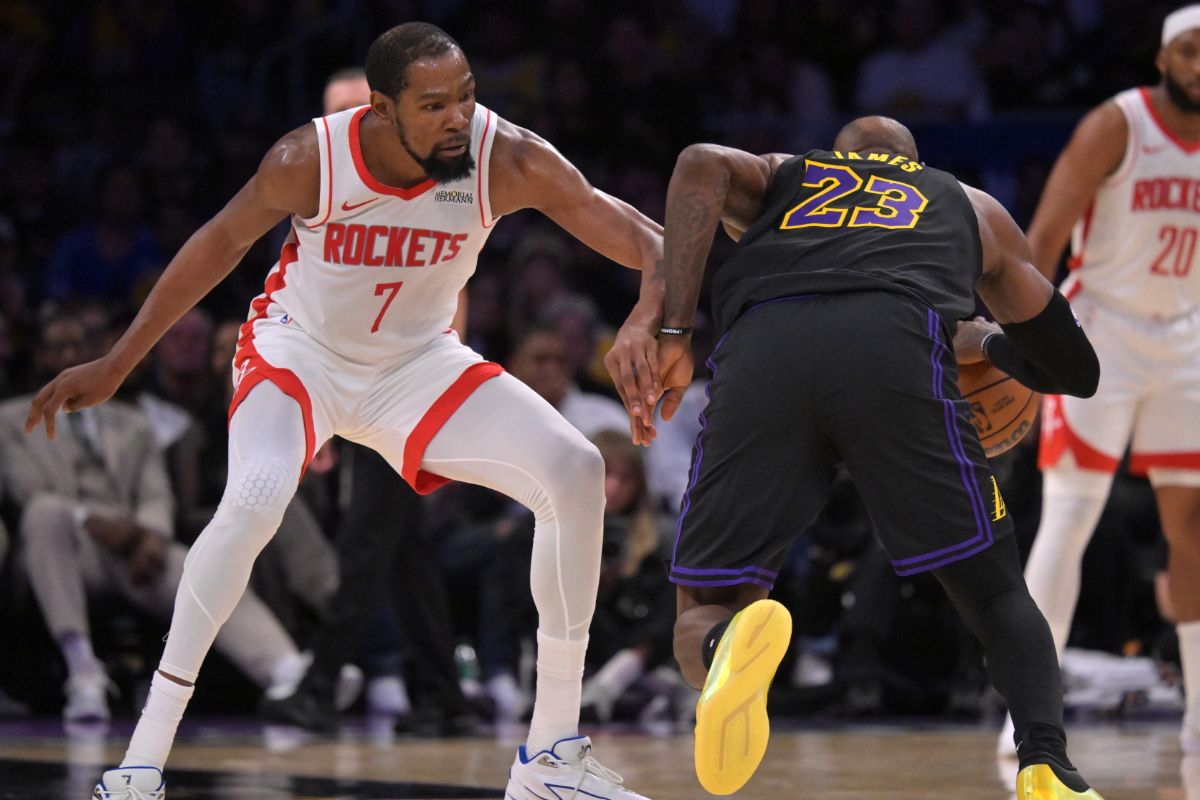
When Durant played a preseason game in Seattle with the Warriors in 2018, he wore a throwback Shawn Kemp jersey during starting lineup introductions and took the microphone to address the crowd, an unrequested gesture that told you everything about how the city still registers for him emotionally.
The practical question hanging over “that sounds good” is the one Durant himself flagged: the uncertainty around his future in Houston. The Rockets are currently out of the playoffs after going down 4-2 to the Lakers in the first round, with Durant having missed Game 3 entirely due to a bone bruise in his sprained left ankle. A return to Seattle would require Durant sticking around until at least 2028, but his longevity is unquestioned, and a player who still dropped 26 points per game at 37 in the regular season has given no reason to doubt the body’s cooperation. “That sounds good, but we will have to see.” In Durant’s vocabulary, that is as close to yes as the moment currently allows.
Durant’s Rocky Road Out of Houston
The Houston chapter has not ended cleanly. The Rockets entered the 2025-26 season as legitimate NBA Finals contenders, trading meaningful assets for Durant specifically to win a championship, and exited the first round with a 98-78 blowout loss to a Lakers squad missing both Luka Doncic and Austin Reaves for most of the series. The bar kept dropping, and Houston still couldn’t clear it.
According to The Athletic’s Sam Amick, the burner account controversy that erupted mid-season, in which Durant was linked to social media activity targeting teammates and team personnel, did not resolve internally, and multiple league sources with close ties to Rockets players indicated the situation had hampered team chemistry heading into the playoffs.
Imago
Credits: IMAGN
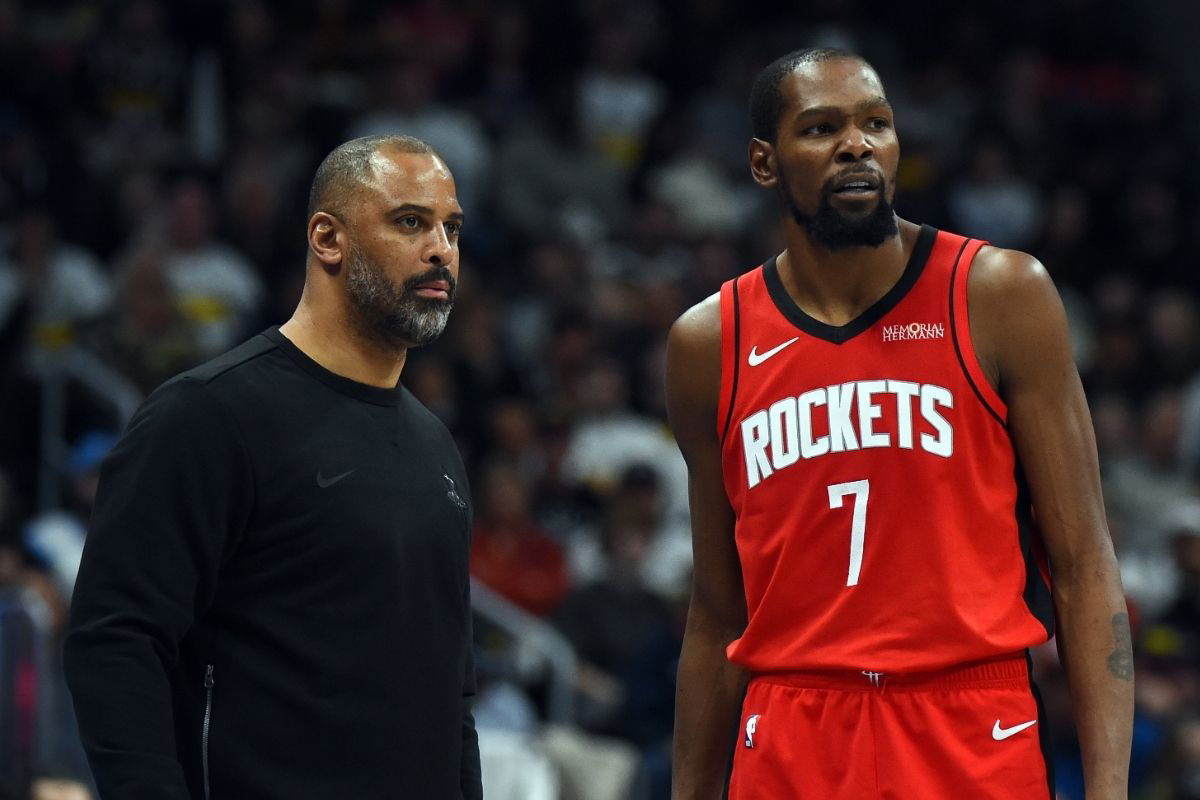
Kevin Durant has a player option for the 2026-27 season and has demonstrated a willingness to request trades when he does not believe his team is a legitimate contender, a pattern that has now been replicated in Brooklyn, Phoenix, and possibly Houston. Multiple reports since the series’ conclusion have described widespread interest from up to two dozen teams in a possible Durant trade this summer, with Houston’s front office now considering whether to use him as a centrepiece in a larger roster overhaul rather than build another season around him. According to Yahoo Sports, the Rockets are confirmed to be in talks with Giannis Antetokounmpo, and nothing is off the table in terms of roster upgrades, which includes the possibility of moving on from KD entirely.
Houston’s front office has publicly committed to retaining both coach Ime Udoka and GM Rafael Stone despite the playoff failure, framing the exit as an injury-affected aberration rather than a structural indictment. Whether Durant views it the same way is a separate question. He can opt out after the 2026-27 season, which means the Rockets have one year to convince him the ceiling is real before he has the leverage to force a decision entirely on his own terms.
The Seattle comment, timed to this particular offseason, is not a coincidence. When a player who has already engineered three franchise exits in eight years says a homecoming “sounds good,” and his current employer is openly discussing what life after him might look like, the gap between those two realities is narrowing faster than either side may be ready to admit.