
As you’ve likely noticed, the NBA news cycle is starting to wind down. We still have some marquee restricted free agents who need to have their contracts inked. However, the NBA Draft and Vegas Summer League are behind us, and most of the big-time players that were available have been either traded or signed to new deals.
Watch What’s Trending Now!
With that in mind, now is the perfect time to look at some of the most economical signings of the 2026 offseason. But how can we use stats to analyze contracts?
A Formula For Measuring Production Value
For this, we are going to focus on a method inspired by Seth Partnow’s book, “The Midrange Theory.” In his book, the former Director of Basketball Research for the Milwaukee Bucks discusses a formula that teams use to estimate a player’s monetary value. In its essence, the formula involves multiplying how many points a player is “worth” by the amount a win “costs” in a given season. Unfortunately, Real-Adjusted Plus-Minus (RAPM) — a major component in the formula — is no longer available. So, I’ve revised Partnow’s formula a bit.
The Website Dunks & Threes offers a metric called Estimated Wins (EW). As the name implies, this measure quite literally estimates how many wins a player earned for their team in a given season. Theoretically, by multiplying this number by the amount a win is worth in a given season (four million in 2026-27), we can get an idea of how much they should be making next season. From there, we can compare the average annual value (AAV) of the contract they received to the amount this exercise produced to see the disparity in how much they got paid versus what they are actually worth.
Now, there are some shortcomings to using such a simple method for calculating a player’s value. First, we are limited to the methodology used to compute EW. As is the case with any catch-all metric, EW can only tell you how many wins a player added in their specific role on their specific team (meaning players on winning teams will look more valuable than those on losing teams).
And second, this sort of method biases against players who struggle with injuries — since they aren’t on the court to help have an impact on winning. In some instances, like with players who are consistently injured, this can be helpful. But in one-off cases, where a player is uncharacteristically unhealthy for a year, this can make a player look far less valuable than they actually are. To account for this, we’ve also included a version of this metric that adjusts for games played.
Now, with all the necessary background context laid out, let’s take a look at the best contracts of the 2026 offseason up to this point.
The Top Five Contracts Of The 2026 Offseason
Before we discuss the injury-adjusted version of production value (PV), let’s look at the top five version of the raw stat, since, after all, injuries are still part of the game, and the ability to stay healthy enough to provide positive value is still incredibly important.
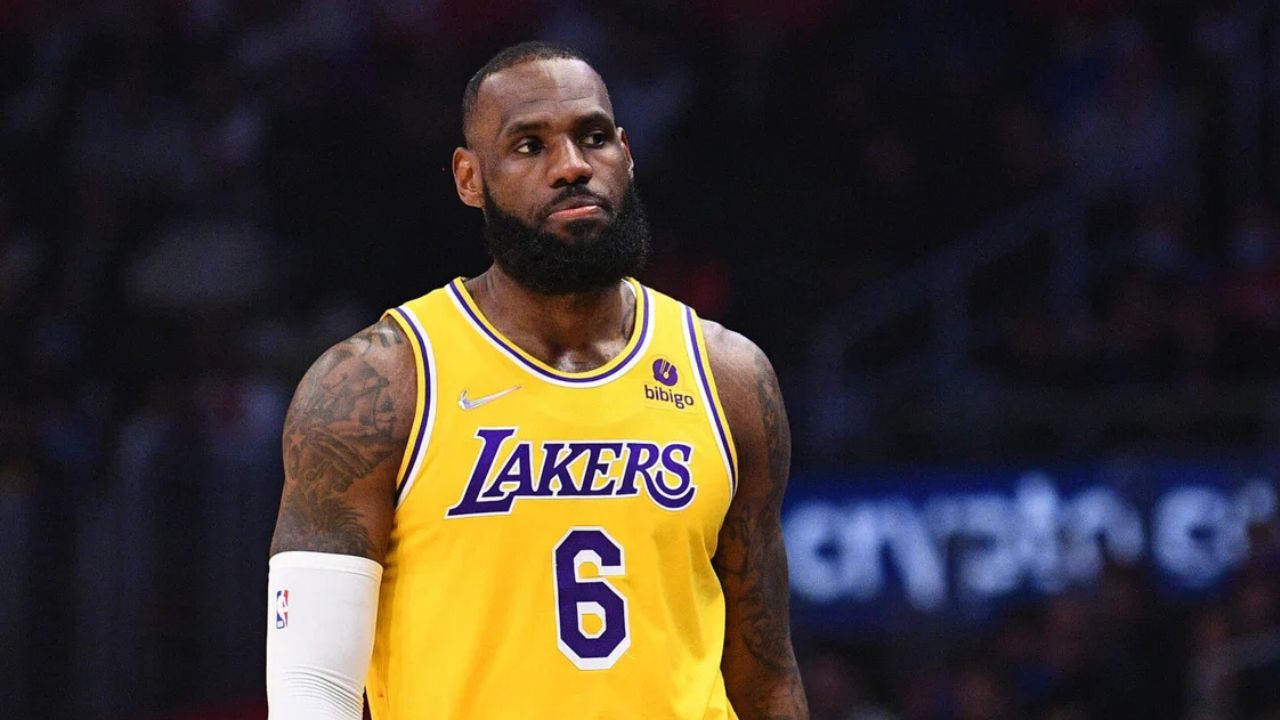
Despite much being made of how much of a steal it was for the Philadelphia 76ers to get LeBron James for roughly $4 million per year, The King does not land the top spot in raw PV. Instead, it is Collin Gillespie, who, after a breakout 2025-26 campaign, agreed to return to the Phoenix Suns for an AAV of $12 million.
Speaking of the Suns, they caught a lot of flak for overpaying for Miles Bridges. However, they did a great job with their free-agent signings. Along with Gillespie, they also brought back Jordan Goodwin on a bargain deal, with his PV being $12.9 million more than his AAV.
Along with those three, we have Marcus Smart and a tie at the number five spot between Javonte Green and Nikola Vucevic. After a bounce-back season last year, Smart didn’t cash out the way some expected him to. Instead, he chose to reunite with his former head coach (Ime Udoka) on the Houston Rockets for an AAV that was $13.4 million less than his AAV.
I’m shocked that Green wasn’t able to get anything more than a notch above his veteran minimum ($3.9 million). He was awesome for the Detroit Pistons last year, and he’s never really landed a big payday before. You’d think that Green would want to capitalize on his career year. Maybe there wasn’t a market for him, or he just really likes Detroit? Whatever the reason may be, the Pistons got an absolute steal.
Many of you are probably surprised to see Vucevic’s name pop up on this list. For years, Vucevic was someone you could argue was one of the worst contracts in the league, because his defensive deficiencies make it hard for him to start on high-level teams. However, he’s still a strong offensive player (79th percentile Offensive Estimated Plus-Minus). And since he’s now only being paid his veteran minimum, the Orlando Magic can feel justified having him come off the bench and leaning on him against more favorable matchups.
The Top Five Contracts Of The 2026 Offseason With Injuries Adjusted
As we alluded to earlier, we’ve also prepared a version of PV that accounts for injuries. Here, we take every player’s PV and assume that they will play 65 games next season (the threshold you have to reach to be eligible for most awards these days). Here is what the top five looks like now:
For the top five contracts, this doesn’t make a huge difference (you will see more of a change once we look at the worst contracts). The only noticeable difference here is the order (and some of the honorable mentions). With raw PV, Gillespie had the edge over James because he appeared in 20 more games than the future Hall of Famer. But in adjusted PV, James reigns supreme.
After those two, it’s Smart, Goodwin, and then Vucevic. Green is out of the top five (falling all the way to 8th), as he was getting a huge boost from having played all 82 games.
Want to find out who signed the worst contracts this offseason? Be sure to tune into Part Two of this series.