
Contracts. As much as we diehards want to focus on the game that’s being played on the hardwood, we can’t get around the fact that the NBA is a business. And since teams have limited resources to work with, a player is only as valuable as their production relative to how much they are being paid.
Watch What’s Trending Now!
In Part One of this series, we looked at the best contracts of this offseason. Now, it times to get all negative Nancy and see which teams stretched their money out the least.
And just like we did before, we’re going to use the help of data to guide our analysis.
A Formula For Measuring Production Value
For this, we are going to focus on a method inspired by Seth Partnow’s book, “The Midrange Theory.” In his book, the former Director of Basketball Research for the Milwaukee Bucks discusses a formula that teams use to estimate a player’s monetary value. In its essence, the formula involves multiplying how many points a player is “worth” by the amount a win “costs” in a given season. Unfortunately, Real-Adjusted Plus-Minus (RAPM) — a major component in the formula — is no longer available. So, I’ve revised Partnow’s formula a bit.
The Website Dunks & Threes offers a metric called Estimated Wins (EW). As the name implies, this measure quite literally estimates how many wins a player earned for their team in a given season. Theoretically, by multiplying this number by the amount a win is worth in a given season (four million in 2026-27), we can get an idea of how much they should be making next season. From there, we can compare the average annual value (AAV) of the contract they received to the amount this exercise produced to see the disparity in how much they got paid versus what they are actually worth.
Now, there are some shortcomings to using such a simple method for calculating a player’s value. First, we are limited to the methodology used to compute EW. As is the case with any catch-all metric, EW can only tell you how many wins a player added in their specific role on their specific team (meaning players on winning teams will look more valuable than those on losing teams).
And second, this sort of method biases against players who struggle with injuries — since they aren’t on the court to help have an impact on winning. In some instances, like with players who are consistently injured, this can be helpful. But in one-off cases, where a player is uncharacteristically unhealthy for a year, this can make a player look far less valuable than they actually are. To account for this, we’ve also included a version of this metric that adjusts for games played.
Now, with all the necessary background context laid out, let’s take a look at the worst contracts of the 2026 offseason up to this point.
The Top Five Contracts Of The 2026 Offseason
Before we discuss the injury-adjusted version of production value (PV), let’s look at the bottom five version of the raw stat, since, after all, injuries are still part of the game, and the ability to stay healthy enough to provide positive value is still incredibly important.
It should come as no surprise that, without accounting for injuries, our formula sees Trae Young and Walker Kessler as the two worst signings of this offseason, since the former appeared in 15 games while the latter played just five. As we will soon see, once we account for injuries, the number that Kessler ended up being paid by the Los Angeles Lakers makes a lot more sense than what the Washington Wizards gave Young.
After them, we have Draymond Green’s one-year deal to return to the Golden State Warriors. Despite the four-time NBA Champion remaining pretty healthy (he played in 68 games — the most of anyone in the bottom five), Green’s drastic defensive decline (going from being in the 98th percentile in Defensive Estimated Plus-Minus to the 73rd) causes his eW to fall by about 71%. However, Green has always been the kind of player who plays better on winning teams. So, if the Warriors can stay healthy this year, maybe his contract ends up looking a little bit better.
At four, we have Gary Trent Jr. This contract was so bad that the Milwaukee Bucks are currently being investigated for possible salary cap circumvention. According to our formula, Trent was so bad last year that he should be playing the Bucks to pay for them. The only reason he isn’t higher on this list (or lower, I guess) is that his deal doesn’t involve as much AAV as the players ahead of him.
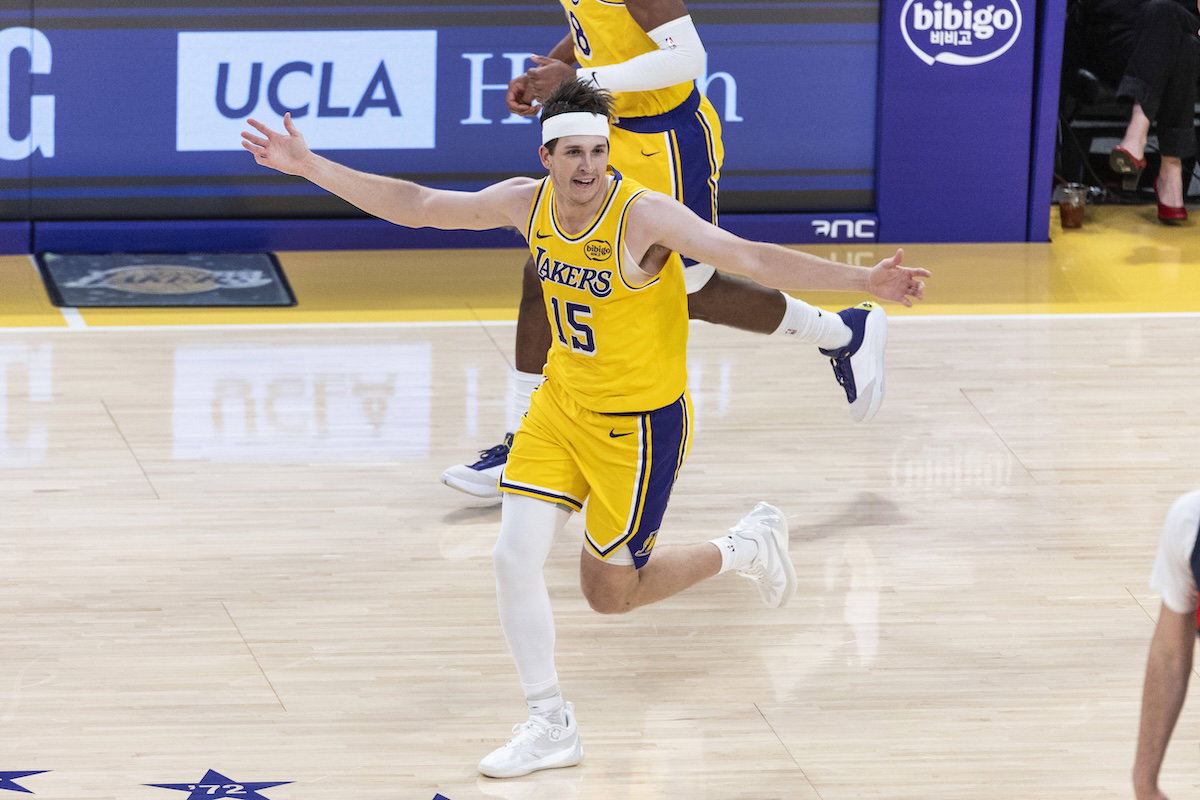
Finally, we have Austin Reaves. In general, it is really hard for players to live up to monster paydays, and raw PV also dings him for missing 31 games last season. Once we adjusted for injuries, Reaves falls out of this dishonorable list.
The Top Five Contracts Of The 2026 Offseason With Injuries Adjusted
As we alluded to earlier, we’ve also prepared a version of PV that accounts for injuries. Here, we take every player’s PV and assume that they will play 65 games next season (the threshold you have to reach to be eligible for most awards these days). Here is what the bottom five looks like now:
Even if we assume Young plays 65 games next season, the Wizards still look like they need to sign up for money-management courses. Green remains in third place, and Trent is still in fourth (coincidentally, he appeared in 65 games for the Bucks last year).
The two newcomers are Bogdan Bogdanovic (second place) and Ousmane Dieng (fifth). To be fair to the Houston Rockets, they signed him to the lowest amount possible for a player of his experience level. He, along with Dieng, are also members of the infamous pay-to-play club.
Reaves and Walker are out of the bottom five, but they still find themselves in the honorable mentions category. I don’t 100% agree with this, but it will be interesting to see how those deals age for the Lakers.
Want to find out who signed the best contracts this offseason? Be sure to tune into Part One of this series.