
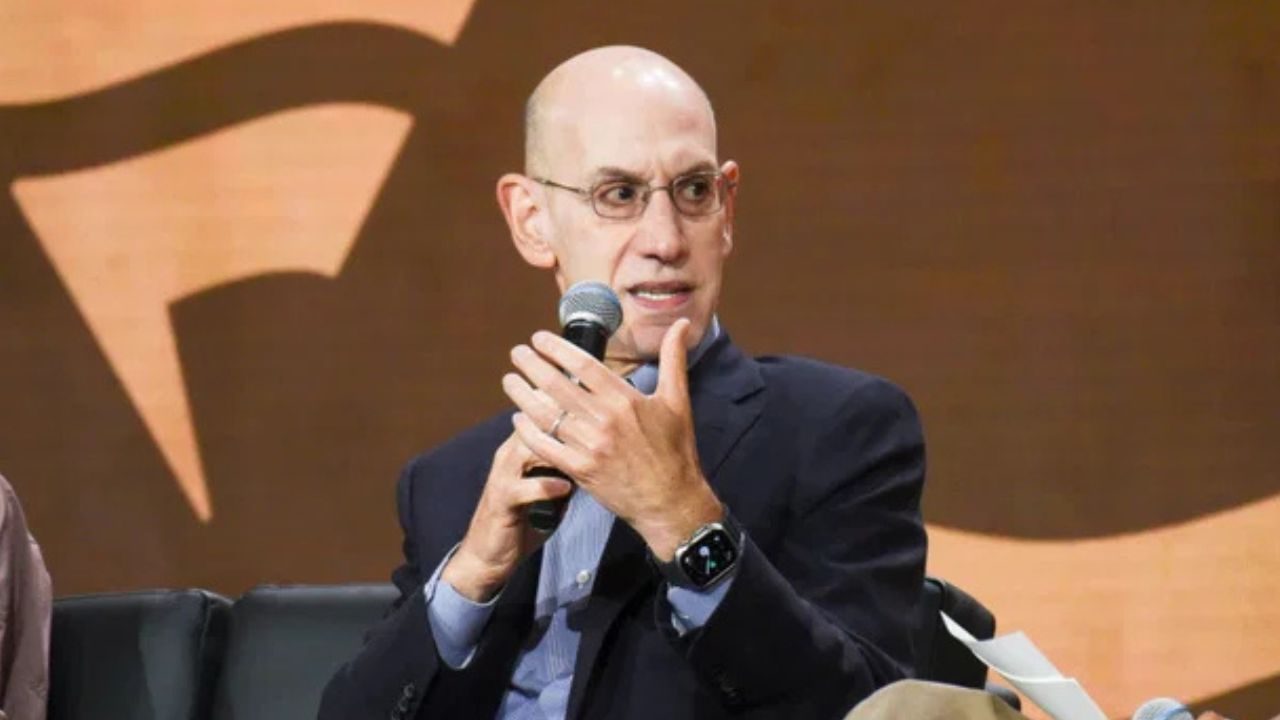
Adam Silver’s office just circulated the updated salary cap projections for the 2027–28 season. For all 30 NBA franchises, this document is a vital financial blueprint for their future roster construction. In reality, it sets the tone for championship contention and upsets that have been going on for eight seasons.
Watch What’s Trending Now!
According to a report by The Athletic’s Fred Katz, the NBA informed front offices that the projected salary cap for 2027–28 is now expected to hit $176 million, with the luxury tax threshold set at $213 million. As per Katz’s reporting, it gives cap-strapped teams a “measure of relief.”
While the updated forecast comes in $2 million higher than the league’s previous estimate, it does offer modest breathing room for front offices operating under the oppressive constraints of the current Collective Bargaining Agreement (CBA). The revised $176 million projection brings the annual cap growth rate to roughly 6.7%.
That’s a meaningful jump from the previous 5.5% forecast, even if it still falls short of the 10% annual cap-smoothing ceiling established under the league’s massive national media rights deals. It comes at an interesting time too, with the NBA now in its first season under the $72 billion media rights agreement while also grappling with a viewership slump.
The modest bump brings some much-needed breathing room for contenders feeling the squeeze of second apron tax penalties. And that apron system itself is no accident. NBA Commissioner Adam Silver has openly admitted it was built with a specific purpose: to break up superteams and prevent dynasties from taking root.
Speaking in Las Vegas back in July, Silver made no apologies for the financial mechanics that have been steadily pulling championship rosters apart across the league, framing it all as part of a deliberate push toward greater competitive balance.
“It’s certainly not an unintended consequence,” Silver said when asked about the roster turnover and tax pressures forcing contenders to part ways with key stars. “In the case of a league, it’s in essence zero-sum. So, to the extent that one player doesn’t sign up, doesn’t re-sign a player, or chooses to trade a player, of course, that player goes to another team. And so, the purpose of the system is ultimately to create competition throughout the league. And from that standpoint, I think the system’s working incredibly well.”
Silver highlighted the unprecedented era of parity, noting, “The goal isn’t necessarily to have a different champion every year, but we’ve had eight different champions over the last eight years.”
The timing of his comments was interesting. The offseason saw superstar turnover, with Giannis Antetokounmpo going to the Miami Heat, Jaylen Brown getting traded to Philadelphia, and LeBron James moving from Los Angeles to Philadelphia. While finances weren’t key to these moves, teams have been straining their cap space around these stars by adding depth.
The Lakers massively overspent to surround Luka Doncic with players that fit his high-scoring style, but they have to trim the roster down to 15 before the season begins. The Knicks are trying hard to stay under the second apron while maintaining the depth that won the 2026 title.
The Denver Nuggets remained the most cap-strapped team, which forced them to forego Peyton Watson.
When Silver made those comments about superteams, the LA Clippers’ punishment for cap circumvention wasn’t announced. But an investigation into the Bucks’ contract with Gary Trent Jr. was initiated.
Bird rights still allow teams to re-sign their own players, but the second apron makes it far more challenging to do so. So such massive extensions do raise scrutiny. Now the Bucks are unable to move Myles Turner’s massive contract because teams don’t have that space.
The $2 million bump reverses a troubling trend of recent cap projections being revised downward due to instability in regional sports networks and declines in local broadcasting.
While the luxury tax line of $213 million still imposes heavy penalties on high-spending teams, the revised numbers provide additional flexibility for franchises navigating the harsh second-apron restrictions, which freeze future first-round draft picks, eliminate the taxpayer mid-level exception, and severely limit trade mechanics.
Beyond front-office planning, the higher cap figure carries direct financial implications for the league’s top superstars. Under the previous luxury-tax rules, wealthy ownership groups could simply write larger tax checks to retain homegrown stars via Bird rights while adding role players through exceptions.
However, Silver’s second-apron paradigm has rendered that approach obsolete, as evidenced by heavy roster restructures across the league, in which teams can no longer sustain multiple supermax figures alongside quality depth.
While fans of established contenders may push back against rules that accelerate the dismantling of championship rosters, Silver’s vision remains clear: preventing 73-win juggernauts from stacking talent in free agency and ensuring every franchise maintains a realistic path to contention.