
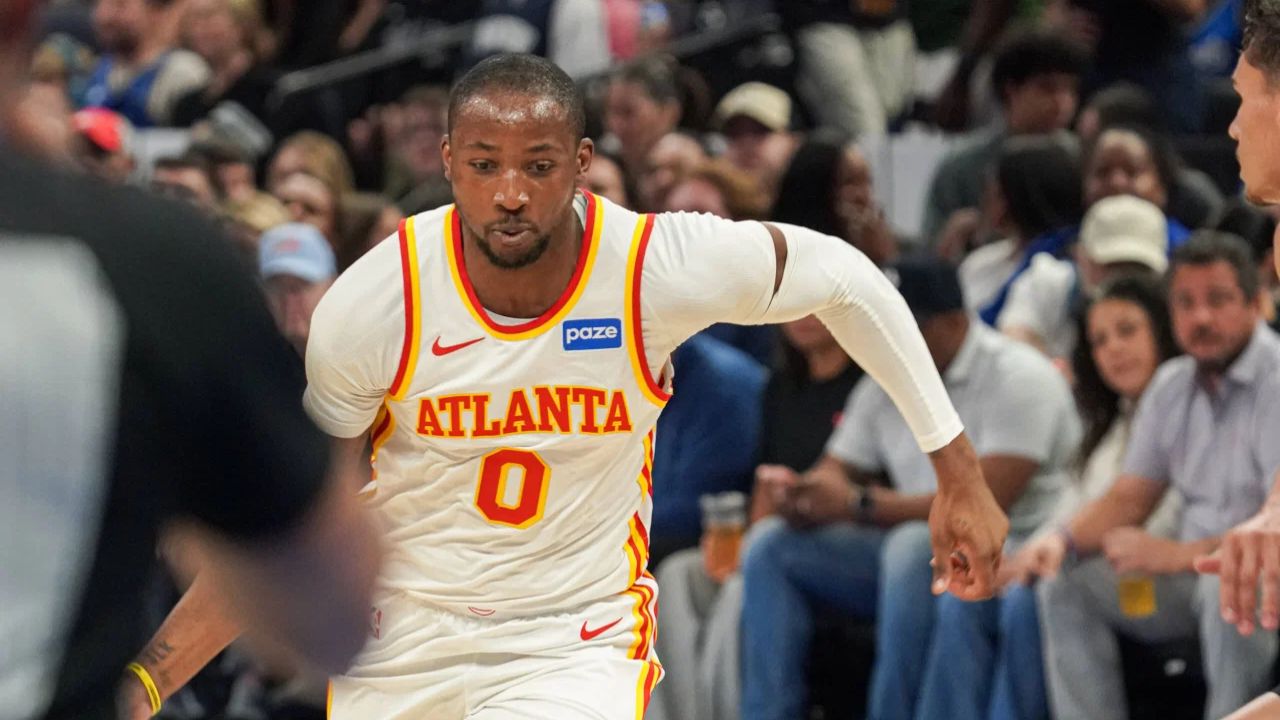
Jonathan Kuminga’s decision to turn down longer, more lucrative contract offers in favor of a short-term, $12.4, almost $13 million deal with the Minnesota Timberwolves continues to reverberate across the NBA landscape. Maybe even more than LeBron James taking a steep pay cut with the 76ers. Someone behind the scenes of these contract talks, Klutch Sports founder and LeBron’s agent, Rich Paul, offered a stark reality check regarding how player value changes during free agency.
Speaking on the Game Over podcast, the super agent separated contract negotiations from athletic talent, framing Kuminga’s market trajectory as a cautionary tale for young talent across the league.
Watch What’s Trending Now!
Co-host Max Kellerman sparked the debate by suggesting Kuminga was “hustling backward” after turning down a longer deal with the Los Angeles Lakers and leaving his previous extension on the table with the Golden State Warriors before his trade to the Atlanta Hawks. While Paul claimed there’s an unwritten agent code against speaking negatively about another player’s contract, he candidly detailed the business realities young stars face when navigating these talks.
“This is a tough one, Max, and just for clearance, I’m not talking negative about Jonathan Kuminga. There’s a rule, laws of agenting that you cannot negatively talk about a player contract… here’s what I would say,” Paul explained. “As a player in the NBA or in any sport, when you’re in contract negotiation or when you up for negotiation, your value in the moment is a lot different now.
“A year later, could you increase your value? Absolutely. For a lot of guys, especially when you go high in the draft, your best chance of really having the most value is probably going to be with the host team, the team that drafted you.”
For Kuminga, that was supposed to be the Golden State Warriors. But he went from 2021’s promising top draft pick to the last option in Steve Kerr’s rotation. He spent the 2025 and 2026 offseasons in a stalemate to presumably get a bigger payday.
He reportedly turned down a $54 million offer from the Warriors last year and was seeking about $25 million this year, which the Los Angeles Lakers couldn’t afford. Combined, he turned down $90 million in guaranteed money for unexplainable reasons. Paul cautions that this might haunt JK for the rest of his career.
Paul added that when an organization passes on locking up a high draft pick, the rest of the league takes notice.
“Well, because essentially, if the general manager doesn’t want to pay you, either you’re not as good, or he made a mistake, or they found somebody to replace you, and you’re not as good.”
The former No. 7 overall pick hit the free-agent market looking for a lucrative, long-term starting-caliber contract when the Hawks declined his $24 million option.
While Kuminga’s agent, Aaron Turner, revealed that teams like the Lakers, Chicago Bulls, and Portland Trail Blazers made compelling offers, Kuminga opted for a two-year deal with a year-two player option in Minnesota.
The move allows him to bet on himself alongside Anthony Edwards, LaMelo Ball, and Rudy Gobert. Still, it requires him to sacrifice his primary scoring ambitions to fit into a heavily established hierarchy.
Addressing how young players must process their team fit, Paul emphasized that success in the modern NBA often hinges on accepting a defined role rather than chasing superstar usage rates.
“For any young player… It’s more so just about when you come into the league,” Paul said. “There’s two ways to come into the league. You’re coming into the league with an opportunity to possibly become a number one guy or you come into the league as a role guy, and that’s just what you’re going to be. How you embrace that is a whole other thing.
“Because I always say there’s 30 starring roles in the NBA. Maybe 45, because some teams have two guys that can actually be stars, right. Everyone else has to play a role. How you embrace that role more than anything, today teams are looking at how do young players process that.”
Kuminga’s agent confirmed that the 23-year-old forward ultimately chose Minnesota over Los Angeles due to organizational alignment between owner Alex Rodriguez, general manager Tim Connelly, head coach Chris Finch, and centerpiece Anthony Edwards.
Despite turning down a larger role on paper with the Lakers, Kuminga chose the tactical flexibility of a $6.1 million annual taxpayer mid-level exception in Minneapolis.
However, former Warriors teammate Draymond Green, and Rich Paul’s client, warned on his show that Kuminga’s bargain salary puts him at risk of being the “first plug that gets pulled” if the starting core struggles.
For Kuminga, transforming this tentative contract into a massive payday next summer will depend entirely on whether he can buy into a supportive role and turn potential into consistent winning basketball.