
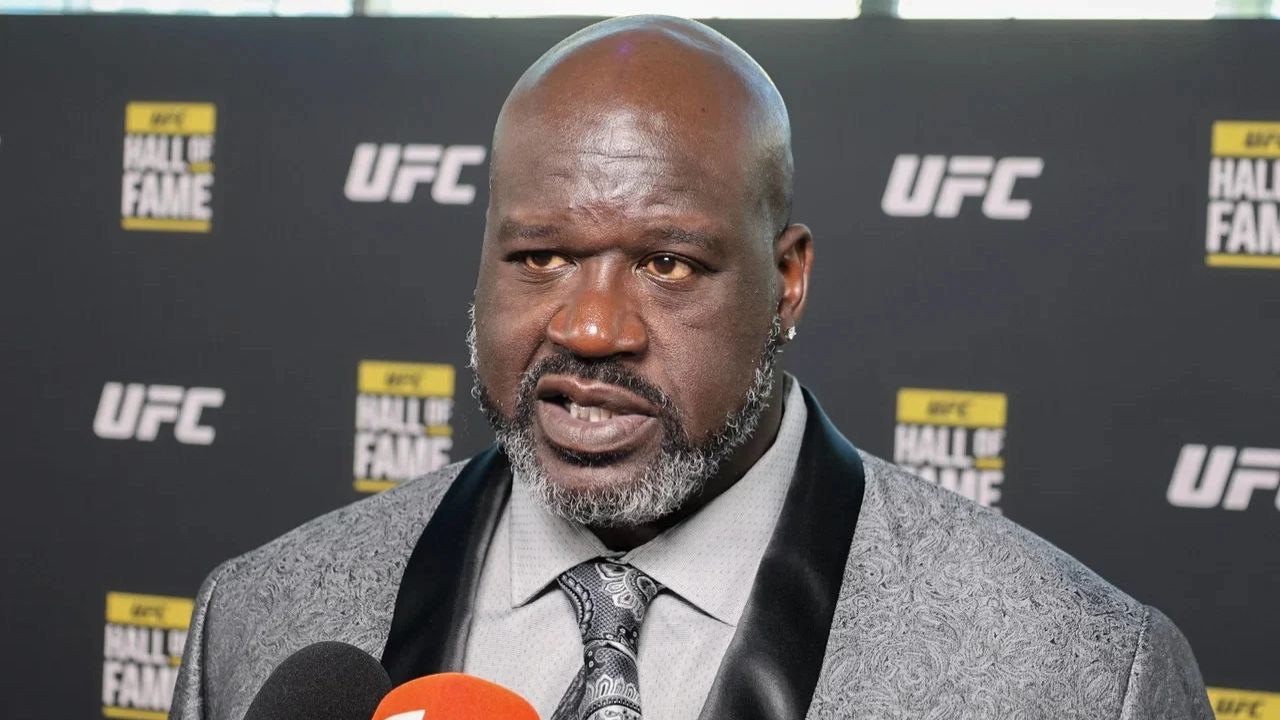
Shaquille O’Neal is not one to back down from controversial takes from players and fans alike. When Kenny Smith had an interesting take on LeBron James and the physicality of the NBA in the 1990s, a fan strongly pushed back against Smith’s comments.
Watch What’s Trending Now!
The exchange came after Smith suggested that the absence of hand-checking in today’s NBA has helped LeBron maintain his effectiveness deep into his 40s. The Inside the NBA analyst argued that modern rules allow James to move more freely, making it easier for him to maintain his conditioning and play at a high level. The argument did not sit well with every basketball fan. Philadelphia sports personality DJ Eastwood challenged the premise behind Smith’s comments on his RunItBackNBA show. He questioned whether hand-checking actually made the 1990s as physically demanding as some former players suggest. O’Neal, however, appeared unimpressed by the criticism and came to his longtime colleague’s defense.
“U never played dude so just be a fan,” O’Neal said in the comments, delivering a blunt response.
DJ Eastwood’s response was particularly pointed. In a video addressing Smith, the critic questioned who started what he called the “fake story” about hand-checking in the 1990s. He argued that the game played today is different, but disputed the notion that defenders in the previous era were constantly using their hands to slow down opposing players.
“Please show me a video of all of this hand checking that was going on,” DJ Eastwood said, challenging those who regularly bring up the rule when comparing players across generations.
SHOULD THE NBA GO HEAD-TO-HEAD WITH THE NFL ON THANKSGIVING?
He also singled out LeBron’s physical profile, asking whether a 6-foot-9, 240-pound player would really have struggled against defenders from the 1990s. The fan argued that James’ combination of size and strength would have allowed him to overpower most players from that era.
To support his point, the critic brought up several smaller guards who found success during the decade, including Muggsy Bogues, Spud Webb, and Avery Johnson. Bogues was a regular starter for much of the 1990s, while Webb averaged 16 points per game despite standing just 5-foot-7. Johnson also became a starting point guard on a championship-winning team.
The fan used those examples to question whether the era was as physically restrictive for perimeter players as some modern comparisons suggest.
Smith’s original comments centered on how changes in defensive rules have affected the modern game. He suggested that the restrictions on hand-checking give players like James more freedom to operate, allowing the 41-year-old to maintain his conditioning without defenders constantly making physical contact.
That argument has become part of a wider debate about how much the NBA has changed across generations. Hand-checking restrictions are a legitimate difference between eras, but they do not mean defenders in the 1990s could freely hold or push offensive players without limits. The league’s rules and enforcement have evolved, making direct comparisons more complicated than simply labeling one era more physical than another.
Smith’s comments also came as James continued to demonstrate that he can still influence games at an advanced age. The Philadelphia 76ers star recently recorded 25 points, 10 rebounds, and 12 assists in a 111-104 victory over the Miami Heat on Nov. 25. The triple-double made him the oldest player in NBA history to record one.
O’Neal also offered a favorable assessment of James after the performance, pointing to the veteran’s understanding of when to take over and when to involve his teammates. With several offensive weapons around him, James does not always have to carry the scoring burden. But when those options are unavailable, he remains capable of taking control.
The debate over hand-checking and the differences between NBA eras is unlikely to end with one social media exchange. The fan made his case by pointing to the success of smaller guards in the 1990s, while O’Neal chose to challenge the critic’s experience rather than engage with every point. Still, his brief response made it clear that he was not letting Smith’s comments go undefended.