
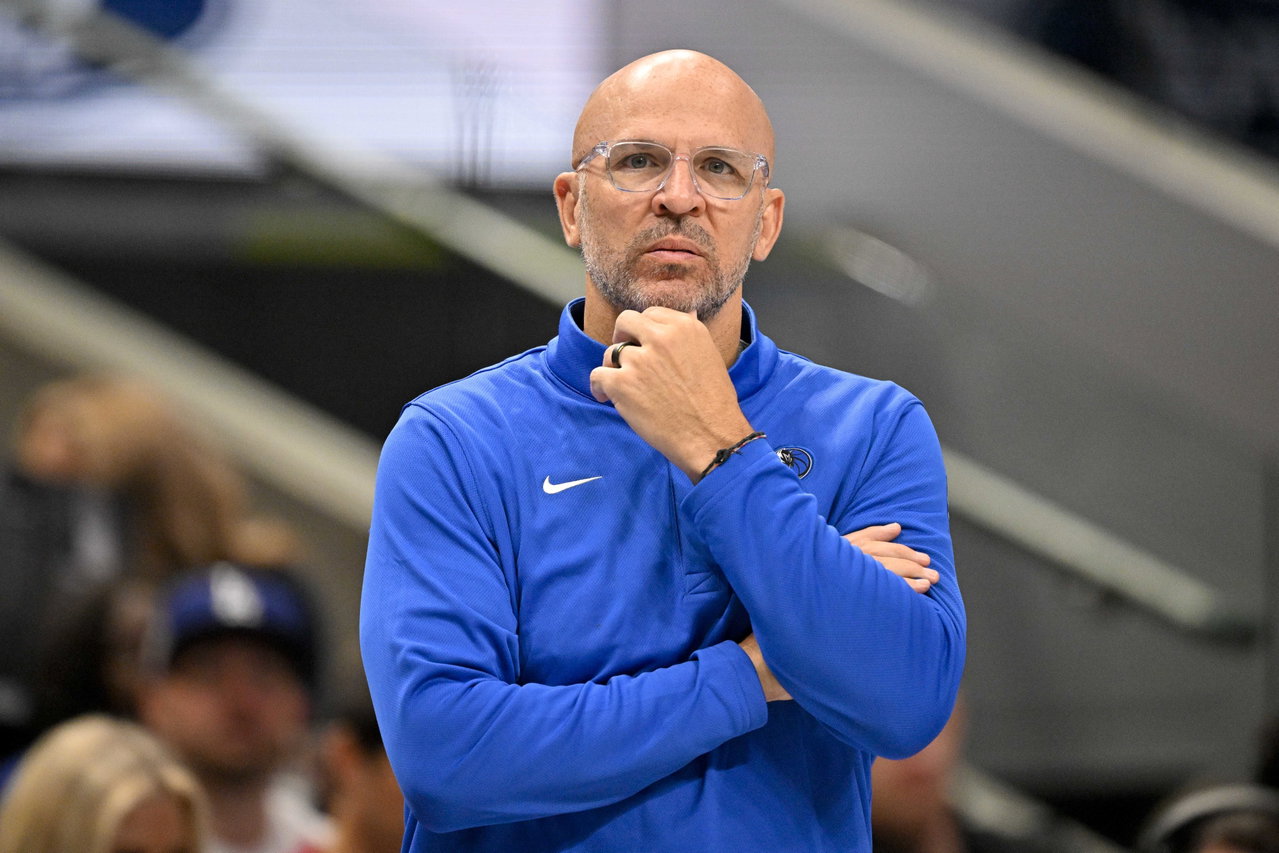
Jason Kidd’s firing from the Dallas Mavericks did more than shock a fanbase still trying to understand the franchise’s direction after the Cooper Flagg era began. It also reopened old conversations about Kidd’s reputation – not just as a coach, but as a figure many around the league have remained deeply divided on for years. Among the loudest voices was veteran journalist Henry Abbott, someone who has known Kidd closely enough to visit his home and witness parts of his rise firsthand.
Watch What’s Trending Now!
While much of the NBA world reacted to the dismissal with surprise, Abbott openly welcomed the move and revisited the baggage that has followed Kidd throughout his career. Long before Kidd helped Dallas reach the NBA Finals as a coach, criticism had already surrounded him from his turbulent Nets stint to the “coach killer” label that shadowed parts of his playing days – a reputation Kidd himself later addressed publicly.
Roughly an hour after the shocking announcement, Henry Abbott dropped a strongly worded post via X. “I covered Jason Kidd when he played for the Nets. I know one of his childhood friends. I’ve been to his house, met his kids, then-wife, and Pilates Instructor. And I have insight from many people who worked with him in his coaching years. This is a great firing.”

I covered Jason Kidd when he played for the Nets. I know one of his childhood friends. I've been to his house, met his kids, then-wife, and Pilates Instructor. And I have insight from many people who worked with him in his coaching years. This is a great firing.
Coming from a journalist who previously led a 60-member team at ESPN, producing groundbreaking reports and also winning the National Magazine Award, the post needed its attention. Noticeably, Abbott didn’t just address Kidd’s coaching abilities, but the concerns surrounding his personal conduct over the years.
Issues related to locker room power struggles constantly surrounded Jason Kidd during his playing years. In 2004, Kidd even addressed it in an SF Gate interview.
“I’ve been a coach- maker,” Kidd said, defending himself on the ‘Coach killer’ tag. “If you look at the history of each situation I’ve been in, a coach has been fired after I left or quit. That’s the truth.”
Even during his debut season as an NBA coach with the Nets, which lasted only for a season, there were also concerns about an alleged locker room struggle. Most notably, Kidd pleaded guilty to a domestic abuse charge involving his then-wife Joumana Kidd. The controversy followed him throughout his career.
Jason Kidd’s dismissal, announced as a “mutual agreement to part ways,” wasn’t a snap reaction to a single moment. To understand it properly, you have to go back to February 2025, when the franchise made a decision that would quietly unravel everything that followed.
That month, Dallas traded Luka Doncic to the Lakers for Anthony Davis and a package of assets. The deal was almost universally condemned the moment it broke, and it didn’t take long for the skeptics to be proven right.
GM Nico Harrison was widely considered the primary architect, and he eventually paid the price, fired in the months that followed. But Kidd’s own role in the trade has never been cleanly settled. Mark Cuban, the former owner, suggested Kidd was involved, pointing to his longstanding relationship with Anthony Davis and his alignment with Harrison’s vision. Kidd told a different story: that he was informed at the “11th hour,” that he was “blindsided,” and that he had no real seat at the table when the decision was made.
What isn’t disputed is what came after. The team cratered. Dallas missed the playoffs, stumbled to a 26-56 record this past season through injuries and roster instability, and finished Kidd’s five-year tenure with roughly a .500 record overall – a number that looks particularly hollow when you strip out the 2024 Finals run that happened before the trade blew everything up.
The Mavericks hired Jason Kidd amid criticisms
The Dallas Mavericks themselves faced backlash when they hired Jason Kidd as head coach in 2021. It was a time when the Mavs as an organization went through a controversial phase. It dealt with many workplace misconduct allegations.
With that, hiring Kidd triggered a lot of chatter around the league. Former Mavs CEO Cynthia Marshall, who claimed to be a victim of domestic abuse, publicly addressed her decision to hire the coach.
“There were multiple reasons we had to do this. By the time I hung up the phone, I didn’t find any reason not to hire him. None,” Marshall said. She also highlighted, “Domestic violence is horrible. I lived through it.”
By the time new team president Masai Ujiri came aboard, the math had become simple enough: a fresh start was the only logical move. Ujiri was hired with a clear mandate to rebuild the franchise around rookie Cooper Flagg and whatever core could be constructed in the post-Luka era, including Kyrie Irving.
A coaching staff that carried the weight of the trade’s fallout, however indirectly, wasn’t going to fit that picture. Within roughly two weeks of Ujiri’s arrival, Kidd was gone, with the Mavericks buying out the remaining four years and $40 million-plus left on his contract.
There had been other frictions along the way, too. Kidd and Harrison had reportedly clashed over roster decisions and rotations well before the trade. But those disagreements might have stayed manageable in a winning environment. The Doncic deal turned them into footnotes in a larger story of dysfunction.
Harrison caught that bullet first. But the trade poisoned the well: it created the losing seasons, the fan anger, the roster chaos, and the sense of institutional drift that made Kidd’s long-term position impossible to defend. He survived Harrison’s departure. He didn’t survive Ujiri’s arrival and the broader house-cleaning that came with it. The trade was the root; his firing was the last branch to fall.