Imago
IMAGN
Imago
IMAGN
A decade later, the wound still gets picked at. For most fans, Stephen Curry’s five straight Finals appearances from 2015 to 2019 cemented a dynasty résumé. However, on February 12, 2026, Skip Bayless revived a familiar criticism during a conversation with Draymond Green, arguing that Curry “wasn’t there” when the Warriors needed him most in the 2016 Finals.
Watch What’s Trending Now!
That reference was not vague. It was specific. It was statistical. And it was personal. “He’s the greatest shooter ever, but he can go cold, and he went cold,” Bayless told Green. “It’s just hard for me to get over the fact that he went cold in all three of your fourth quarters after you got suspended in five, six, and seven. Two of those in your house. And he just went cold.”
That single stretch remains the foundation of Bayless’ long-running case against Curry’s postseason aura.
USA Today via Reuters
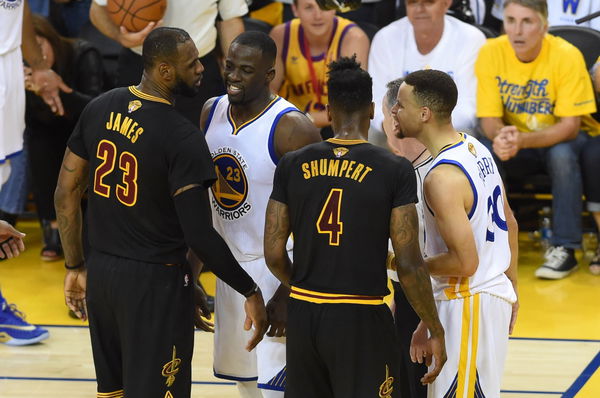
Jun 19, 2016; Oakland, CA, USA; Cleveland Cavaliers forward LeBron James (23) and guard Iman Shumpert (4) and Golden State Warriors forward Draymond Green (23) and guard Stephen Curry (30) react in the second quarter in game seven of the NBA Finals at Oracle Arena. Mandatory Credit: Bob Donnan-USA TODAY Sports
The debate centers on Games 5, 6 and 7 of the 2016 NBA Finals against Cleveland. Golden State had a 3-1 lead. Then momentum flipped. Green was suspended for Game 5. And in the fourth quarters of those final three games, Curry shot 6-for-20 from the field and 3-of-12 from three-point range.
Bayless drilled deeper. “Go look at the numbers of what he shot. He shot 6-for-20 in those three fourth quarters and 3-of-12 from three. And then we talked about the fourth quarter of game seven. He just wasn’t there for you.”
Game 7 offers the clearest snapshot. Curry finished with 17 points on 6-of-19 shooting. Meanwhile, Green produced 32 points, 15 rebounds and 9 assists in one of the most complete Finals performances of his career. From Bayless’ perspective, that contrast still matters.
Curry went on to win two more championships in 2017 and 2018. He also captured a Finals MVP in 2017 while averaging 26.8 points per game in that series. His overall résumé now includes four championships and two MVP awards.
However, Bayless has long argued that elite legacy conversations hinge on defining moments under maximum pressure. In his view, the 2016 collapse remains that moment. That stance previously affected his all-time rankings. In 2023, during a top-20 discussion with Shannon Sharpe, Bayless left Curry off his list, citing postseason shortcomings. Meanwhile, other stars with playoff scars still made the cut.
Skip Bayless finally includes Stephen Curry in his top-20 list
That is where February 2026 becomes relevant. When Green asked directly whether Curry now belongs in Bayless’ top-20 all-time list, the longtime critic adjusted.
“I would give him a place in my top-20 list,” Bayless said. He contrasted Curry’s résumé with James Harden, whom he labeled the most disappointing player among that group due to repeated Game 7 struggles. “The one who has disappointed me the most of those names is James Harden, because he’s just been a disaster when it was time to be great,” Bayless added.
That comparison reveals the underlying philosophy. Bayless measures greatness through late-game delivery in elimination settings. For years, Curry’s 2016 fourth quarters anchored his skepticism. Now, accumulated championships and sustained dominance have softened that position.
Imago
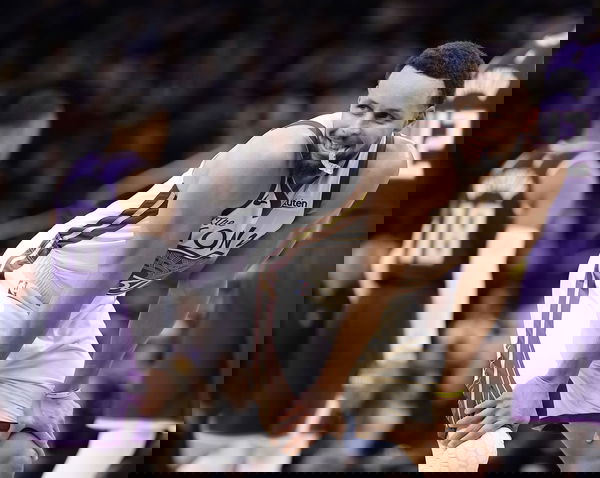
Jan 9, 2026; San Francisco, California, USA; Golden State Warriors guard Stephen Curry (30) smiles as a call is reviewed for a flagrant foul against Sacramento Kings guard Russell Westbrook (18) during the fourth quarter at Chase Center. Mandatory Credit: Kelley L Cox-Imagn Images
Across NBA history, a single playoff collapse or breakthrough often defines narrative arcs. Players who win in Game 7 are canonized. Players who fall short carry that label until future success reframes it. Curry’s case mirrors that pattern. The 2016 Finals became the critical lens through which one analyst evaluated him. Yet subsequent titles, awards and longevity gradually diluted the impact of that series.
That tension between one moment and an entire career fuels debates like this one. Bayless has not erased his critique. He still references those fourth-quarter numbers. However, he has publicly conceded Curry’s all-time placement. For Warriors fans, that shift validates what four championships already suggested. For critics, the 2016 tape still exists.
The debate resurfaces because legacies in the NBA are rarely unanimous. They are argued, revised, and revisited. And ten years later, three fourth quarters still spark conversation.
Written by

Edited by

Ved Vaze