
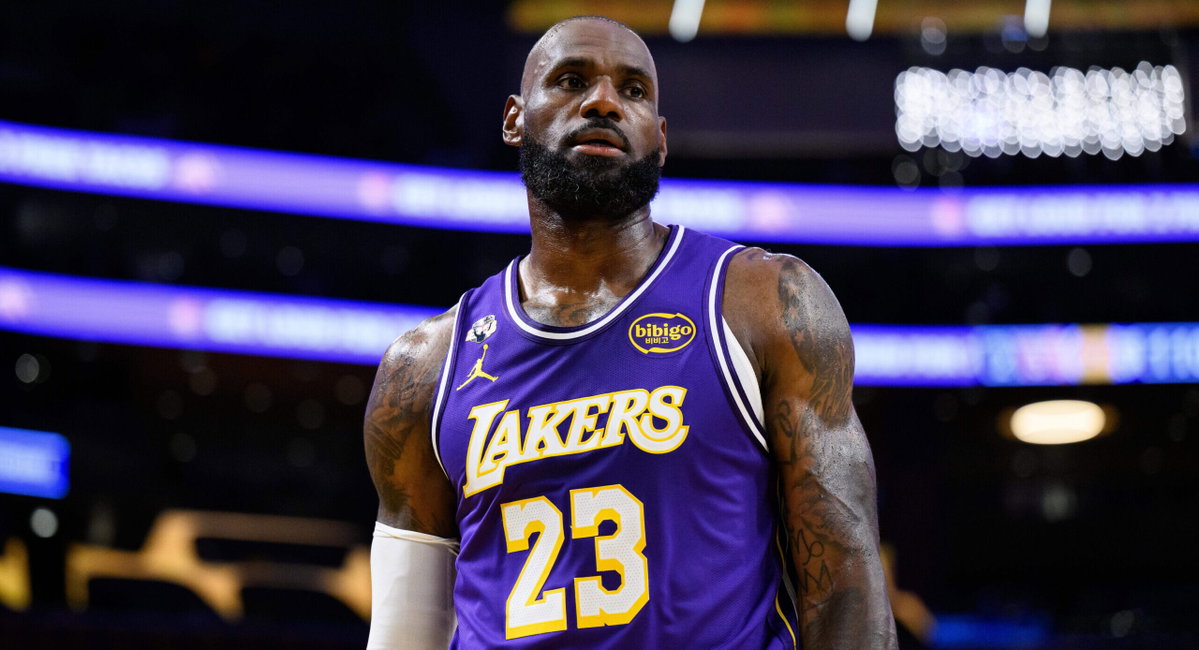
LeBron James walked off the floor knowing the Lakers hadn’t been broken by effort, toughness, or coaching. The humiliation of a sweep hurt anyway, because this time there was no familiar excuse to lean on. Not when every late-game push was answered by younger legs, deeper firepower, and a roster that simply had more to throw back. Even in a Game 4 battle that stayed alive until the closing possessions, the Lakers looked like a team trying to survive a storm they could never fully control.
Watch What’s Trending Now!
For years, James has turned postseason deficits into personal showcases, bending series back in his favor through sheer brilliance. Against the Oklahoma City Thunder, though, the gap felt different. Every adjustment had a counter. Every Lakers run met another wave of talent. And when James later reflected on the series, his explanation cut deeper than frustration over a sweep.
“If we’re being completely honest, we were out-talented. We were not outworked. You know, they didn’t out physical us. They didn’t outsmart us. Um, you know, I feel like we were just out-talented, you know, by OKC,” James explained on Mind The Game.
This isn’t the first time James has highlighted talent disparities. In past Lakers postseason disappointments, including a 2023 sweep by the Denver Nuggets, similar themes emerged: maximum effort met by superior opposing firepower and depth. At 41, James continues to defy age, shooting 50% from the field in the series, but the pattern shows a recurring front-office challenge: building sustainable contention around aging or injured stars.
It’s not like the Purple and Gold threatened the Thunder. OKC still imposed itself, forcing turnovers and causing havoc. But it wasn’t a blowout every time. The Lakers led at the half twice in this series. But eventually, they didn’t have the legs to compete against a younger roster that had more rest. Marcus Smart and Austin Reaves averaged nearly 9 turnovers amongst themselves. Not having Luka Doncic to navigate through their physicality stunted the Laker offense.
But their talent still stepped up. Rui Hachimura turned into a shooting menace, averaging 20 points per game throughout the series. Hachimura shot 55.2% from beyond the arc, a ludicrous number.
LeBron James shot 50% from the field, but again couldn’t keep scoring on a tear due to age and fatigue. The Lakers weren’t dealt a fair hand, with Reaves also recently returning from an injury.
The best thing to take away from that series was the Lakers’ fight. “I feel like there’s times where we had moments where we out IQ’ed them. But at the end of the day, we failed in talent, you know. OKC just possesses so much more talent than us,” said James.
The Lakers actually kept Shai Gilgeous-Alexander to modest numbers, at 24.5 points in the series. However, the Thunder had a plethora of players to handle the rock. Ajay Mitchell particularly stepped up, with six assists against just a single turnover. Only two of their players averaged multiple turnovers. That’s the kind of depth they have, even with Jalen Williams missing the series.
The series also highlighted how thin the Lakers looked once the pressure intensified. When Luka Doncic wasn’t controlling the floor or collapsing defenses with his gravity, the offense became vulnerable to rushed possessions and costly turnovers, with the backcourt struggling to consistently handle OKC’s relentless defensive pace.
Meanwhile, the Thunder kept finding answers from everywhere. Their bench brought constant energy, fresh legs, and secondary playmaking, preventing the Lakers from ever fully regaining momentum.
That contrast is what makes this offseason feel so urgent for Los Angeles. In a Western Conference now dominated by younger, deeper, and faster contenders like the Oklahoma City Thunder, standing still is no longer a realistic option.
Heading into the summer, Rob Pelinka has to make several decisions to shape the Lakers’ future.
The stakes are particularly high entering this offseason. Luka Doncic, fresh off a 3-year, $165 million extension signed last August, is entering the prime of his career at 27. With a player option in 2028 potentially leading to a supermax, the Lakers must maximize this window or risk wasting MVP-caliber production. Pelinka has been explicit: the roster will be built around Doncic’s needs as the franchise cornerstone.
LeBron James, Austin Reaves, and more business await the Lakers
It’s only right to start with the four-time MVP. LeBron James is an unrestricted free agent. According to Shams Charania, contenders still believe the 22-time All-Star can be an impactful contributor in the right environment. The Lakers agree. Rob Pelinka publicly spoke about wanting to bring back the NBA’s all-time leading scorer for a ninth season. However, the team will likely not compromise if it affects their team-building operations.
As Pelinka said, “The archetype of the roster we want is going to be retrofitted around Luka and the things he needs. Clearly, he’s that leader and player for the future that we want to build the right way around”.
That reality now shifts the pressure onto Rob Pelinka and the front office. Keeping Austin Reaves feels less like an option and more like a necessity after his breakout campaign, especially with Luka Doncic reportedly viewing him as an ideal long-term backcourt partner. Rui Hachimura also strengthened his case during the postseason, spacing the floor efficiently and providing reliable two-way minutes when the Lakers needed them most.
But the biggest concern remains the frontcourt. The Lakers’ lack of athletic size and rim protection was exposed repeatedly, making names like Robert Williams III, Walker Kessler, and Jalen Duren natural fits if Los Angeles wants more vertical presence around the rim.
On the wings, younger defensive players such as Peyton Watson or Tari Eason could add the kind of energy and versatility the roster often lacks. And while speculation around a potential pursuit of Giannis Antetokounmpo continues to linger, pulling off a move of that magnitude would almost certainly force the Lakers into another massive reshaping of the roster.
Nonetheless, the next few months are key. Depending on what Pelinka can work out, they might make the most out of Luka Doncic’s prime or risk losing another year with the cornerstone putting up MVP-caliber production.