
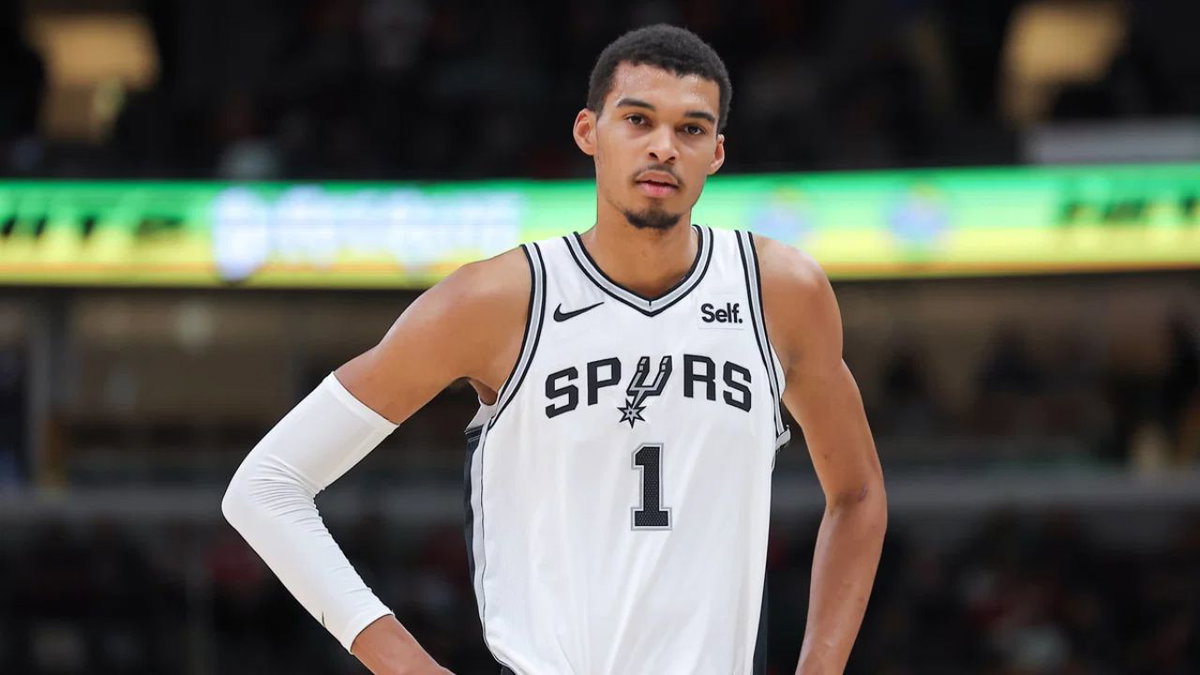
Victor Wembanyama’s decision to leave an estimated $51 million on the table looked like the ultimate team-first move for the San Antonio Spurs. But beyond San Antonio, the deal has sparked a much bigger conversation across the NBA about whether the league’s salary cap rules are quietly forcing superstars to choose between maximizing their earnings and keeping championship-caliber rosters together.
Watch What’s Trending Now!
That debate extends far beyond Wembanyama. Jalen Brunson made a similar financial sacrifice in New York, while executives across the league have openly admitted that the NBA’s second apron has fundamentally changed how teams build rosters. The National Basketball Players Association now believes the burden has shifted too heavily onto players.
Wembanyama isn’t the first star to make that choice. Brunson previously accepted a team-friendly extension that helped the Knicks retain OG Anunoby and Mikal Bridges before eventually winning the NBA championship. Yet even that sacrifice didn’t stop New York owner James Dolan from refusing to cross the second apron, calling it “suicidal.”
“We are not fans of the second apron. We did not propose the second apron. We should have done a better job of fighting back against the second apron. In the future, we will do a much better job of fighting back. We’re seeing it decimate teams and force decisions to be made that are not basketball decisions,” incoming NBPA executive director David Kelly said during his introductory press conference.
“Our position would be that the system should not require a player to carry all that burden,” incoming NBPA executive director David Kelly said at his introductory press conference Friday, via The Athletic. “It should not put a player in a position where he has to carry the burden in order to keep a team together. A system that does that, we have a problem.
“We actually think that makes sense around certain issues around the second apron, whether it’s drafted players, whether it’s a Bird exception for certain players. The ability to keep teams together, I think, will help fan interest and will still allow for player movement, but allow players to have the decision of staying where they want to stay.”
Wembanyama’s extension quickly became the latest example. The Spurs star agreed to a five-year deal worth roughly $250 million, choosing the 25% maximum instead of waiting for a projected 30% supermax worth around $301 million. The decision gives San Antonio significantly more long-term roster flexibility while leaving nearly $51 million on the table.
The financial flexibility matters because of the NBA’s second apron. Teams that cross the threshold lose several roster-building tools, including the taxpayer mid-level exception, face major trade restrictions and risk future draft-pick penalties. Those consequences have made many owners reluctant to exceed the apron, even if they’re willing to spend more money.
Thus, New York couldn’t retain Mitch Robinson. So it is creating pressure on star players to choose between getting paid what they’re worth or taking a pay cut to keep the team together. So, Kelly and other NBPA leaders believe that Victor Wembanyama and other players shouldn’t have to face that decision. The incoming NBPA executive director is open to exploring other options before the Oct. 15, 2028, deadline for the NBA or its players to opt out of the current collective bargaining agreement.
One suggestion came from Celtics President Brad Stevens, who wanted the players to receive the 30% guaranteed respective to their contract. But stated that only 25 percent of it should be part of the salary cap.
Even before Victor Wembanyama’s move, Kyle Kuzma sent an alert
Milwaukee Bucks forward Kyle Kuzma recently voiced his own frustration with the current CBA in a social media post that has generated more than 9.1 million views, describing the upcoming negotiations as a pivotal moment for players.
“The new CBA was sold as parity, but the first and second apron are starting to function like a hard cap on player value, team continuity, and player movement,” Kuzma wrote. “Teams are no longer making purely basketball decisions. They’re making fear-based apron decisions. That means good players get squeezed, homegrown cores get broken up, fan-favorite teams lose their identity, and the overall product loses some of the nostalgia and continuity that made people fall in love with the NBA in the first place.”
The NBA, however, introduced the second apron to improve competitive balance and discourage the formation of expensive superteams. Commissioner Adam Silver has maintained the goal isn’t to prevent dynasties but to create greater “equality of opportunity” across the league, even as teams continue adjusting to the system’s long-term consequences.
Kelly and Kuzma ultimately agree on one point: the current system has shifted too much responsibility onto players. With both the NBA and NBPA holding opt-out rights before the current CBA expires in 2029, the second apron is already shaping up to be one of the biggest issues in the league’s next labor negotiations. Wembanyama’s contract may have helped the Spurs today, but the broader debate is whether future stars should have to sacrifice millions just to give their teams a realistic chance to compete.