
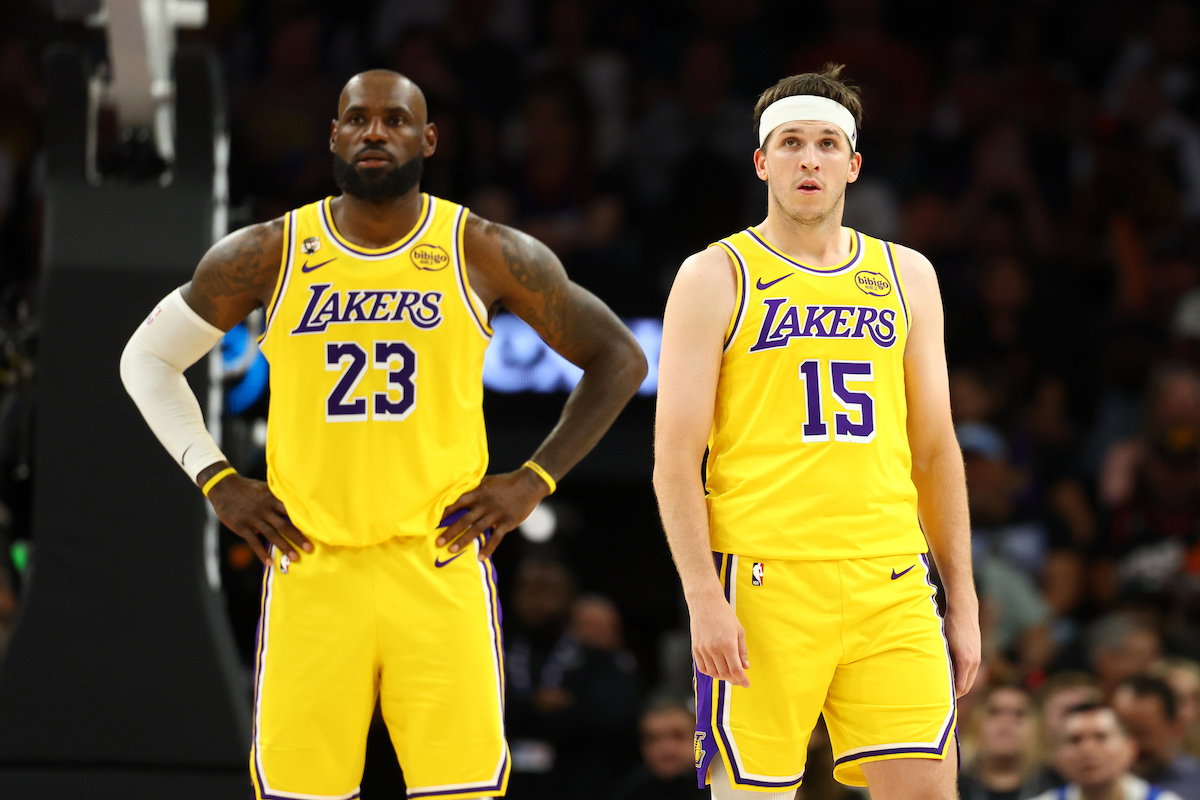
The Los Angeles Lakers enter their Western Conference Semifinals matchup against the Oklahoma City Thunder facing one of the toughest challenges of the postseason. They went 0-4 against Oklahoma City in the regular season and lost those games by an average of 29.3 points per game. Now they head into Game 1 without Luka Dončić, with no clear timeline for his return, placing immediate pressure on the rest of the roster.
Watch What’s Trending Now!
That responsibility now falls squarely on LeBron James and Austin Reaves. Both proved in the first round that they can scale their roles when needed, but this matchup demands a far higher level of execution against one of the most disciplined defenses in the league.
The question is not whether the Lakers can match Oklahoma City talent-for-talent. It is whether they can find specific cracks in a defensive system that has barely shown any all season.
Cracking One of the Best Defenses Ever
Oklahoma City is not just elite defensively, it is historically dominant. Their relative defensive rating of -8.1 per 100 possessions ranks among the best marks ever recorded, according to Thinking Basketball. This is a defense that controls games rather than reacting to them.
Their system operates on three core principles. They keep the ball in front and limit dribble penetration, they shrink the floor to take away high-value shots at the rim, and they use length and speed to disrupt passing lanes and force turnovers at one of the highest rates in the league.
Beating that structure requires more than shot-making. It demands ball handlers who can consistently create advantages, make quick decisions under pressure, and surround those actions with spacing that punishes help rotations.
In theory, James and Reaves provide that foundation. James remains one of the most reliable advantage creators in the league, and the Lakers are likely to lean on him through post entries and elbow touches to force Oklahoma City into defensive rotations.
The goal is not to slow the game unnecessarily, but to collapse the defense and create openings. Once Oklahoma City is forced to rotate, James has the vision and experience to exploit those gaps.
Reaves becomes the swing factor. When Dončić is off the floor, his scoring volume and efficiency both rise, and his role as a primary ball handler becomes far more pronounced. However, he will be targeted by Oklahoma City’s perimeter defenders throughout the series.
The Lakers will also need consistent shooting from their supporting cast. Role players were effective in the previous round, but Oklahoma City closes out harder and recovers faster than most teams, meaning those same looks will be far more difficult to convert.
The biggest concern remains turnovers. Oklahoma City thrives on creating live-ball mistakes, and Los Angeles has already shown vulnerability in that area during the playoffs.
James has the experience to manage that pressure. Reaves does not. Oklahoma City’s perimeter defenders are specifically built to disrupt players with his style, cutting off driving lanes and forcing rushed decisions.
As a team, the Lakers ranked among the worst playoff teams in protecting the ball in the first round. Against a defense of this level, even minor mistakes can quickly turn into scoring runs the other way.
What Can JJ Redick Do Defensively?
Defensively, Los Angeles showed creativity in the first round. Their ability to mix coverages and disrupt rhythm played a key role in slowing down their opponent.
One potential approach is to focus defensive attention on Shai Gilgeous-Alexander and force others to take on a larger offensive burden. The challenge is that Oklahoma City’s supporting cast is well-balanced, making that strategy difficult to sustain over a full series.
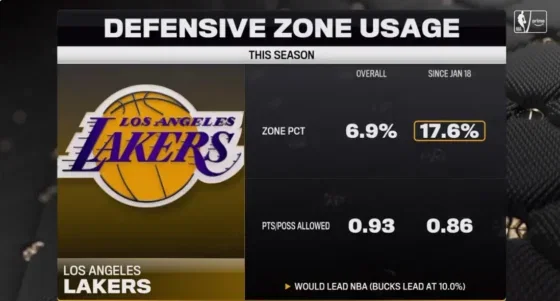
A more viable adjustment could be increased use of zone defense. A 2-3 alignment can limit rim attempts, reduce fouling, and disrupt offensive rhythm by forcing the Thunder into more perimeter decision-making.
Imago
Screenshot Of Los Angeles Lakers Zone Defense (As Of February 16, 2026). Screenshot Credit: Raj Chipalu.
While zone defenses are typically used in short stretches at the NBA level, they can be effective against teams that rely heavily on spacing and timing to generate clean looks.
Oklahoma City will still have stretches where its defense takes control of the game. That is expected. The Lakers are not chasing perfection. They are chasing disruption. They need to slow the game down, limit turnovers, and capitalize on the few breakdowns they can create. If Dončić returns, the equation changes significantly. Until then, it comes down to James, Reaves, and whether they can consistently pressure a defense that has rarely been tested this postseason.