
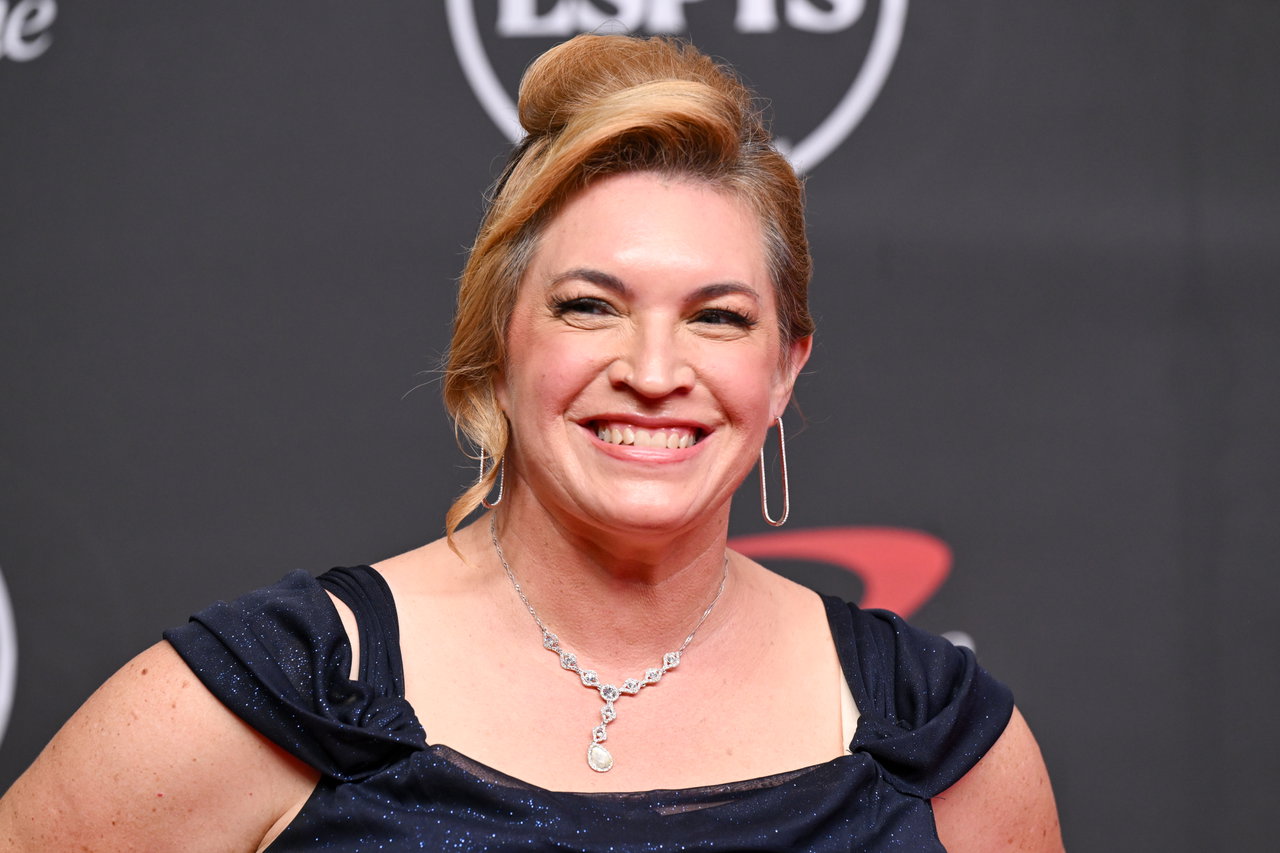
Ramona Shelburne’s assessment of the Los Angeles Lakers’ early-season schedule sparked debate about how much credit the team deserved for its 12-2 start. However, the ESPN reporter says the reaction went beyond basketball criticism, with personal insults highlighting the abuse women can face while working in sports media.
Watch What’s Trending Now!
Shelburne questioned whether the Lakers’ record accurately reflected their strength against the NBA’s leading teams. Her argument was that Los Angeles had enjoyed a relatively favorable opening stretch and still needed to demonstrate its ability against stronger Western Conference opponents. During a conversation with Scott Kaplan and Jorge Sedano, Shelburne described the personal nature of the backlash.
“Normally I would just be like, whatever, don’t check your mansions, people are stupid. But like, I don’t know that people understand what it’s like to be a female reporter,” she said.
She continued by describing the insults directed at her: “It’s people calling you the B word, the C word, the F word.” Shelburne then questioned who these individuals were in real life, adding, “I kind of want to know who these people in real life are, like, who talk to people this way.”
Kap defended her, pointing to how social media can encourage people to make personal attacks they might avoid face-to-face. He highlighted the disproportionate reaction to her basketball opinion.
“Here’s Ramona, she’s on ESPN, she has an opinion, I want her fired, I want her life destroyed. Why? Because she has an opinion about a sports schedule,” Kaplan said.
The available schedule-strength rankings offer some support for Shelburne’s assessment, although they do not produce identical results.
Team Receipts ranked Los Angeles 16th in schedule difficulty based on games through November 16, placing it around the middle of the league. Its data also showed that the Lakers had a 5-2 record against opponents with winning records.
Power Rankings Guru offered a more favorable assessment of the Lakers’ schedule, placing it 25th in difficulty out of 30 teams in its November 17 update. That made it the sixth-easiest schedule according to its model. The ranking also recorded Los Angeles at 2-1 against its top 10 opponents, 7-1 against teams ranked 11th through 20th, and 3-0 against the bottom 10.
These rankings use different calculations, and so they aren’t directly interchangeable. However, Power Rankings Guru’s assessment supports the argument that the Lakers had faced a comparatively easier group of opponents.
Shelburne was careful not to dismiss the team’s victories. She specifically praised its wins against Detroit and Portland, along with its performance on the second night of a back-to-back in Atlanta.
“I think their, their win in Detroit was good, their win against Portland was good, I thought second night of a back-to-back in Atlanta was good,” she said.
Her concern was that the Lakers had not yet played several of the West’s leading contenders. She identified Oklahoma City and San Antonio as examples, explaining that those matchups would provide a stronger measure of the team’s progress.
“This is a normal thing to say here, that they haven’t been tested against the best in the West yet, or the best in the East yet,” Shelburne added.
The conversation also addressed whether other journalists had experienced similar treatment. Shelburne asked Sedano if he received abuse because he was Hispanic. He acknowledged that it happened occasionally but said he had learned to limit his exposure to it.
“Yeah, I mean, sometimes, but I don’t, I don’t really pay much attention to it anymore, but when it does happen, it is annoying,” Sedano said. He added that he had adjusted his Twitter account to reduce the number of mentions he received.
As the season progresses, the Lakers will have more opportunities to establish themselves against stronger opponents. Their performances in those games will provide a clearer picture of their standing among the West’s contenders. For Shelburne, however, the reaction to her assessment raised a separate issue: disagreement with a journalist’s opinion should not become an excuse for personal abuse.