Imago
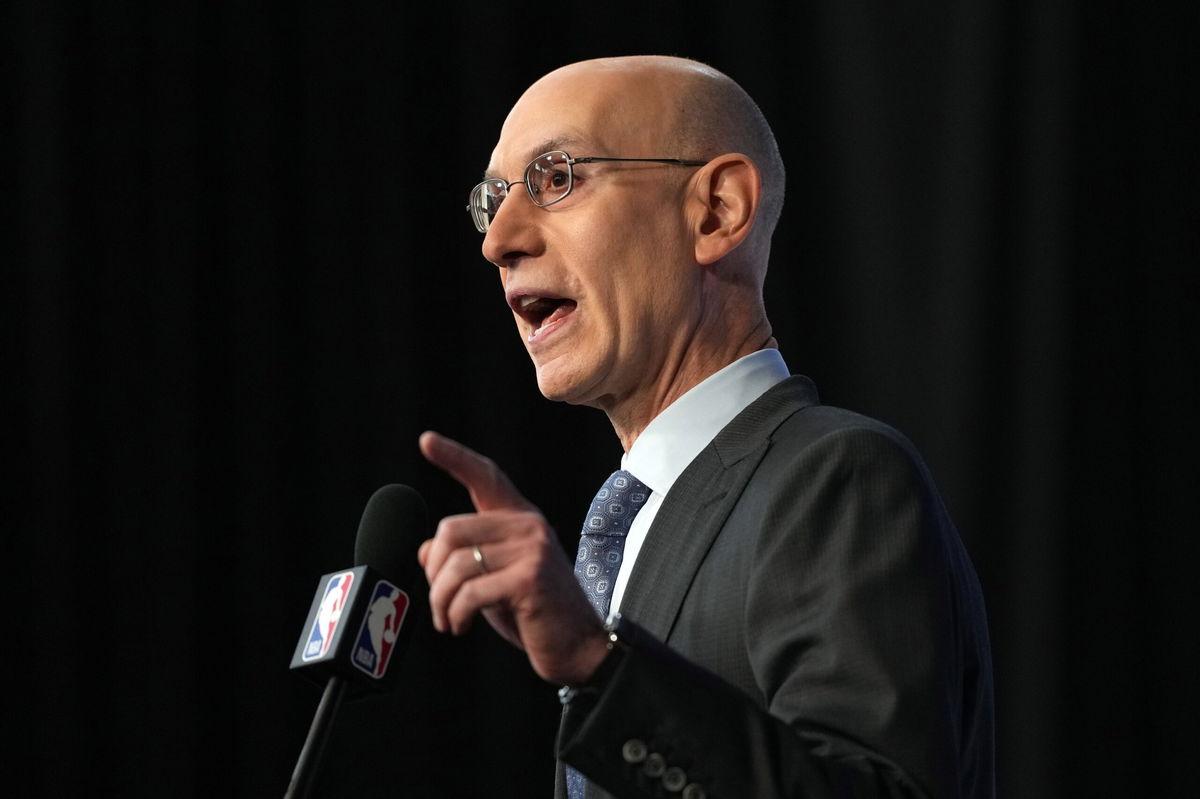
Feb 14, 2026; Los Angeles, CA, USA; NBA commissioner Adam Silver speaks at press conference during the NBA All Star game at the Intuit Dome. Mandatory Credit: Kirby Lee-Imagn Images
Imago
Feb 14, 2026; Los Angeles, CA, USA; NBA commissioner Adam Silver speaks at press conference during the NBA All Star game at the Intuit Dome. Mandatory Credit: Kirby Lee-Imagn Images
NBA commissioner Adam Silver has been preaching about the globalization of the sport since he took charge in 2014.
Watch What’s Trending Now!
Having regular-season games in Europe was a start, but until now, it has all felt like clever marketing. However, in January 2026, plans were announced for what has been called “NBA Europe,” which is proposed to be launched in partnership with FIBA and targeting a full slate by 2027. Teams will come from various high-profile European cities, and bids are already in place.
Reports indicate that bidding fees ranged from $500 million to multiple bids of $1 billion per franchise, with the bidding process officially closing at midnight on March 31, 2025. Silver himself has called it an “enormous undertaking,” which will take time but all fits into his one big dream of globalizing the NBA.
In the past decade or so, the NBA has gravitated towards more European talent, with the likes of Nikola Jokic, Giannis Antetokounmpo, Luka Doncic, and most recently Victor Wembanyama headlining the number of European superstars making a name in the NBA.
However, Silver’s big idea is to show that Europe isn’t just a talent farm but a massive, passionate market hungry for more than occasional games.
Everything is in place at the perfect time for NBA Europe:
- NBA games on Prime Video in Europe this season are up 184% year-over-year on average.
- London and Berlin games broke previous viewership highs by 90% and more in key territories.
- The league’s U.S. media rights alone are worth $77 billion over 11 years.
But while it looks enticing from the outside, there is a lot that has to go down to make this dream a reality and a successful one.
The European two-way talent street
For the NBA, the first big question on this new league will be about the European pipeline for stars coming into the NBA. However, the new league formalizes bidirectional movement, seeing how the league has been pulled into an era of European superstar influx.
- A record 71 Europeans are on 2025-26 NBA rosters.
- The 2025-26 EuroLeague also featured a record number of ex-NBA players.
The fusion will go a long way to provide more European stars for the NBA and more NBA players for its European version.
Ownership opportunities for the players
Current and retired superstars are all-in on potential franchise ownership. Part of Silver’s big plan is welcoming investments not just from investors or franchise owners, but from players as well. Provided NBA owners get a piece of the European pie too, there is no strict ban on players being part of the bid. Los Angeles Lakers superstar Doncic is backing a group buying an Italian club to relocate to Rome. Retired NBA star Pau Gasol is eyeing a leadership role in the NBA Europe venture. Tony Parker already owns ASVEL, which is primed to join.
These are the first bricks to a new power structure, but most importantly, having player-owners who understand both continents. The idea at first is not about making money but making the game go global across both continents. Silver has admitted that this is a long play.
“People who are looking for a short return should probably look elsewhere,” he said during his 2026 annual NBA All-Star Weekend press conference.
But that patience will be key to this venture’s long-term success. Current NBA owners stand to pocket roughly $5 billion from Europe entry fees alone, part of a potential $20 billion windfall when combined with U.S. expansion, which has also been a hot topic of late.
How the broadcast deal will unfold
The long-term commitment might be a good note, but at the end of the day, a big venture like this demands huge revenue generation just like the NBA does. The bigger pie of this revenue will undoubtedly fall to the media deal, looking at how it applies to the NBA. For the 2025-26 season, revenue was up 12% from last season, driven mainly by the new national media rights deal.
- Central league revenue, which includes the media broadcast, accounted for 42% of the revenue, with each team receiving $143 million.
- Gate revenue, which includes tickets and hospitality, amounted to 26-28%.
- Sponsorships and advertising, 13-14%.
- Then local media deals and other operations accounted for the rest.
That $77 billion deal boosted its revenue, and the NBA will be open to cutting a piece of that media pie for its European league. Talks are already underway with Amazon, YouTube, and NBC for broadcast partners. Early projections are positive, with reports suggesting that the league could add up to $3 billion in revenue from streams, merchandising, and sponsorships.
Challenges of NBA Europe
As with every huge development like this, it won’t come without a series of hiccups. The first being the territorial one. The whole point of NBA Europe is to be the main basketball focal point in Europe, which essentially means bad business for the already existing EuroLeague. The European basketball league has threatened legal actions if the NBA tries to poach its teams. What that means is that big basketball cities like Barcelona or Istanbul may end up having two teams, one affiliated with the EuroLeague and the other with the NBA.
The league will also face a huge cultural disconnect because European fans are not used to the franchise model of teams and the closed league system that the NBA implements. There are also the issues of new arenas and government policies in play, and whether the game will be played with NBA or European rules hasn’t been a topic for discussion yet. Although Silver has said he wants to “respect the traditions of European basketball” and blend “the old and new.”
The big takeaway
Silver is engineering the first true transatlantic basketball super-league. It aims to globalize the NBA in Europe and serve as a bridge to its European talent pool. The NBA is not acting alone in this venture but collaborating with FIBA, which is controversial enough because of the threats it poses to the EuroLeague.
The idea is to have franchises across major cities like London, Paris, Barcelona, Madrid, Istanbul, and Berlin, some of which already have teams participating in the EuroLeague. This has been called a venture with “more hidden risks than tangible opportunities” by EuroLeague representatives.
However, Silver and the NBA view Europe as a huge market, following successes from its European regular season games. They want to go one step further from that with a new league with high commercialization, which will require huge investments that will be backed by a stable revenue-sharing system.
Only time will tell how it will all unfold.
Written by

Edited by

Ved Vaze