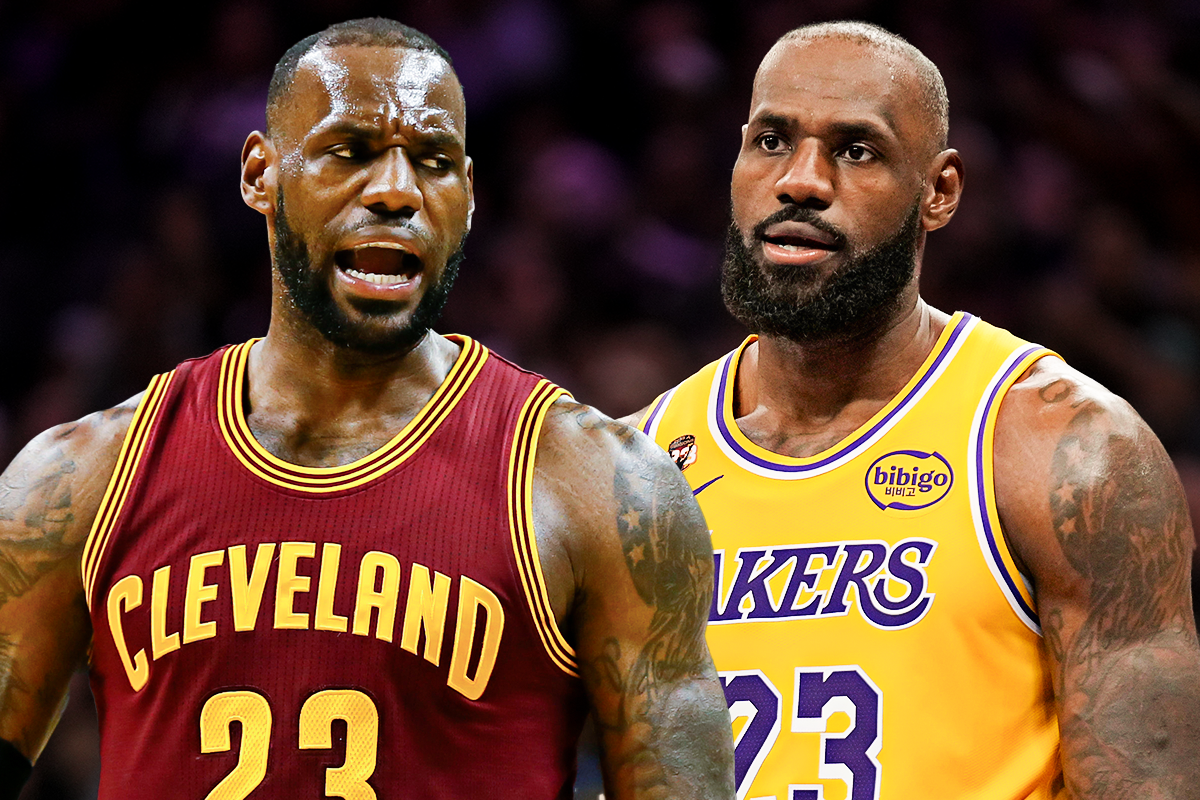
Imago
credits: Imagn
Imago
credits: Imagn
One day, the game will slow down, even if the clock keeps running. The arena will still be full. The broadcast will still talk about standings, matchups, and minutes. But inside the building, attention will begin drifting somewhere else. People will lift their phones earlier than usual, not to capture a play, just in case the moment arrives without warning.
Watch What’s Trending Now!
Players on the other team will look across more often than necessary. A referee will hold the ball for an extra second before handing it over. Conversations in the lower bowl will stop at the same time, without anyone having to ask.
The loudest sound will not follow a basket. It will follow a substitution call. First confusion. Then a kind of recognition that spreads across the seats the way memories do, quietly, all at once. Not a celebration. Not sadness. The feeling you get when you realize you are watching the last ordinary seconds of something that was never ordinary.
Because nobody will really be watching the game anymore. They will be watching the ending. And long before the final buzzer, people will realize they are not just watching a retirement moment. They are watching a story return to the place where it first made sense.
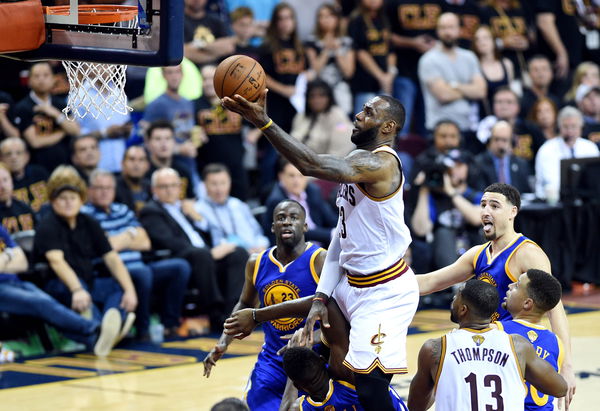
USA Today via Reuters
Jun 16, 2016; Cleveland, OH, USA; Cleveland Cavaliers forward LeBron James (23) shoots the ball against Golden State Warriors center Festus Ezeli (31) during the third quarter in game six of the NBA Finals at Quicken Loans Arena. Mandatory Credit: Bob Donnan-USA TODAY Sports
By then, the arguments about championships will fade into the background. The question people will be asking isn’t how many rings he won, but where his story was meant to conclude.
What will make it meaningful isn’t the statistics, the records, or even the titles themselves. It will feel right because of where it happens – because some careers are defined by their achievements, while others find their true meaning only in returning to their origins.
To grasp why this narrative demands that ending, you must look back further: before the debates, before the championships, before the league began measuring him against history.
Back to when a city didn’t simply draft a player. It drafted hope.
Before Hope Had a Name
Before he ever played a professional game, Cleveland already knew what long stretches without celebration felt like.
The Browns’ last championship came in 1964, in a different league and era, before the Super Bowl even existed. The Indians reached October often enough to keep hope alive, but October kept ending the same way.
The Cavaliers had moments, good teams, even deep playoff runs, yet every season eventually ended up on the same shelf of almosts.
Years passed long enough that the drought stopped sounding temporary. Fifty-one seasons across Cleveland’s major professional teams without a title. Long enough for grandparents to explain it to grandchildren who had never seen a parade.
So when the draft lottery delivered the first pick in 2003, people did not react like a franchise had improved its future. The Cavaliers had finished the previous season 17–65, tied for the worst record in the NBA. They reacted like a cycle might finally be interrupted.
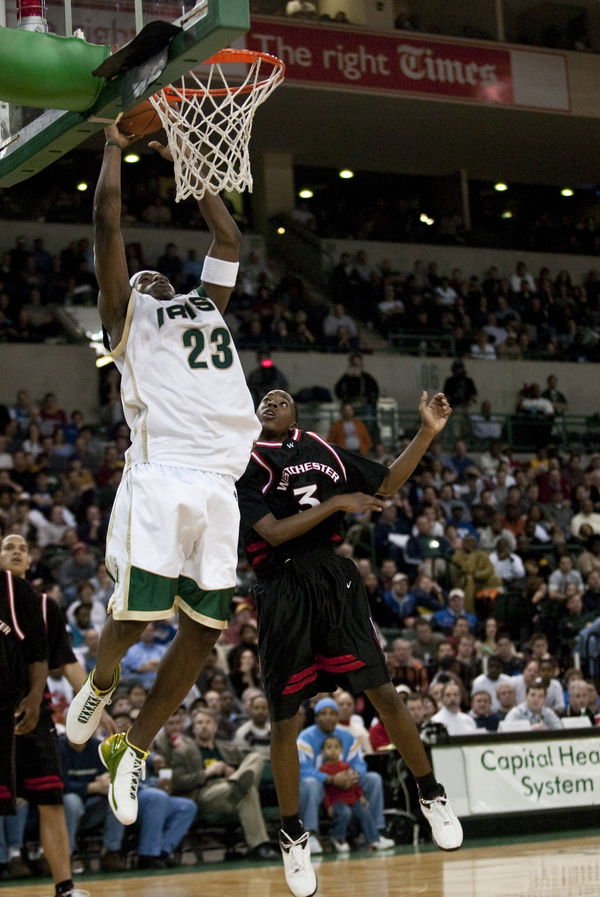
Imago
Basketball Lebron James, 19 years old, playing for St Vincent s-St Mary s High School vs Westchester at the 2003 The Prime Time Shootout. Trenton New Jersey USA Copyright: xPaulxJ..xSutton/DUOMO/PCNx BK1817 106057
It was still basketball, still five players moving together, still a sport built on passing and timing. But something unusual happened the moment he stepped on the floor. The margins changed faster than teams usually change.
As a rookie, he averaged 20.9 points, 5.5 rebounds, and 5.9 assists. He claimed Rookie of the Year honors while elevating a rebuilding team from obscurity to contention. A roster that had languished near the bottom of the standings ascended through the conference standings, into the playoffs, and reached the Finals within four seasons.
Basketball did not transform into an individual sport. The burden of expectation did.
Every possession seemed to hinge on his presence in ways rarely attributed to a single player. Not because his teammates were inconsequential, but because the potential for transformation appeared to emanate from wherever he stood. When he rested, the arena fell silent. When he returned, so did the roar.
By 2007, the Cavaliers were playing for a championship. LeBron James averaged 25.1 points, 8.1 rebounds, and 8.0 assists during the Eastern Conference Finals, including a legendary 48-point Game 5 performance against the Detroit Pistons. And nationally, it was framed as the arrival of a superstar. Locally, it felt different. The reaction was not a surprise that he reached the stage so quickly. It was recognition that the city had finally reached it with him.
View this post on Instagram
That difference in reaction would follow everything that came next. Because from the beginning, Cleveland was not just watching a great player grow. It was watching a chance it believed might not come again.
When the Secret Became National
It did not stay Cleveland’s story for long. High school games rarely travel nationally. They belong to small gyms and familiar faces and schedules built around classes.
Suddenly, opponents moved games to larger arenas. Television trucks arrived before team buses did. Tickets stopped being school events. They became secondary markets. People who had never visited Ohio could describe the court at St. Vincent–St. Mary.
By the time he graduated, the attention no longer resembled curiosity. It looked like confirmation. Every performance became proof of something already decided. Highlights were replayed less like discovery and more like validation.
When Sports Illustrated placed him on its cover and called him “The Chosen One,” the reaction inside the city was quieter than outside it.
SI had placed the phrase “The Chosen One” across its February 2002 cover while he was still a junior in high school. The phrase sounded dramatic everywhere else. In Northeast Ohio, it sounded familiar.
Back when LeBron James Made it to SI’s Cover “The Chosen One” pic.twitter.com/eEkOvh2DPZ
— Ved Vaze (@VedVaze) March 5, 2026
Because the language had already existed. The label only made it official. He entered the league not introduced as a promising rookie but as an answer delivered late.
Growth is normally allowed to be uneven. Mistakes are expected. Patience is built into the idea of development.
None of that quite applied. Every loss felt temporary. Every win felt like progress toward something predetermined. Even early playoff exits carried a strange tone, closer to delay than disappointment.
Then came 2007.
Nationally, it was the emergence of a young superstar carrying an undermanned roster to the Finals. Locally, the narrative diverged. Conversations centered less on the improbability and more on the proximity.
The chasm between Cleveland and a championship no longer felt insurmountable; it felt within reach. For the first time, the championship drought acquired a face and a timeline. And once a city binds its aspirations to a single person, departure ceases to be mere movement. It becomes betrayal.
The Night Everyone Watched Together
People did not watch alone. Bars filled earlier than they usually did for an offseason program. Living rooms arranged themselves around televisions before the show even began. The event had a scheduled start time, which made it feel less like news and more like something waiting to happen for everyone at the same moment.
The broadcast opened with standard questions, pacing, and studio conversation. For a few minutes, it almost resembled any other interview. Then the sentence arrived. The one everyone remembers.
“I’m going to take my talents to South Beach.”
“In this fall I’m going to take my talents to South Beach and join the Miami Heat.”
LeBron James made “The Decision” to join Dwyane Wade and Chris Bosh on this day in 2010 🔥
Cavs fans clearly weren’t too thrilled about it 😬pic.twitter.com/gTfcDdUxpd
— ClutchPoints (@ClutchPoints) July 8, 2024
Bill Simmons later described it as “agreeing to stab an entire city in the heart on a one-hour television show.” There was no immediate reaction in many places.
Not anger first. Silence. The kind that comes when the mind tries to understand whether it heard correctly before deciding how to feel about it.
In Cleveland, the silence lasted longer than the sentence.
People did not argue on the spot. They looked at each other the way crowds do when something shared has suddenly changed shape. Some turned the television off before the analysis began. Others kept it on without really listening. The decision had already been made.
The next morning, the word “Gone” appeared on the front page of the newspaper. It was not written like a transaction. It read like a loss.
Jerseys burned that night, but the anger came after the quiet. Callers filled radio lines trying to explain why something professional felt so personal. The team’s response matched the city’s emotion, not the language of a contract.
View this post on Instagram
Elsewhere, the response diverged. National discourse centered on strategy, championships, and roster composition. In Cleveland, the conversation remained rooted in loss.
Not whether he could deliver now, but why his departure felt like something had been stolen. The first return game months later carried playoff intensity despite lacking playoff stakes.
Security was fortified. Boos erupted before introductions concluded. For those hours, he was regarded not as a former star but as a rival who had violated an unspoken covenant. Time eventually tempered the vitriol.
Years later, some conceded the roster had failed him. Others claimed understanding. But reconciliation arrived only in retrospect.
Because what fractured that night was not a contractual arrangement. It was the narrative ending the city believed had already been written.
When Winning Didn’t End It
This was the part of the story where LeBron James became undeniable. The move worked exactly as it was supposed to. The roster fit made sense, the talent stacked cleanly, and the games often felt decided before the fourth quarter.
Nights that once carried tension now carried expectation. When Miami lost, it was surprising. When they won, it felt procedural.
He improved in visible ways. The game slowed around him. Efficiency replaced force. Mistakes shrank. Championships followed. And yet the reaction never sounded the same.
Crowds booed him in cities that had no connection to Cleveland. Even Gregg Popovich admitted the strategic problem of guarding him: “You can double him if you want, but he’s a pretty good player. I’m going to guess he’s going to find the open man.”
Opponents celebrated ordinary defensive stops like they were playoff victories. A loss in June drew louder national relief than many teams’ championships ever had. The league had gained its most dominant player and its most convenient villain at the same time.
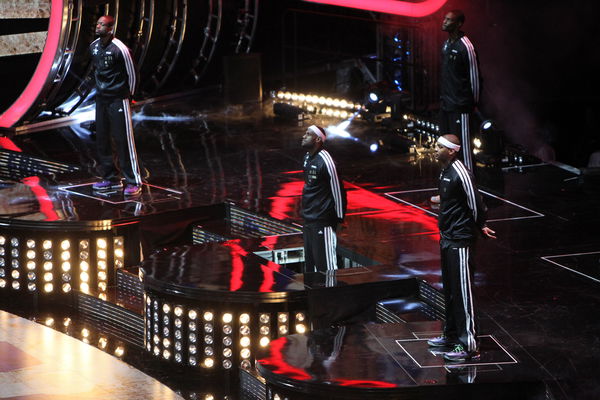
USA Today via Reuters
Feb 17, 2013; Houston, TX, USA; Eastern Conference forward LeBron James (center) of the Miami Heat is introduced as forward Carmelo Anthony (right) of the New York Knicks and guard Dwyane Wade (left) of the Miami Heat and forward Chris Bosh (back) of the Miami Heat prior to the 2013 NBA All-Star Game at the Toyota Center. Mandatory Credit: Brett Davis-USA TODAY Sports
The first title looked less like a celebration and more like an exhale. Teammates lifted him. Cameras flashed. But the feeling around it carried validation rather than release, as if a debate had ended instead of a journey.
Greatness had been proven. Something else remained unresolved.
In Ohio, the games were watched differently. Not ignored, not forgiven, just distant. The accomplishments were clear, but they did not feel owned. The connection had been stretched into awareness instead of belonging.
Years later, he would describe that period as necessary for growth, almost like education. It made sense. The player became complete there. The story did not.
Because winning had changed how he was measured, not where he was understood.
And a career can be perfected without being finished.
When the Ending Arrived Early For LeBron James
Four years later, the announcement came in a different form. No stage. No countdown. Just words on a page.
LeBron James wrote that his relationship with Northeast Ohio was bigger than basketball. He did not promise championships this time. He did not promise timelines. The language sounded less like ambition and more like responsibility accepted voluntarily.
People read it more than they reacted to it. The tone itself mattered. The spectacle was gone. In its place was something quieter, almost careful, as if both sides understood what had happened before and did not want to repeat the distance.
The first game back did not erase anything immediately. Cheers carried hesitation inside them. Applause and memory arrived together. Forgiveness rarely appears all at once. It accumulates through normal nights that pass without incident.
Then came June 2016.
The score was tied at 89 with under two minutes left when Andre Iguodala broke free down the right side for what looked like the go-ahead layup. For a moment, the play felt inevitable, the kind Cleveland fans had learned to recognize long before the ball reached the glass.
Then LeBron James came from behind, covering the length of the floor silently, and met the shot against the backboard. The arena did not erupt immediately.
There was a pause first, a fraction of disbelief, people turning toward each other to confirm they had actually seen it. Only then did the noise arrive, belief catching up to what had just happened.
View this post on Instagram
The score had been tied 89–89 with 1:50 remaining in Game 7 against the 73-win Golden State Warriors. Kyrie Irving’s step-back three over Stephen Curry with 53 seconds left finally broke the deadlock.
Minutes later, after the final seconds, he fell to the floor crying. Not a celebration. Release. “I gave everything that I had,” he said. “Cleveland, this is for you.”
Strangers hugged strangers in bars that had once watched the opposite announcement. Parents cried in front of children who had never seen them react to sports that way before.
Some fans who had burned jerseys years earlier spoke openly about regret. The parade gathered more people than any event in the city’s history, less a victory lap than a gathering to confirm the moment was real.
The championship parade drew more than 1.3 million people, the largest gathering in Cleveland history.
Nationally, it became one of the greatest championships ever won.
Locally, it felt like the end of a conversation.
Because the title did not introduce greatness. That part had been settled. It repaired the relationship between a player and a place that had expected an ending years earlier.
And for a moment, the story felt complete. The career, however, kept going.
After the Story Kept Going
LeBron James kept playing, and he kept adding.
A championship arrived in Los Angeles in 2020, different in circumstance and setting but still another chapter in a career that no longer seemed measured in seasons.
The all-time scoring record fell years later inside a packed arena that paused the game so history could be acknowledged. On February 7, 2023, he passed Kareem Abdul-Jabbar’s 38,387 career points with a fadeaway jumper against Oklahoma City.
Teammates came and went around him, the Lakers reshaped themselves repeatedly, and younger stars across the league grew up having never known an NBA without him.
He’s a father, a son, and now the #ScoringKing
Congrats, @KingJames. From the #JamesGang. pic.twitter.com/qLBY9x8aKv
— Los Angeles Lakers (@Lakers) February 8, 2023
The reaction became respectful. Standing ovations followed him into visiting arenas, including the one in Cleveland, where the cheers no longer waited for introductions to end. Analysts spoke about longevity more than dominance.
Discussions shifted from whether he could reach another championship to how long he could continue postponing the final season. The conversation no longer sounded urgent. It sounded appreciative instead.
That difference mattered.
In 2016, against Golden State, every possession felt like it carried decades of weight. Later achievements felt cataloged rather than lifted.
People admired them the way visitors admire records in a museum, aware they were witnessing history but no longer waiting for emotional resolution.
Cleveland felt this shift most clearly.
When he returned wearing a Lakers uniform, the boos were gone. Then the tension disappeared. Eventually, even rivalry faded, giving way to recognition.
A tribute video played on the same floor where the championship had been secured years earlier. He watched it quietly while the crowd stood without needing instruction.
The relationship no longer required a result.
At some point, the question around him stopped being what he would accomplish next and became where the story would rest when it was done.
And that question lasted longer than any debate about numbers.
What a Trophy Cannot Finish
If another championship were to come, the reaction would be familiar.
Graphics would appear within seconds, comparing totals across eras. Debate shows would reset their arguments before the confetti settled.
Some would move him higher in rankings. Others would adjust the standards so nothing would change. The conversation would grow louder, then repeat itself the following morning.
The achievement would matter. It just would not resolve anything. Because championships add to careers differently than endings do.
A fifth title would extend his case. A sixth would reshape lists. But none of them would answer the question people have slowly begun asking, instead of arguing. Not whether he is great enough, but where the story feels finished.
A return is a different kind of moment than a victory.
A trophy settles the competition.
A place settles narrative.
One invites debate. The other ends it.
You can imagine the reactions separately. A championship parade in any city would celebrate achievement. A final season in Cleveland would not need an argument to explain itself. The meaning would arrive before the outcome.
For most of his career, the league tried to measure him against history.
Now people wait to see where history places him. ESPN analyst Zach Lowe summarized the expectation simply: “Cleveland retirement tour. I could see it.”
The Era We Lived Through
During most careers, seasons blur together. You remember the championships, maybe a rivalry, maybe the final year. The rest becomes background noise within the league’s larger history.
This one never worked that way.
People remember where they were when the decision happened. They remember the first time he came back to Cleveland wearing another jersey.
They remember the block. They remember the parade. They remember the night the scoring record fell.
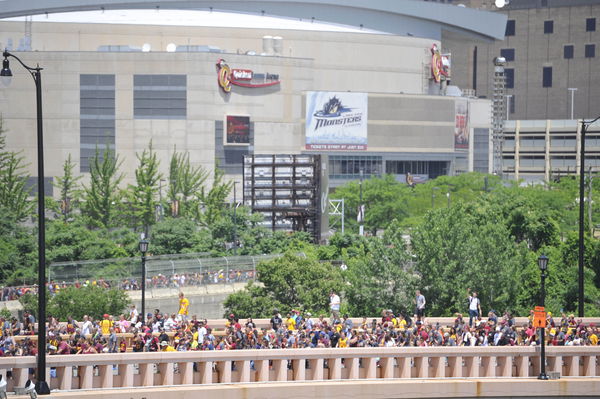
USA Today via Reuters
Jun 22, 2016; Cleveland, OH, USA; Fans walk on the Hope Memorial Bridge after the Cleveland Cavaliers NBA championship parade in downtown Cleveland. Mandatory Credit: David Richard-USA TODAY Sports
Two decades of basketball turned into something else without anyone planning it.
An era that people can locate in their own lives.
The strange part of watching LeBron James for this long is realizing that the story did not belong just to him. It belonged to everyone who kept showing up to see what happened next.
Which is why the ending matters. Because endings are the only way eras become history.
The Last Time for LeBron James
So envision that night once more.
Not a farewell tour with countdown clocks. Not an arena awaiting a final address. Simply another game proceeding ordinarily until it doesn’t. A timeout is called. A glance toward the sideline. A substitution that carries weight beyond the scoreboard. The kind of substitution that stills the arena, not because the game has concluded, but because everyone grasps that something else has ended.
People would rise without prompting. Opponents would linger beyond the demands of competition. The moment would feel collective rather than observed, as though everyone comprehends something profound without needing explanation.
Because the significance would not derive from seasons played or championships won. Cleveland already understands what victory tastes like. What it has always yearned for is closure.
View this post on Instagram
It would come from the place matching the memory.
For two decades, the league tried to decide what LeBron James meant in comparison to other players. Fans argued about numbers, eras, teammates, and opponents. Those debates shaped the career but never quite explained the attachment.
Attachment came from something simpler.
A city once waited for change and believed it found it in one player. His presence had already changed the city once before. Economic studies later estimated that restaurants and bars within a mile of the arena saw revenue increase more than 13 percent during his tenure.
That player left, returned, repaired what had broken, and kept playing long after the emotional question had been answered. The achievements expanded. The meaning stayed anchored.
That is why the last game would feel different in Cleveland than anywhere else.
Not because it adds to the legacy, but because it completes it.
Some careers end when performance declines.
Some end when contracts expire.
And some end when the story no longer needs another chapter.
Records will remain.
The arguments will continue.
But the story was never trying to end everywhere.
Some endings are announced.
This one would simply feel right for LeBron James.