Imago
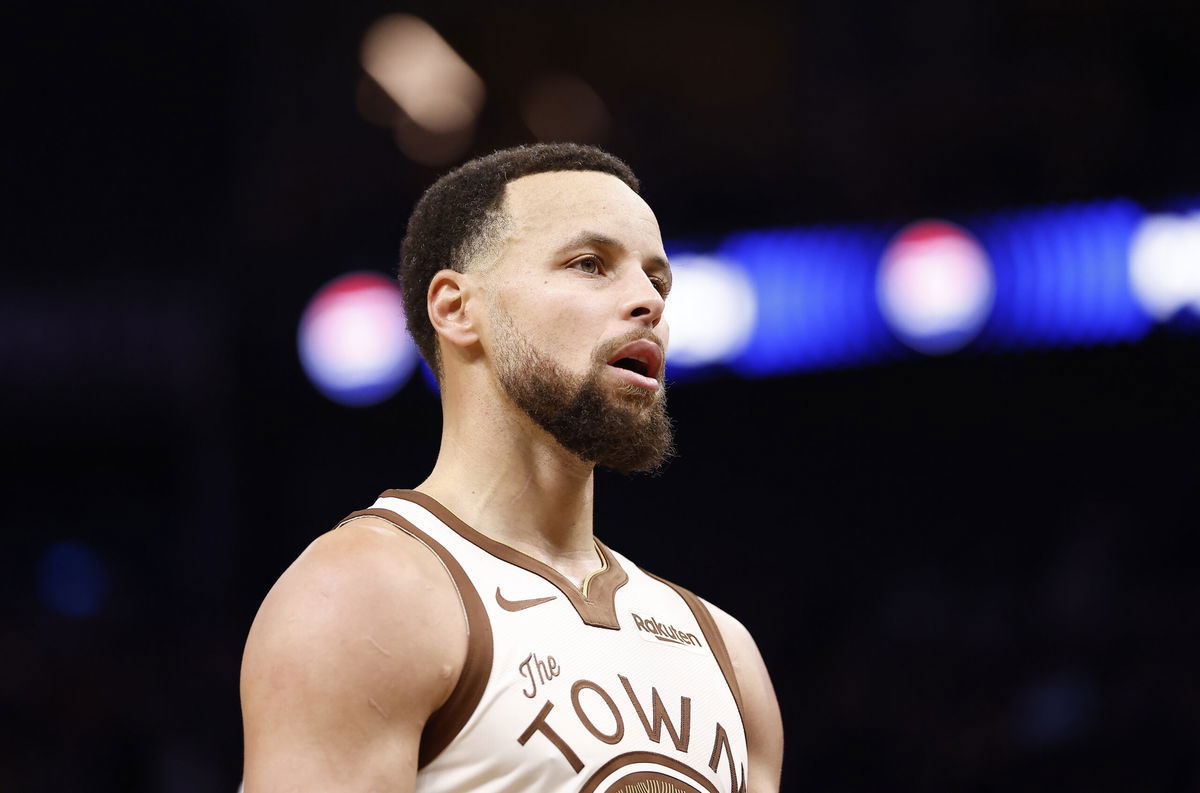
Jan 9, 2026; San Francisco, California, USA; Golden State Warriors guard Stephen Curry (30) between plays against the Sacramento Kings during the third quarter at Chase Center. Mandatory Credit: Kelley L Cox-Imagn Images
Imago
Jan 9, 2026; San Francisco, California, USA; Golden State Warriors guard Stephen Curry (30) between plays against the Sacramento Kings during the third quarter at Chase Center. Mandatory Credit: Kelley L Cox-Imagn Images
Stephen Curry is not just choosing a shoe deal. He is choosing control. Because for the first time in his career, the decision is not about money or exposure. It is about ownership.

That shift became official in November 2025. Curry and Under Armour mutually ended a 12-year partnership, with the four-time champion walking away with full ownership of his brand, trademarks, and signature “Splash” logo.
Watch What’s Trending Now!
The real story is what those changes. Because it ensures one thing immediately. Nike is no longer an option.
USA Today via Reuters
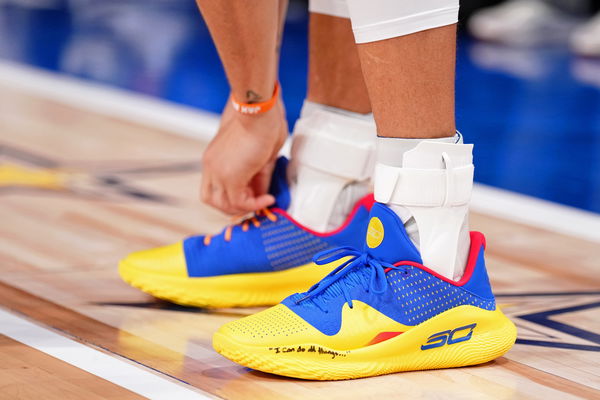
Feb 18, 2024; Indianapolis, Indiana, USA; A detail view of the shoes worn by Western Conference guard Stephen Curry (30) of the Golden State Warriors during the first half of the 73rd NBA All Star game at Gainbridge Fieldhouse. Mandatory Credit: Kyle Terada-USA TODAY Sports
Curry already made that decision once. In 2013, Nike had the opportunity to build its next generational signature athlete. Instead, it delivered one of the most infamous recruitment misfires in sports business.
The pitch meeting set the tone. Nike representatives mispronounced Curry’s name. A presentation slide still carried Kevin Durant’s name. More importantly, there was no clear vision to make Curry a centerpiece athlete on the level of Michael Jordan, LeBron James, or Kobe Bryant.
The offer reflected that hesitation. Nike proposed roughly $2.5 million per year without a defined path to signature dominance. Under Armour saw something different. They offered $4 million annually, a signature line, and full brand focus.
Curry chose belief over legacy. And that decision has never been revisited. That bet paid off immediately. Curry’s first signature shoe launched in 2015. At its peak, Under Armour’s basketball business saw growth of over 700%, with his line becoming one of the best-selling signature series outside of Jordan Brand.
However, the long-term ceiling never materialized. Under Armour treated Curry as a performance product. The rest of the industry treated athletes as cultural icons.
That difference mattered. By 2025, Under Armour’s basketball division was generating just $100–120 million annually, barely 2% of total company revenue. Meanwhile, Jordan Brand alone was producing over $5 billion.
Because of that gap, the partnership stalled. Curry had the influence. The brand did not have the ecosystem.
The Power Shift: Why This Free Agency Is Different
This time, Curry controls everything. Unlike Michael Jordan, who does not own the Jumpman logo, Curry owns his intellectual property outright. That means any new partner is not building a brand.
They are supporting one. That distinction changes the negotiation entirely. Instead of fitting into a system, Curry is now selecting a system that fits him. Because of that, legacy brands face a new challenge. They have to adapt to him. Not the other way around.
That is where ANTA enters the picture. At first glance, the idea feels unexpected. However, the structure makes sense. ANTA brings scale.
The company holds a market capitalization exceeding $30 billion and operates over 12,000 retail locations across Asia, giving it unmatched reach in a global market where Curry already has massive appeal.
At the same time, it brings flexibility. During All-Star Weekend in Los Angeles, Curry trained in ANTA Enclosion Type 2 sneakers featuring his own Curry Brand logo on the heel tab. That detail matters more than the shoe itself.
Because it proves integration is already happening. ANTA is not asking to own his brand. It is building around it. There is also a familiar connection. Klay Thompson, Curry’s longtime teammate and four-time champion alongside him, already holds a lifetime deal with ANTA.
That relationship lowers the barrier. It creates immediate trust in a space where control matters more than ever. Meanwhile, ANTA continues to build a roster that reflects the league’s global shift.
The NBA is no longer centered around one market. The footwear business is following that same direction. Because of that, ANTA is not just a contender. It represents where the industry is going.
On paper, a reunion would generate headlines. In reality, it does not align structurally. Nike’s model is built on ownership. Curry’s position is built on independence.
That gap is too large to bridge. Even if Nike presents a stronger offer today, the core issue remains unchanged. There is no evidence the company is willing to cede control of branding and intellectual property at the level Curry now demands.
Because of that, the door is not slightly closed. It is shut.
Curry’s next move is not just another endorsement. It is a blueprint. If he aligns with ANTA, it signals a shift toward global distribution and athlete-controlled brands. If he chooses a legacy company, it will require that company to adapt in ways the industry has never seen before.
Either outcome reshapes the market. Because this is no longer about who signs Stephen Curry. It is about who is willing to build around him. And that is why Nike is no longer part of the conversation.
Written by

Edited by

Ved Vaze