Imago
IMAGN
Imago
IMAGN
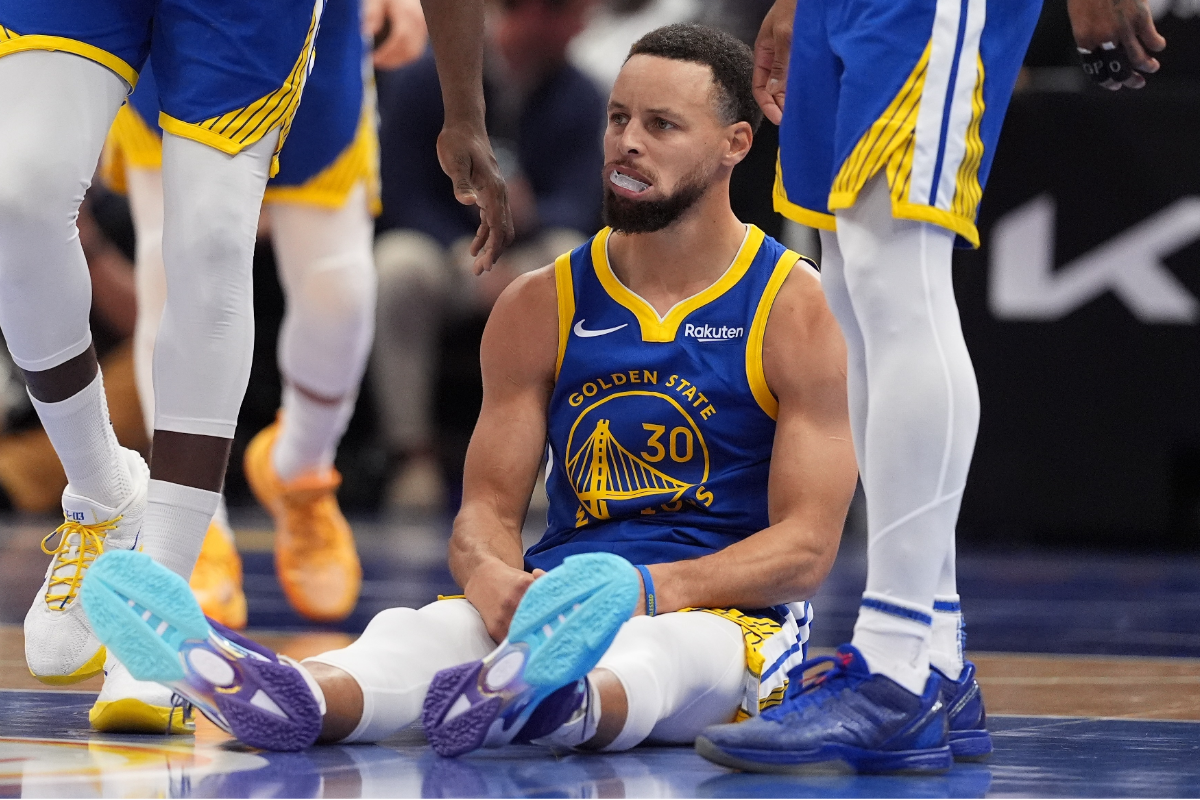
What should be a marquee matchup instead feels like a hollow echo for the Warriors. Star point guard Stephen Curry will miss his sixth straight game with a lingering right knee issue that has plagued him since late January.
Watch What’s Trending Now!
He sat out the last five games before the NBA All-Star break and skipped the All-Star Game itself — and there was little optimism he would return immediately after the midseason showpiece. Curry, who turns 38 next month, remains the longest-tenured player on any active NBA roster after being drafted by Golden State in 2009.
Imago
Dec 18, 2025; Phoenix, Arizona, USA; Golden State Warriors guard Stephen Curry (30) reacts against the Phoenix Suns in the second half at Mortgage Matchup Center. Mandatory Credit: Mark J. Rebilas-Imagn Images
That loyalty is sacred inside the organization, but from the outside it looks like the marriage that built a dynasty is now dragging both parties into irrelevance. Curry embodies the Warriors, leading them to four championships and one of the defining dynasties in modern sports. But the period since that last title in 2022 has seen Golden State cycle through first playoff round exits, play-in heartbreaks, and now sit at 29-26, good for another play-in position.
With no timeline set in stone for their star point guard’s return, and with star swingman Jimmy Butler, the next biggest name on the roster, out for the season, it doesn’t look promising. Butler is the only other Warrior averaging over 20 points per game this season, and he underwent surgery on Feb 9 to repair a torn ACL in his right knee.
Why Protecting Curry Matters More Than Chasing the Play-In
Curry is averaging 27.2 points per game this season, still above his career average, showing that he is still productive. But the wins aren’t following. Pushing the icon through pain won’t fix the crisis. The Warriors are caught in post-dynasty inertia driven by loyalty, while the modern NBA demands adaptation.
While Curry’s loyalty is admirable, it has locked the Warriors into a version of themselves that no longer contends. The Warriors have tried everything for a full reset — trading for veterans, tweaking lineups and hoping the young pieces gel. Yet here they are sitting in mediocrity.
The worst part of it all is that Curry’s health has started to limit his time on the court. The two-time NBA MVP managed to play 70+ games in the last two seasons, but only played 56 the season prior and just over 60 two seasons preceding that. With his current injury status, his availability for the stretch run is again in serious doubt as the Warriors look to make the postseason directly or lock in a play-in spot at the very least.
Even after adding Kristaps Porzingis at the deadline, the roster still lacks enough healthy scoring to justify rushing Curry back. Realistically, the Warriors are not going anywhere this season, and putting a 38-year-old body in harm’s way just to fight for a play-in spot is a short-term gamble with long-term consequences.
Plus, there is some upside in sitting Curry for the remainder of the 2025-26 season.
Without the 12-time All-Star, the Warriors get an unfiltered look at what they actually have or don’t have. Although the roster isn’t exactly littered with promising young talent, Golden State must face the big picture and begin assessing what direction to take in the post-Curry era. The Warriors will very likely look terrible without Curry, but at least it will improve draft positioning for a true rebuild. They don’t want to limp into the offseason with zero clarity, especially if Curry’s injury takes time to heal.
Shutting Curry down wouldn’t signal surrender — it would signal clarity. The Warriors no longer need proof of his greatness; they need answers about their future. Protecting a franchise icon and evaluating the roster honestly matters more than chasing a play-in appearance that changes nothing.
Written by

Edited by

Ved Vaze