
Even after over a dozen high-profile prospects returned to college basketball, the 2026 NBA Draft still appears special. Five players featured in our previous top-30 mock in April won’t enter this draft, but there are still tons of talent on the board throughout the class. Following the NBA Combine, we’ve learned even more about this crop of players.
Watch What’s Trending Now!
We’ll do our best to predict the order of a deep and occasionally polarizing NBA Draft class, relying on consensus draft opinion, team ecosystems, timelines and roster constructions.
1. Washington Wizards – Darryn Peterson, Guard, Kansas
Despite playing beneath his full athletic and physical capacity, Peterson authored one of the best teenage college guard seasons in years. If his rim pressure and passing inch closer to the level he’s shown in the past, his special shotmaking, athletic gifts and defensive playmaking will allow him to fit in any lineup and any scheme. He’ll impact winning now, paired with Anthony Davis and Trae Young while developing as Washington’s long-term centerpiece.
2. Utah Jazz – AJ Dybantsa, Wing, BYU
The Jazz would love to keep Dybantsa in the state of Utah, where he’s played for the last few seasons, slotting in on the wing for a Jazz team looking to push towards the playoffs. He’s a preternatural wing scoring talent with the standstill creation nobody on the team can replicate, with the on-ball defensive potential to bother and slow other potent scorers.
3. Memphis Grizzlies – Cameron Boozer, Forward, Duke
Boozer processes the game like many of the league’s best offensive players, wielding his true superpower to create constant shots for teammates. He enters the NBA Draft after dominating college basketball as an 18-year-old, scoring at all levels, shooting from distance and flashing defensive aptitude. He’s not a traditionally elite athlete, but he’s a perfect fit with Zach Edey and a top-level upside player, far better than most third overall picks.
4. Chicago Bulls – Caleb Wilson, Forward, North Carolina
Wilson is the caliber of talent that can transform a franchise, something that the Bulls haven’t rostered in quite some time. While questions about Wilson’s outside shooting and perimeter creation are valid, his nuclear athleticism, excellent passing and superstar defensive upside project him as a foundational piece.
5. Los Angeles Clippers (via IND) – Keaton Wagler, Guard, Illinois
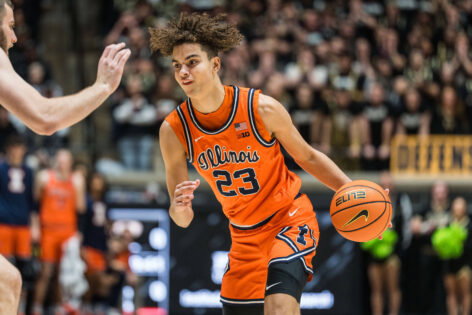
Imago
January 24, 2026, West Lafayette, Indiana, USA: Illinois Fighting Illini guard KEATON WAGLER 23 dribbles the basketball during the NCAA, College League, USA mens basketball game between the Washington Huskies and the Purdue Boilermakers, Saturday January 24, 2026, at Mackey Arena in West Lafayette, Ind. Illinois won 88-82. West Lafayette USA – ZUMAw145 20260124_zsp_w145_019 Copyright: xDavidxWegielx
Wagler seems firmly embedded in the top-7 of this NBA Draft at the very least and he’d make sense for a team like the Clippers with some current stars in place but few enticing long-term pieces. He’s a brilliant processor with the ball, crafty separator and advanced shotmaker for his age, compensating for below-average strength and explosiveness.
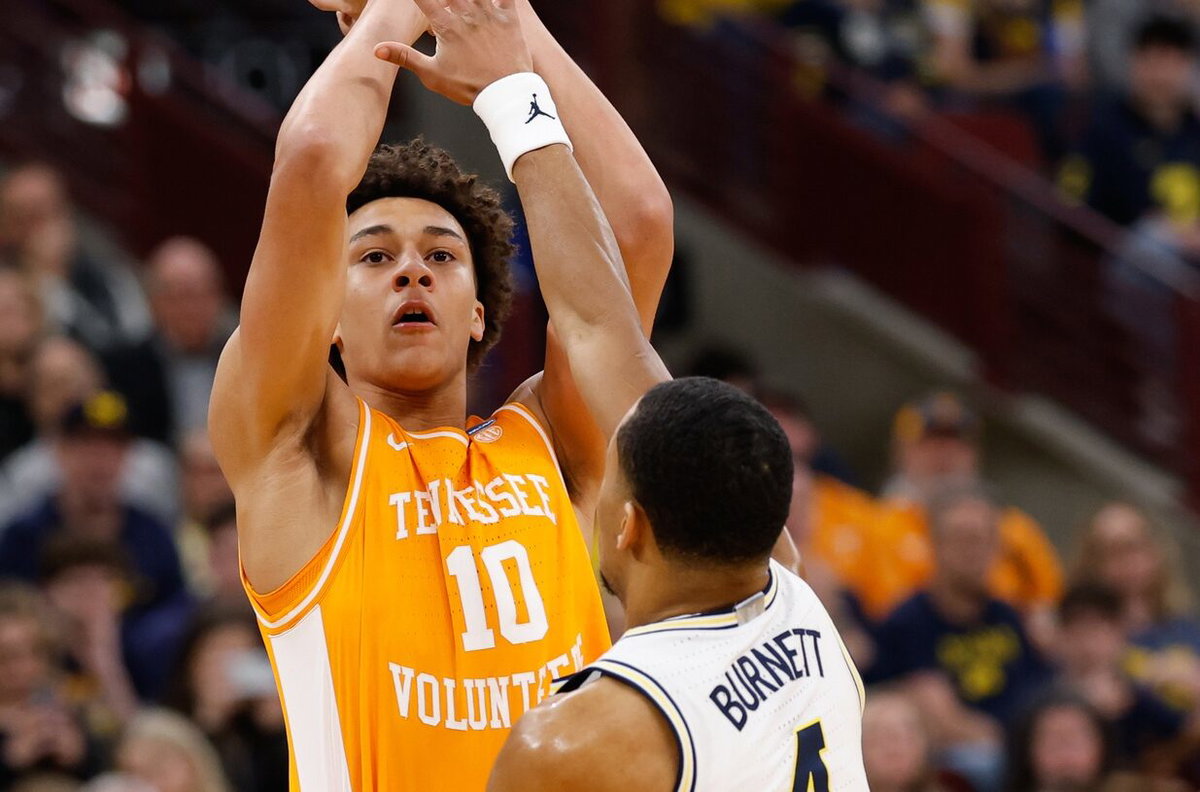
6. Brooklyn Nets – Nate Ament, Forward, Tennessee
The Nets bucked consensus drafting Egor Demin last year and could make a similar play with Ament, betting on his shotmaking and physical tools over other talented guards. If the smoke truly leads to fire here, he’d add another developmental forward with impressive shooting and strength creation chops for his size.
7. Sacramento Kings – Darius Acuff Jr., Point, Arkansas
Acuff Jr.’s elite pick-and-roll creation, elite dribbling and all-encompassing shotmaking project him as a potentially devastating offensive weapon down the line. A team without much direction, like the Kings, can afford to swing on a player with defensive limitations like his and figure the rest out later.
8. Atlanta Hawks (via NOP) – Kingston Flemings, Point, Houston
The Hawks value athletic, high-motor players who turn offenses over, crash the boards and attack the hoop and Flemings fits that description best of the top point guards in the class. If he continues to improve as a shooter and ballhandler, he’s talented enough to develop into a star offensive player who adds value on the other side of the ball.
9. Dallas Mavericks – Mikel Brown Jr., Point, Louisville
Dallas would be thrilled for Brown Jr. to fall this far, boasting all-league offensive upside and the tools to grow as a defender. As long as the back injuries that limited him in college don’t linger to the NBA, he’d slot in smoothly as a primary pick-and-roll creator and secondary operator next to Cooper Flagg and co.
10. Milwaukee Bucks – Karim Lopez, Forward, NZ Breakers
Lopez is a strong, athletic forward with more ball skills and driving verve than most players of his archetype. The Bucks have historically prioritized young, toolsy wing players like Lopez, who already has a proven track record of production in a pro league. Improving his off-ball defensive consistency and crystallizing his outside shot will allow him to play earlier in the NBA.
11. Golden State Warriors – Brayden Burries, Guard, Arizona
As long as the Warriors employ Stephen Curry, they’ll likely target players in the NBA Draft to advance their winning chances in the short term. Burries proved his mettle on a championship-caliber Arizona team as a freshman and that projectable rebounding, defensive versatility, shooting and secondary scoring should help him acclimate to the NBA.
12. Oklahoma City Thunder (via LAC) – Jayden Quaintance, Big, Kentucky
Who else but the Thunder, who spent two straight top-15 picks on talented players with injury concerns, are best suited to swing on Quaintance. Oklahoma City can afford him all the time he needs to recover and develop, hoping his special explosiveness and defensive playmaking allow him to swing playoff matchups down the line.
13. Miami Heat – Yaxel Lendeborg, Forward, Michigan
The Heat have no problems drafting older players relatively high and few 23-year-old prospects ever approached Lendeborg’s impact, physical tools and feel for the game. He’ll add value in nearly all facets of the game and his excellent motor and malleability will fit Miami’s ecosystem smoothly.
14. Charlotte Hornets – Aday Mara, Center, Michigan
Charlotte’s center rotation has punched above its weight class, but a needle mover like Mara would transform that room. His elite rim protection, improved mobility and excellent passing skill as a true seven-foot-plus big man could allow him to develop into one of the league’s most unique two-way weapons.
15. Chicago Bulls (via POR) – Labaron Philon Jr., Point, Alabama
Philon doesn’t exactly fit new Bulls GM Bryson Graham’s desire for size, length, athleticism and physicality, but drafting Wilson fourth overall in this NBA Draft opens the door to add a talented guard sliding in the draft. The Alabama product might be the class’s best on-ball advantage creator with the outside shooting and off-ball skill to fit as a complementary player as well.
16. Memphis Grizzlies (via PHX) – Allen Graves, Forward, Santa Clara
An analytically inclined Memphis front office likely values Graves’s youth elite statistical production and advanced impact numbers. He didn’t produce against competition as strong as many other players in this range, but Memphis didn’t fear Cedric Coward’s lack of high-major experience in last year’s NBA Draft.
17. Oklahoma City Thunder (via PHI) – Cameron Carr, Wing, Baylor
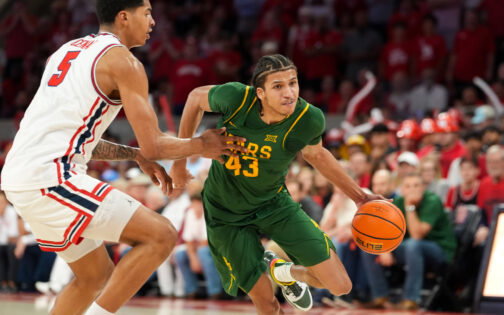
Imago
March 4, 2026, Houston, Texas, USA: Baylor guard CAMERON CARR 43 moves the ball against Houston center CHRIS CENAC JR 5 during a college basketball game between the Houston Cougars and the Baylor Bears on March 4, 2026 in Houston, Texas. Houston won, 77-64. Houston USA – ZUMAc201 20260304_zap_c201_016 Copyright: xScottxColemanx
After swinging big with their first top-20 pick, Oklahoma City adds one of the draft process’s late risers. Carr fits Sam Presti’s historical preference for players with gigantic wingspans, bringing explosive athleticism, shot blocking and movement shooting that project him as an effective NBA role player.
18. Charlotte Hornets (via ORL) – Dailyn Swain, Wing, Texas
Swain provides the athleticism and defensive playmaking Charlotte will covet with more live-dribble creation upside than most wings of his archetype. Few players of his size boast his elite dribbling and downhill driving skill, suggesting offensive upside against the switching defense that troubled the Hornets last season.
19. Toronto Raptors – Ebuka Okorie, Guard, Stanford
Toronto’s lack of live-dribble creation, paint touch generation and off-dribble shooting all reared their heads against Cleveland in the postseason. In response, they’ll draft the class’s quickest player, infusing Okorie’s elite creation ceiling and defensive potential into an already promising young core.
20. San Antonio Spurs (via ATL) – Morez Johnson Jr., Big, Michigan
Regardless of whether or not the Spurs win the 2026 NBA Finals, they’ll look to bring in more forward depth to supplement Victor Wembanyama. Johnson Jr.’s incessant motor, elite athleticism, rebounding and defensive versatility all will help him thrive partnered with Wemby and as an occasionally lone big.
21. Detroit Pistons (via MIN) – Christian Anderson Jr., Point, Texas Tech
Detroit badly needs additional ball-handling and shotmaking juice to alleviate the immense offensive load Cade Cunningham carries. Despite his size, Anderson Jr. projects as an elite off-dribble shooter and pick-and-roll passer with the touch, skill and feel to become a star-level offensive player at his peak.
22. Philadelphia 76ers (via HOU) – Chris Cenac Jr., Big, Houston
It’s possible to make a case for Cenac Jr. as the most impressive athletic and physical talent in this NBA Draft class, loaded with elite size, length, strength, explosiveness and movement skills. His physicality, feel for the game and outside shooting have a ways to go, but the physical ceiling for a Philly team lacking tons of big man upsize would be tantalizing.
23. Atlanta Hawks (via CLE) – Henri Veesaar, Center, North Carolina
Veesaar measured near seven feet without shoes at the combine and that true center size has been absent in Atlanta’s frontcourt in recent years. His outside shooting, ball skills and solid playmaking should fit him in Quin Snyder’s offense, which prioritizes spacing and frequents 5-out looks.
24. New York Knicks – Hannes Steinbach, Big, Washington
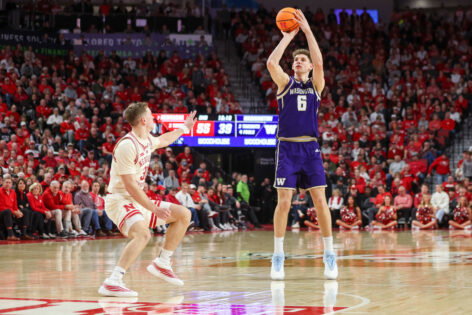
Imago
January 21, 2026, Lincoln, Nebraska, USA: Washington Huskies forward HANNES STEINBACH 6 shoots a three pointer during the game against Nebraska at Pinnacle Bank Arena. Lincoln USA – ZUMAa267 20260121_zsp_a267_019 Copyright: xBrandonxAndersonx
The NBA Finals-bound Knicks would still benefit from added frontcourt depth behind their two staple big men. Steinbach’s special rebounding, hands and touch present immediate pathways to value at the next level, even considering some limitations as an outside shooter and questions about his true position.
25. Los Angeles Lakers – Zuby Ejiofor, Big, St. John’s
Ejiofor is an athletic, physical tweener big with case as the draft’s most effective defender on switches. His defense would go a long way in helping insulate Luka Doncic and Austin Reaves while he continues progressing as an outside shooter and playmaker, as he did during his final college season.
26. Denver Nuggets – Koa Peat, Forward, Arizona
Peat’s athleticism and physicality have been critically missing from Denver’s rosters across the past few seasons. He’ll need plenty of time to improve his outside shot, decision-making and ball skills, but he profiles as an effective forward defender and rebounder who could add some scoring value next to a jumbo initiator like Nikola Jokic.
27. Boston Celtics – Bennett Stirtz, Point, Iowa
Boston would be fortunate for Stirtz to slip this far, helping the Celtics replenish a fairly thin guard room. His elite outside shooting, pick-and-roll playmaking and general feel for the game should allow him to slot in next to other creators and command some on-ball usage in a pinch at the NBA level.
28. Minnesota Timberwolves (via DET) – Sergio De Larrea, Guard, Valencia Basket
Minnesota may address Donte DiVincenzo’s Achilles tear and Ayo Dosunmu’s impending free agency with a backcourt swing in the late first round of the NBA Draft. De Larrea’s live-dribble passing talent exceeds any guard on the roster and he projects as an effective complementary option next to Anthony Edwards.
29. Cleveland Cavaliers (via SAS) – Tarris Reed, Center, UConn
A fatally soft Cleveland core must inject more physicality and toughness into the roster. That’s exactly what Reed brings, pairing elite functional strength and power with a high feel for the game. He’d thrive as a third big behind Evan Mobley and Jarrett Allen, assuming the Cavs don’t elect to trade one of those players.
30. Dallas Mavericks (via OKC) – Joshua Jefferson, Forward, Iowa State
Dallas addresses its barren cupboard of young frontcourt players, beyond Flagg and the oft-injured Dereck Lively, late in the first. Jefferson has the two-way tools to function in a smaller role next to the Mavs’ higher usage players, adding value as a connective passer, rebounder and versatile defender.