
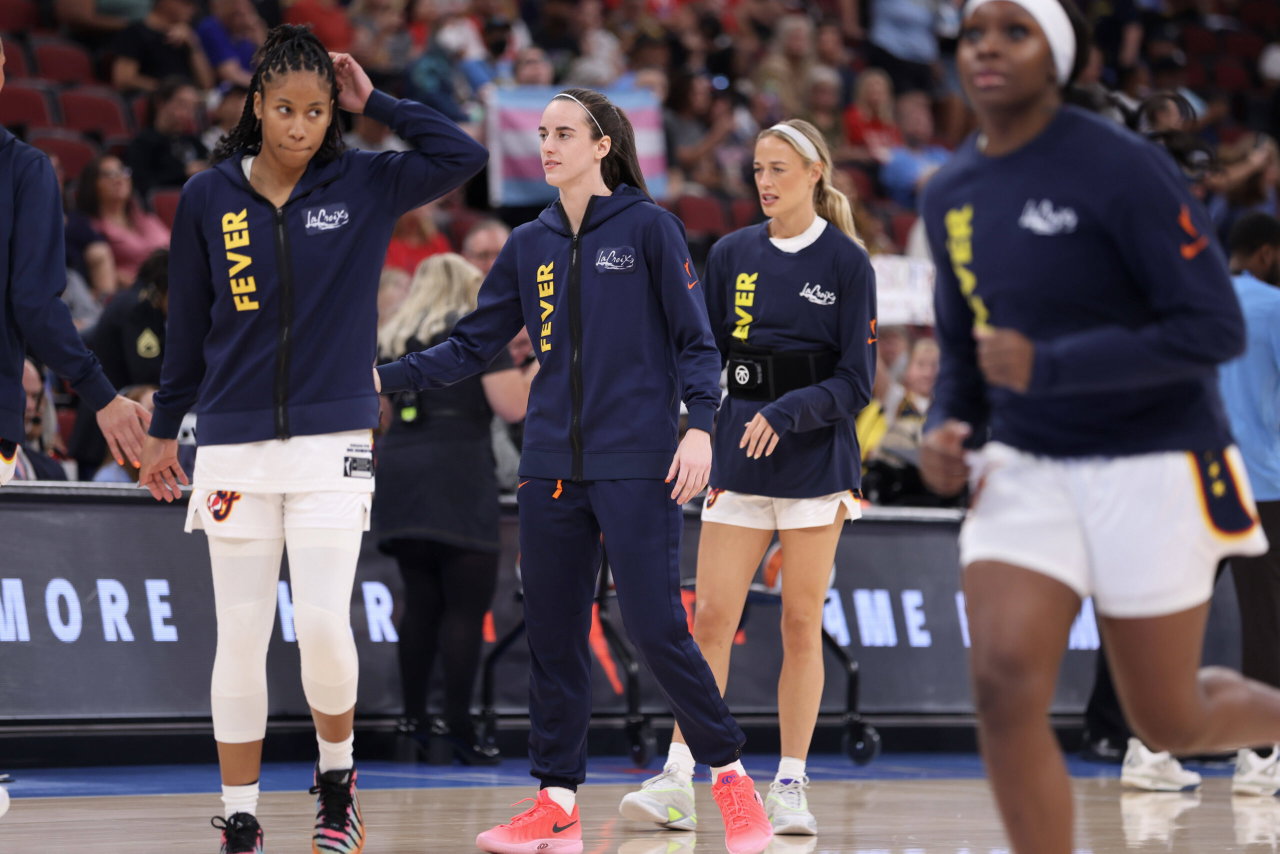
The WNBA says only women can play, yet its CBA leaves one crucial question unanswered: what defines a woman? That ambiguity could force players to make a deeply public choice if they gain control of the agreement. Now, with Enes Kanter Freedom and Royce White declaring for the 2027 Draft, an already sensitive debate has taken an unexpected turn, raising more unignorable questions for the league.
Watch What’s Trending Now!
Analyst and lawyer Clay Travis gave a clear picture of what is truly going on. On Fox News Sunday with Shannon Bream, Travis said, “It’s the WNBA, the Women’s National Basketball Association. All they have to do is adopt the same standards as the Women’s Tennis Association, the NCAA, the Olympics, and test one time to prove that it’s all women. If it’s not the WNBA, then it becomes a unisex league.”
But this debate is not solely based on the definitions and understandings of gender. There is an economic factor that maybe many have failed to notice.
“The G League, which is the minor league of the NBA, the average player makes $45,000 a year. The average WNBA player makes $500,000 a year,” Clay Travis pointed out. “There are a lot of people watching us right now that would raise their right hand and say, I identify as a man or a woman. If identifying as a different gender got you 10 times the salary, this is why the WNBA is in crisis.”
The new pay structure puts WNBA earnings on a completely different level. Players could average more than $583,000 to $600,000 annually. Meanwhile, minimum salaries range from $270,000 to $300,000, depending on experience. Elite stars can reach $1.4 million. By comparison, G League players receive about $45,000 for a five-to-six-month season. So, the financial gap between the leagues has become remarkably wide.
This disparity is one of the key reasons behind the need for a new gender identification for the likes of Enes Kanter and Royce White. Now, Clay Travis further called out the league and the higher-ups who couldn’t come up with a basic definition of a woman.
“Maybe we need to go back to Kindergarten Cop. If people remember that Arnold Schwarzenegger movie where little kindergarteners could tell us who was a boy and who was a girl,” he said.
Now, what did the WNBA do that has triggered such widespread criticism all over again?
A WNBA task force addressed transgender athlete participation in the league
WNBA team leaders gathered Wednesday to examine transgender player eligibility. However, the meeting ended without setting any rules. Why did the league need to hold the discussion in the first place? Well, Enes Kanter and Royce White’s decisions weren’t the only reasons. The debate grew after Indiana Fever star Sophie Cunningham voiced support for restrictions. She opposed transgender girls and women competing in female sports.
The league’s statement read: “Today’s meeting covered a wide range of topics, including ongoing discussions on transgender athletes and the continued hate and vitriol directed at players online. We will continue to engage all league stakeholders in the coming weeks and months. We will approach these important conversations thoughtfully and in alignment with the values of our league. There are no immediate eligibility matters affecting the WNBA and we strongly denounce the bad-faith efforts to use these topics to demean or marginalize others.”
The debate is growing more intense. Meanwhile, figures like Clay Travis are examining the issue from a different angle. Financial incentives are now part of the conversation, too. Yet, that aspect has received little attention. At the same time, the WNBA and its CBA still lack the definition needed to clarify the rules for everyone involved.