
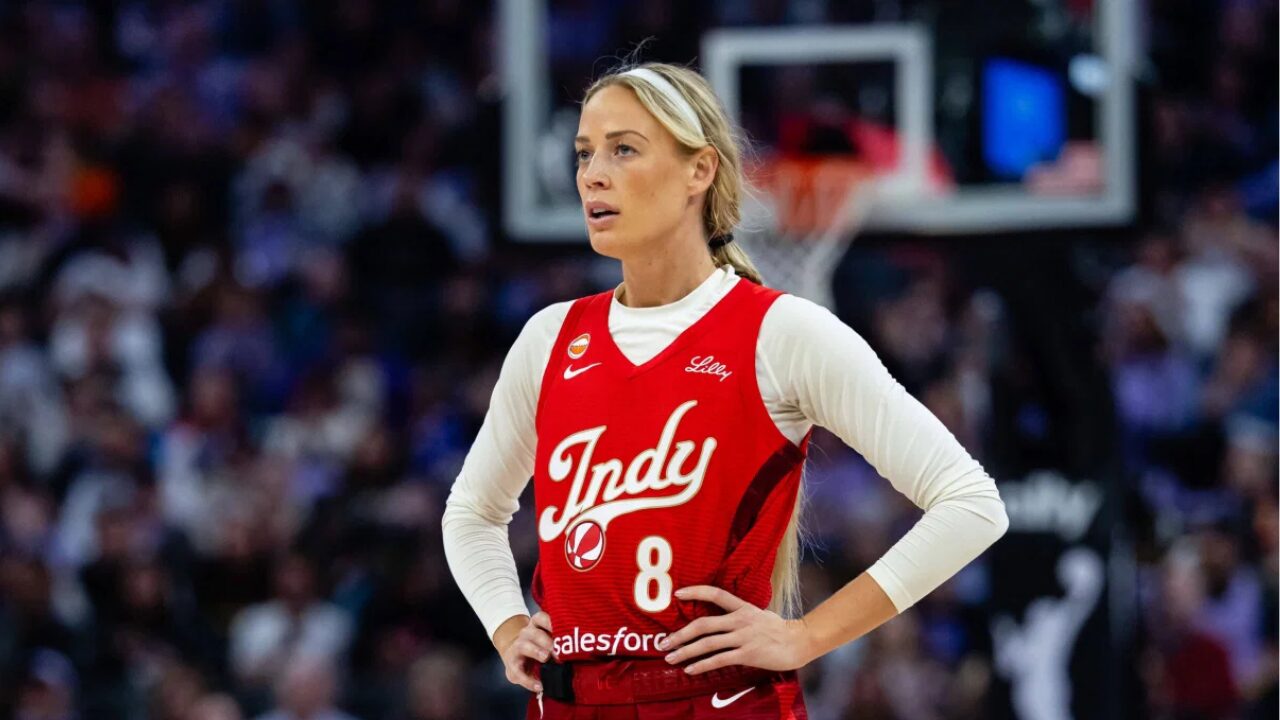
Sophie Cunningham just found out a big difference in how NBA and WNBA players prepare during a season, and it left both her and basketball fans in disbelief. The Indiana Fever guard expressed utter shock during a recent episode of No Hesitation after learning about the load management privileges and pre-scheduled rest days enjoyed by premier NBA superstars like LeBron James and Stephen Curry.
Watch What’s Trending Now!
Cunningham’s co-host, Drew Hanlen, is a prominent NBA skills trainer who has worked with players like Jayson Tatum on the Boston Celtics’ 2024 championship team. So he gave Cunningham insight into the stark contrast between training regimens and rest protocols in the NBA versus the WNBA. During their conversation, Hanlen revealed that top-tier NBA stars often map out their rest days months in advance to protect their health for deep postseason runs.
“There’s already scheduled rest days for players,” Hanlen explained during the broadcast. “Before the season starts, they already know a couple games that they’re sitting out, because they’re trying to manage their load.”
The revelation left Cunningham stunned, prompting her to question the disparity in how player health is managed between the two leagues. She pointed out that her Fever squad navigates an intense practice schedule late in the year.
“I know you’re going to say it’s smart, because the end goal is to get the championship, but like, is that fair?” Cunningham asked.
Cunningham’s reaction comes amid her candid breakdown of the Fever’s grueling two-hour practice sessions under head coach Stephanie White. With only four games remaining in the regular season as Indiana battles for a top-four playoff seed, Cunningham openly questioned the necessity of high-intensity, two-hour scrimmages at this late stage of the campaign.
“I truly love to practice, I love working hard and I love what we do in practice. I just think, for me, it’s the time,” Cunningham said regarding Indiana’s preparation. “Why can’t we do that in 1:20 or 1:30? Why does it have to be two hours?”
Clarifying that her comments were not an attack on White’s leadership, Cunningham acknowledged the delicate balance between physical sharpness and player fatigue.
“That has to be our coach’s mentality because holy s—t. Like, I love her to death, trust me. I like to think we are prepared, in shape, in rhythm, and our chemistry is great right now,” Cunningham added. “So I get where she’s coming from. But there’s something to be said of like load management, because as a player, you also want to feel healthy and refreshed and ready to go when it matters. I think that’s what I’m struggling with, truthfully.”
Cunningham’s candid remarks quickly ignited widespread debate among Indiana supporters, many of whom pointed to the team’s lingering injury history from last season, particularly to star guard Caitlin Clark, whose previous MVP campaign was cut short by injuries.
Given Indiana’s stark injury history, fans campaigned for White to reconsider lengthy practices. Some fans online voiced concerns that two-plus hours of full-court scrimmaging against male practice squads so close to the postseason could lead to burnout or soft-tissue injuries.
Some, however, claimed White’s physical, defense-first philosophy has proven results. Under her guidance, the Fever currently holds a 27-14 record, sitting fifth in the standings while pushing for homecourt advantage in the opening round.
White’s high-intensity approach helped guide Indiana to a Commissioner’s Cup title in 2025 and a semi-final appearance, proving that her emphasis on conditioning can pay dividends when games tighten up in October.
The comparison between the NBA and WNBA rest protocols highlights a unique league dynamic. While NBA superstars navigate a grueling 82-game regular-season slate that naturally necessitates scheduled rest for aging icons like James and Curry, WNBA players contend with a compressed 44-game schedule where every single contest carries immense weight for playoff seeding.
Further, key Fever figures like Caitlin Clark and Aliyah Boston recently returned from grueling international play with Team USA at the FIBA World Cup, adding extra physical wear to an already demanding season.
As Indiana closes out its final regular-season games before the postseason, White and her coaching staff face the ultimate challenge: maintaining the physical edge that built their 27-win season while ensuring their roster remains healthy enough to capture the franchise’s first championship since 2012.