
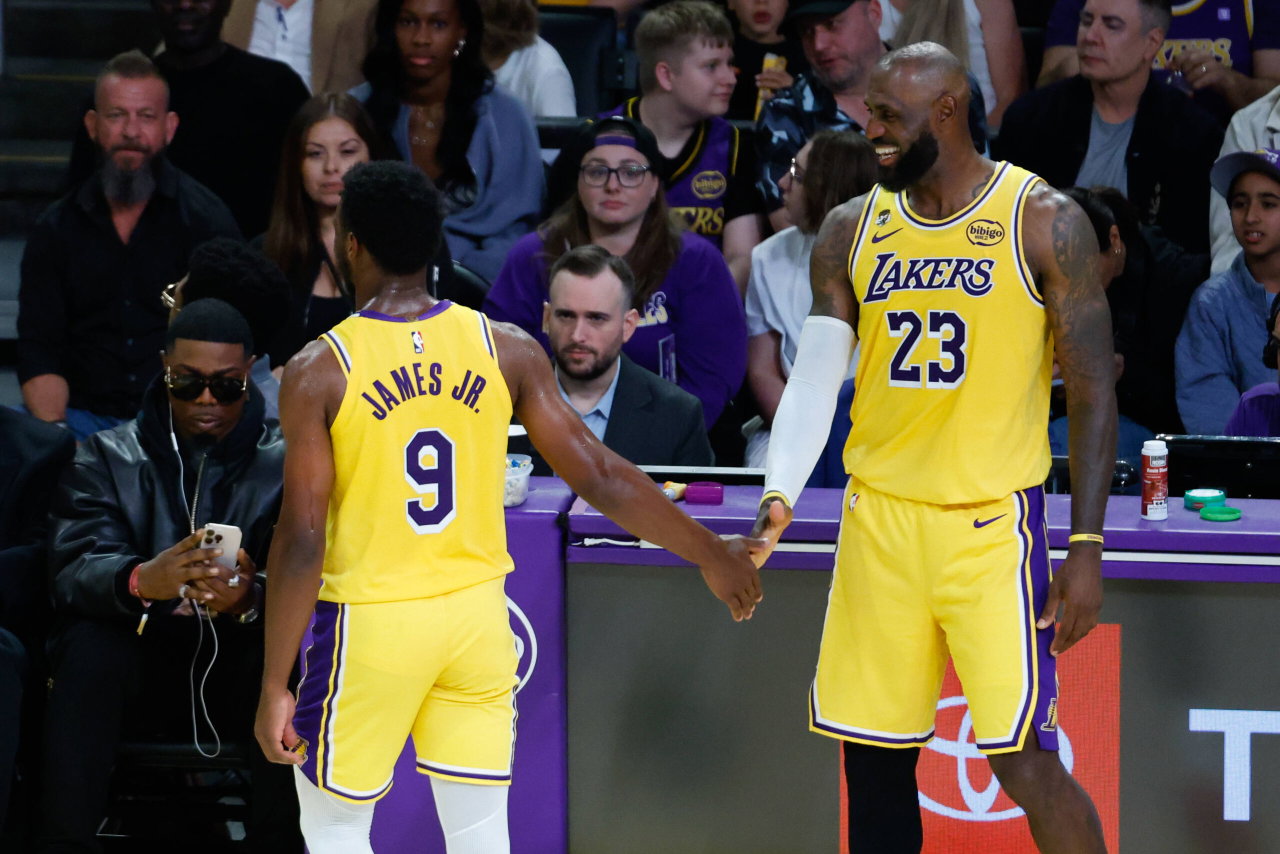
Bronny James’ place in the NBA has remained a talking point, particularly because he entered the league with the Los Angeles Lakers alongside his father, LeBron James. However, his journey has entered a new chapter following LeBron’s departure for the Philadelphia 76ers ahead of the 2026-27 season. Former NBA player Kenyon Martin has now shared his perspective on the circumstances surrounding Bronny’s entry into the league, acknowledging the influence of family connections while questioning whether the young guard was ready for the opportunity.
Watch What’s Trending Now!
During a conversation with Alejandro G, Martin was asked whether he believed Bronny had received special treatment to enter the NBA. The question also referenced Martin’s own son, who worked hard to earn his place in the league. Martin did not shy away from the subject, acknowledging that parents would naturally use their influence to create opportunities for their children.
“Wholeheartedly, and nepotism is real, right? We all know it, and we all would do it, 1,000%. If any one of us are able to put our child in a position to succeed and have direct influence on it, we would, right? No doubt about it,” Martin said during the conversation.
However, Martin separated the influence behind Bronny’s opportunity from his assessment of the young guard’s readiness for professional basketball. He admitted that he did not believe Bronny was prepared to enter the NBA at that particular point in his career, especially after his interrupted college experience at USC.
Martin suggested that another season at USC could have given Bronny more time to gain playing experience and get comfortable on the court without the expectations attached to his family name. He believed the young guard should have been allowed to develop further before entering the demanding NBA environment.
“I just think it was a lot for the kid to deal with, considering everything he had dealt with at USC,” Martin said.
Bronny was selected 55th overall by the Lakers in the 2024 NBA Draft. Martin pointed out that players selected in that position do not usually face the same level of attention or expectations. However, Bronny’s connection to LeBron brought additional scrutiny to his selection and subsequent development.
Martin felt that the attention placed a heavy burden on the young guard. “It was unfair to him. We get it, the last name is James, but it’s unfair to the kid. He’s still a kid,” he added.
Martin’s perspective also came from his own experience as a father. His son, Kenyon Martin Jr., was selected 52nd overall in the 2020 NBA Draft. Having watched his son navigate the process of entering the league, Martin understood the challenges young players face when trying to establish themselves professionally.
He also acknowledged that he would not judge another parent for using their influence to help their child. For Martin, the opportunity had already been given, and Bronny now had the chance to determine what came next in his career.
“If it works, it works. If it doesn’t, you pivot,” Martin said. He added that the opportunity to play in the NBA would remain part of Bronny’s story and legacy, regardless of how his career develops.
LeBron’s departure from Los Angeles adds another dimension to Bronny’s journey. The young guard initially entered the NBA in a historic situation, sharing the Lakers roster with his father. Now, with LeBron moving to Philadelphia, Bronny has to continue developing his career without the same immediate family connection within the Lakers organization.
The change also brings Martin’s earlier comments about giving Bronny more time to develop into focus. His argument was not simply about whether nepotism played a role in the young guard’s arrival. He also questioned whether the expectations surrounding his surname made the transition more difficult than it would have been for another second-round pick.
Martin ultimately acknowledged that family influence can open doors in professional sports, but he believes Bronny should be judged on his own development rather than the expectations attached to his father’s legacy.