
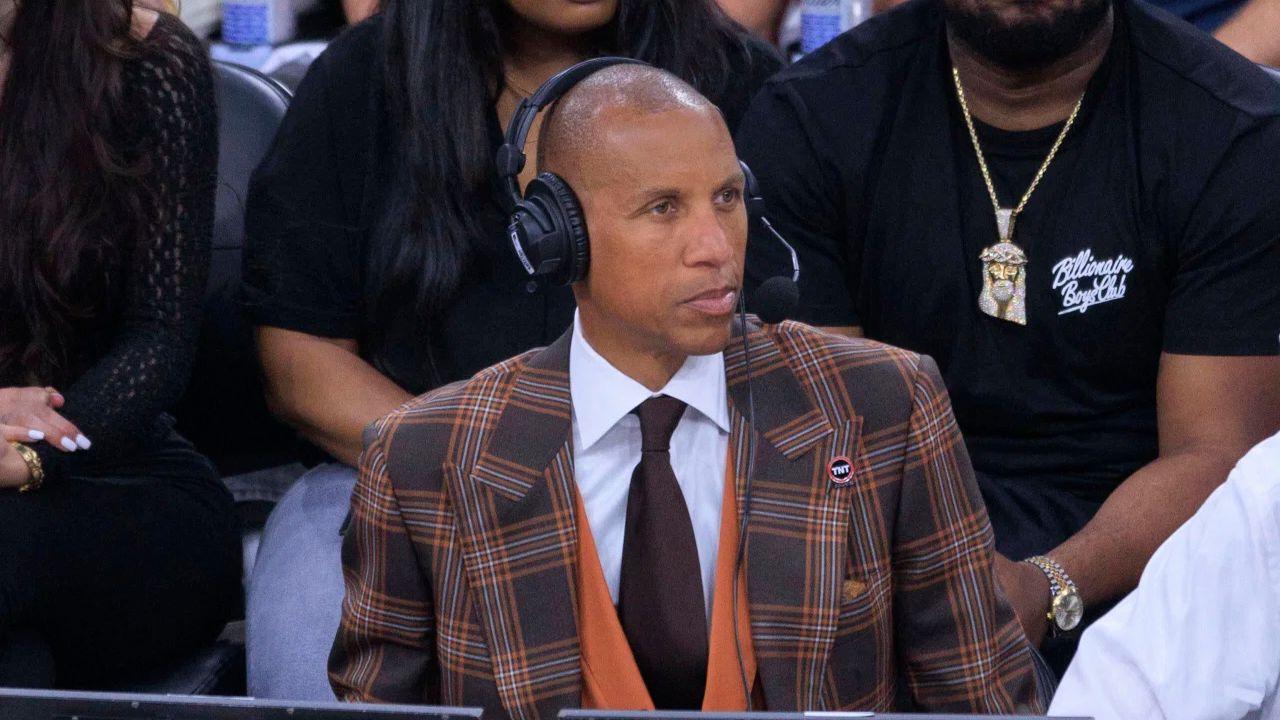
Stephen Jackson had carried something from the Malice at the Palace for years. When he finally addressed it with Reggie Miller, the conversation became more emotional than either former Pacers player expected. Jackson apologized for his actions during the infamous 2004 brawl. His explanation revealed how much that championship opportunity meant to that Pacers team.
Indiana entered the 2004–05 season with legitimate championship ambitions. Miller was approaching retirement, while Jackson, Jermaine O’Neal, Ron Artest, Jamaal Tinsley, and Al Harrington gave the Pacers a roster capable of challenging the Eastern Conference’s best. They had the experience, defensive presence, and offensive talent to make a serious run. The Malice at the Palace, however, changed the trajectory of a potential championship season. During their conversation on All The Smoke, Jackson admitted he had never properly apologized to Miller for his role in the incident.
“I’ve never had a chance to tell you that I’m sorry. We all understood what our motivation was for that season. It wasn’t for us; it was for you. The whole motivation was for getting things done the right way, and getting the championship was for you,” Jackson said.
He then acknowledged how much Miller’s support meant to him.
“So I never got a chance to apologize to you for my actions, now with me saying that I love you even more because you defended me, because you knew that I was just being a loyal teammate.”
Miller struggled to hold back tears as Jackson spoke, but immediately tried to dismiss the need for an apology. The former Pacers star explained that those younger teammates had made the final years of his career among his best. Even when he no longer felt he had the same “Superman” abilities he once possessed. Jackson’s words brought back the significance of a team that believed it could accomplish something special for its veteran leader.
Miller’s response to Jackson was rooted in the relationship they had built during those Indiana years. Rather than holding the incident against his former teammate, he remembered how the younger players had made the final seasons of his career special, even when he no longer felt he was at his peak.
“First of all, you young cats, and when I say young, I mean Jamal, Jermaine, Al, yourself, Ron, those last few years in Indiana, my best years. I didn’t have my superpowers, but I felt, and you guys made me feel like I was Superman,” Miller said.
His words offered a glimpse into why Jackson’s apology was difficult for him to accept. Miller continued to view those teammates as the people who made his final years in Indiana memorable.
That relationship was put to the test during the Malice at the Palace. The altercation between Ron Artest and Ben Wallace escalated into a fight involving players and spectators. This resulted in some of the league’s harshest suspensions. Artest was suspended for the remainder of the season. Jackson was out for 30 games, and Jermaine O’Neal’s suspension was reduced from 25 games to 15 following an appeal.
The fallout left Indiana without several key players during a season in which it had legitimate championship ambitions. The Pacers still reached the playoffs, but their run ended in the Eastern Conference semifinals against Detroit, losing the series 4–2. For a team that believed it could contend, the suspensions changed everything.
That is what makes Jackson’s apology particularly meaningful. He wasn’t simply revisiting a fight from two decades ago. He was acknowledging the role his actions played in disrupting a team that had wanted to deliver a championship for Miller. And despite the consequences, Miller’s response showed that he remembered the loyalty and camaraderie more than the incident itself.