
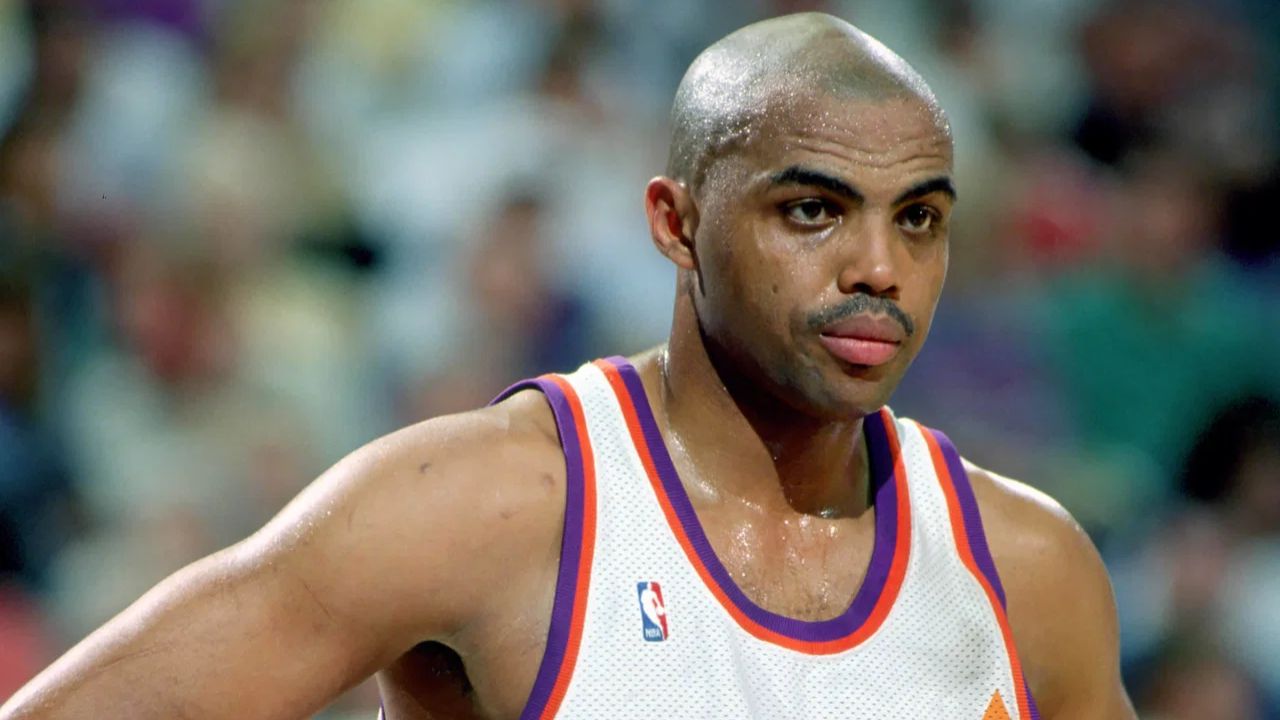
In the wake of the NBA’s historic sanctions against the Los Angeles Clippers for salary cap circumvention involving Kawhi Leonard, it was finally Charles Barkley’s turn to speak out. While effectively declaring the franchise ‘irrelevant,’ he dropped a bombshell of his own. Appearing on The Bill Simmons Podcast, Barkley admitted to taking an under-the-table financial arrangement during his playing career with the Houston Rockets to facilitate signing Scottie Pippen in 1998. Unlike the way it went for Kawhi, the Rockets pulled the ultimate switchbait on a retiring Chuckster.
Watch What’s Trending Now!
When host Bill Simmons questioned whether off-the-books promises were a modern phenomenon or an established league practice, Barkley pulled back the curtain on how teams historically manipulated payrolls, including during his own playing career.
“Oh, it happened when I played,” Barkley revealed to Simmons. “The Rockets needed me to take a pay cut to sign Scottie Pippen. And I said, you know what? If y’all can get Scottie Pippen, I’ll take a pay cut. So they said, we’ll make it up to you next year. I’m like, all right, fine.”
Do note, Pip was fresh off his sixth championship alongside the Chicago Bulls and Chuck, on his final leg of his career, was in Houston for another shot at the title. Yet, he explained that despite making sacrifices to assemble a championship-caliber roster alongside Pippen and Hakeem Olajuwon, the front office backtracked when it came time to compensate him.
“I show up for training camp and sign my contract and they’re like, ‘Well, we decided you wasn’t worth a s—, so we’re not gonna give you that money back. We’re just gonna give you your original money back,'” Barkley continued. “And I was like, oh no, no, no, no, no, no, no, no, no. They’re like, well, you can go somewhere else. And at that stage, I couldn’t get more than that money with them. I’m like, you know what, y’all pissing me off. But I had to take that money.”
Scottie Pippen signed a 5-year, $67.2 million contract with the Rockets because Chuck was reportedly settling for one-year deals worth a million. According to reports in the late ’90s, Chuck was promised about $12 million down the line.
Instead, he was given a final one-year contract worth $9 million. Barkley has expressed his frustration about it many times, claiming that the fury enabled his weight gain and injuries. To date, he maintains that the Rockets owe him $3 million.
While it’s not technically the cap circumvention at the scale of the Clippers, the circumstances in the late ’90s forced Chuck to accept the deal.
“But you remember, you go back, remember when Joe Smith got busted, but the Timberwolves, but teams have always did under-the-table deals where they’re like, hey, you take a pay cut here, we’ll hook it up to you.”
Unlike the Timberwolves’ paper trail, Barkley noted that teams traditionally relied on unwritten, verbal promises and agreements that leave players vulnerable to betrayal and franchises exposed to league discipline if discovered.
As has historically been the case, NBA players have taken pay cuts to be rewarded later, but the crackdown on Smith probably deterred other teams and players from taking such risks.
In the case of Joe Smith and then Kawhi Leonard two decades later, there was actual documentation and a paper trail. Smith signed three consecutive below-market one-year contracts under a secret written agreement that promised an $86 million extension once Minnesota acquired his Bird rights.
The NBA findings even disclosed Aspiration contracts with Leonard’s signature.
The arrangement between Chuck and the Rockets was ‘under the table’ in spirit, a handshake agreement that the Rockets weren’t obliged to uphold. So no, Chuck didn’t technically break the rules.
Addressing the broader landscape of undisclosed deals and side agreements in the aftermath of the Clippers’ $30 million fine and suspensions imposed on Steve Ballmer and Lawrence Frank, Barkley offered a stern warning about illegal compensation.
“Bill, let me tell you something. There is never free money,” Barkley cautioned. “Like, some of these stories you’ve been hearing through our lifetime, when something crooked happens, if you do something criminally for money, it always comes out in the long run.”
With the NBA enforcing unprecedented penalties on the Clippers and investigating multiple off-court sponsorship arrangements like Gary Trent’s, Barkley’s personal experience serves as a stark reminder that these covert deals rarely work out.