
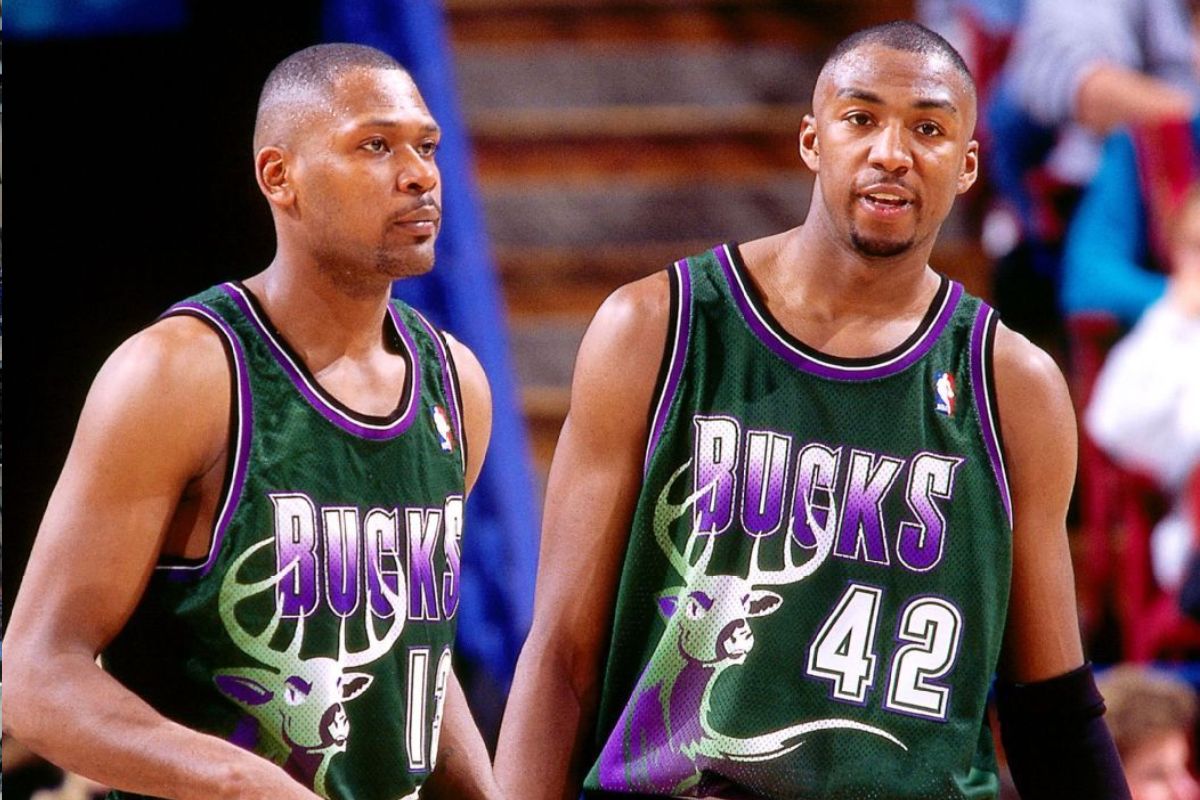
In 2006, the U.S. Marshal found the 1998 13th overall pick, Keon Clark, boarding a bus in Houston. He was due to stand trial in Illinois on weapons and drug charges but never showed up. After the authorities took him into custody, Clark admitted he had an addiction problem. The former Orlando Magic hooper said he was a heavy drinker and had been consuming alcohol since high school. “I’ve never played a sober game,” he confessed. Keon blamed his career’s downfall on alcoholism.
Watch What’s Trending Now!
For many former athletes, addiction becomes the final chapter of the story. Keon Clark’s career never recovered. Lewis Lloyd spent years battling substance abuse after leaving the league. Mitchell Wiggins faced similar struggles. Vin Baker’s story could have ended the same way. Instead, it took a remarkably different turn. But Giannis Antetokounmpo’s close ally and Milwaukee Bucks assistant coach Vin Baker rewrote his story.
The 53-year-old went 8th overall in the 1993 NBA Draft, as Milwaukee put its faith in him. “My struggle with alcohol began during my earliest days as a pro player and lasted until I hit rock bottom in 2011,” the former NBA star said, per The U.S. Sun’s report.
“By that point, I was broke and living at my parents’ house in Old Saybrook, Connecticut, drinking a gallon of cognac a day and waiting for the alcohol to kill me.” During these tough times, help arrived for Vin in the form of Howard Schultz, the former Starbucks CEO and the man who owned the Sonics during Baker’s playing days. Schultz threw him a lifeline when few expected it.
Baker later admitted that losing basketball was not the hardest part. “The rock bottom for me wasn’t necessarily knowing I couldn’t get back in the league,” he said. “I knew I felt abandoned by God.” It was during that period that he began searching for a way to rebuild his life.
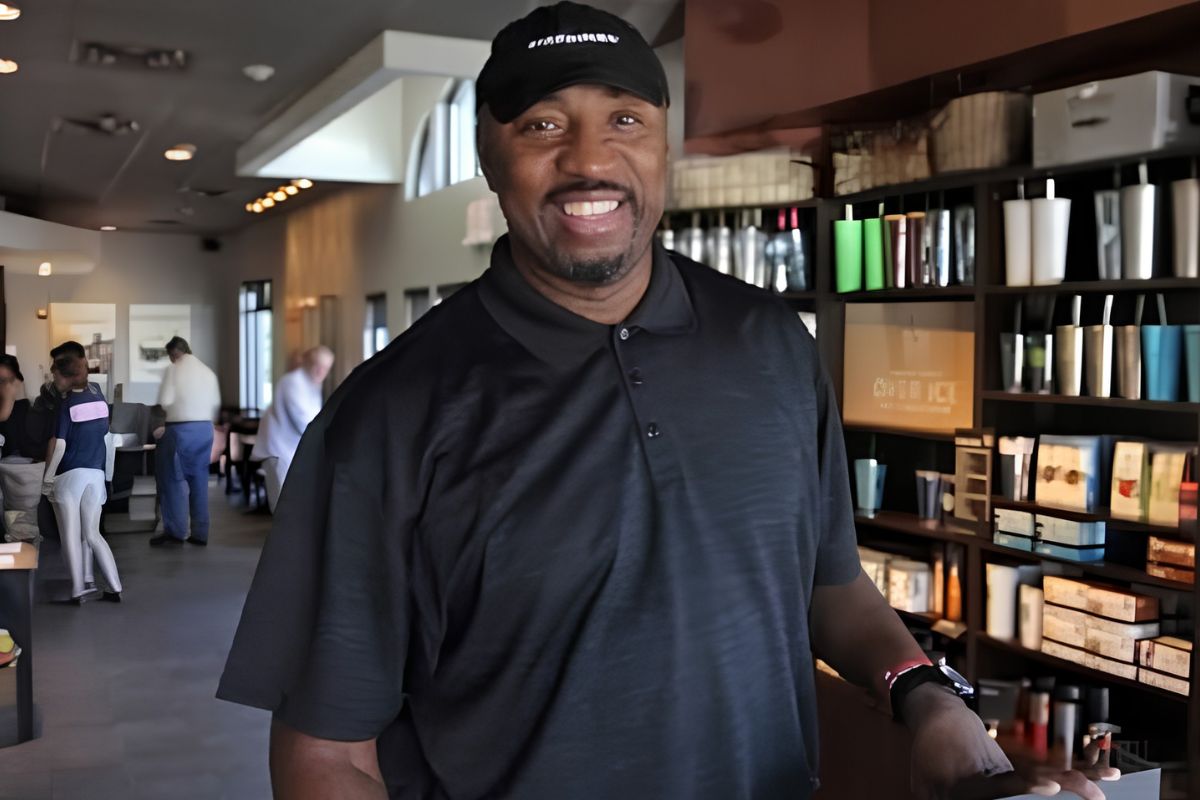
The man who helped change that trajectory was former Starbucks CEO and Seattle SuperSonics owner Howard Schultz. After Baker reached out for guidance following rehab, Schultz connected him with opportunities that extended far beyond basketball. He first helped Baker land a position at Abyssinian Baptist Church in Harlem before later opening the door to Starbucks management training, believing the former All-Star could rebuild his life through service and structure.
The adjustment was jarring. Baker went from private flights and sold-out arenas to opening Starbucks stores before sunrise, learning drink recipes and wearing the same green apron as every other employee. The former All-Star later called it “the hardest job I ever did,” but embraced the challenge as a chance to start over.
“For me to summon the strength to walk out here and get excited about retail management at Starbucks and try to provide for my family, I feel that’s more heroic than being 6-11 with a fade-away jump shot.” Vin further shared, “I get energy from waking up in the morning and, first of all, not depending on alcohol, and not being embarrassed or ashamed to know I have a family to take care of. The show’s got to go on.”
Imago
Credit: Work Stress Counseling Metro NYC
The fall was stunning because Baker had once looked destined for basketball stardom. A 1992 Sports Illustrated profile famously called him “America’s Best Kept Secret,” and within five years he had become a four-time All-Star and one of the NBA’s most respected forwards.
Between 1995 and 1998, he earned four consecutive All-Star selections and established himself as one of the NBA’s premier forwards. After arriving in Seattle in 1997, Baker averaged 19.2 points and 8 rebounds per game while helping the SuperSonics win 61 games. He earned All-NBA Second Team honors and later added an Olympic gold medal with Team USA in Sydney.
Behind the success, however, alcohol had quietly become part of his daily routine. What began as a way to ease anxiety eventually escalated into dependency. Baker later revealed that teammates could smell alcohol on him during practices and that his drinking had evolved from occasional nights out to something far more destructive.
The collapse came from a combination of factors. Baker later spoke openly about battles with alcohol, gambling and prescription medication. He once revealed losing nearly $1 million during a single night in Las Vegas, while failed business ventures, real estate troubles and addiction steadily drained a fortune that reportedly exceeded $100 million over the course of his career.
The financial consequences became public in 2008 when Baker’s 10,000-square-foot Connecticut home entered foreclosure. By then, a player who had earned nearly $100 million during his NBA career was watching much of it disappear through a combination of addiction, poor financial decisions and unsuccessful investments. Looking back, Baker has repeatedly pointed to depression and alcoholism as the driving forces behind his downfall.
Years after hitting rock bottom, basketball unexpectedly found Baker again. Milwaukee Bucks general manager John Horst and head coach Mike Budenholzer brought him into the organization, first in a developmental role before promoting him to a full-time assistant coach.
Vin Baker’s second round in the NBA
The 6-foot-11 found a second home on the sidelines with the Milwaukee Bucks. He has remained a valued voice for years in the organization. Baker first joined the staff in 2017 and earned a full-time assistant coach role in 2018. Along the way, Baker helped guide Milwaukee to the 2021 NBA Championship.
Budenholzer later described Baker as someone with a “heart of gold” whose life experiences made him uniquely valuable to players. The comeback was remarkable not simply because Baker returned to the NBA, but because he returned as a mentor capable of helping others navigate challenges he once struggled to overcome himself.
Since returning to the game, Vin Baker has carved a meaningful relationship with the Bucks organization. Especially with Giannis Antetokounmpo, with whom he shares a close relationship. “One night [Giannis and I] were talking, and we had never had this conversation,” Baker recalled. “And Giannis said to me, we were at dinner, and he said, ‘Coach, like, your story’s amazing. Like, I cannot believe it…it’s hard for me to even fathom what you’ve been through.’”
Their relationship eventually extended beyond basketball. Baker later officiated Giannis Antetokounmpo’s wedding, a reflection of the trust he earned within the Bucks organization and the bond the two built over the years.
Today, Baker channels much of his energy into the Bouncing Back Foundation, a nonprofit focused on helping people battling addiction find treatment, recovery resources and renewed purpose. The mission is deeply personal. “My sobriety is the most amazing thing,” Baker once said. “I want to share it now.”
For a player once considered one of basketball’s brightest rising stars, the greatest achievement of his life ultimately had nothing to do with All-Star appearances, Olympic medals or NBA championships. Today, Baker spends much of his time helping others avoid the same path that nearly ended his own life. For a man who once feared his story would end in addiction, that may be the most meaningful comeback of all.